


Stump removal safety isn’t about wearing gloves and hoping for the best, it depends on following the right standard at the right moment in the job. This guide breaks stump removal safety tips into three phases: before, during, and after removal, plus the specific standards each removal method calls for.
Whether you’re doing it yourself or hiring a professional, these are the standards that actually prevent accidents.
What Is Stump Removal?
Stump removal is the process of extracting a tree stump and its root system from the ground, using manual tools, mechanical equipment like a stump grinder, or chemical treatments. The method you choose changes the risk profile of the job, which is exactly why stump removal safety looks different depending on the approach. For a full breakdown of each method, see our guide to stump removal.
Tree stump removal isn’t just about appearance, an unaddressed stump can hide underground hazards and attract pests over time. That’s covered in more depth in our post on the benefits of stump removal. This page focuses specifically on doing the job safely, not on why it’s worth doing.
How to Remove a Stump Safely, Step by Step
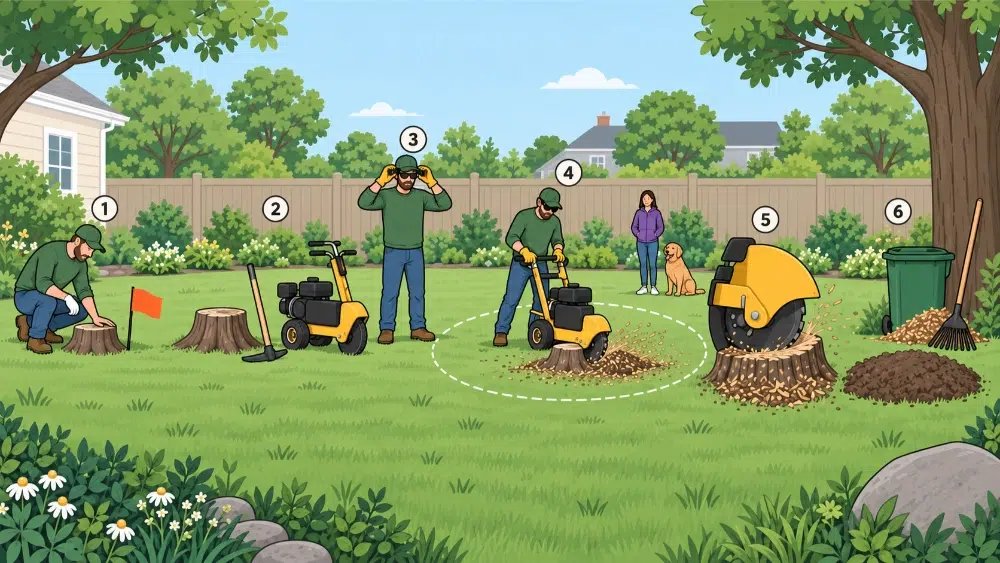
Knowing the standards is one thing, knowing how to safely remove a tree stump from start to finish is what actually gets the job done without an injury. Here’s the sequence, with the safety consideration built into each step rather than treated as a separate afterthought.
- Call ON1Call several business days before you dig. Once utilities are marked, walk a 10-foot radius around the stump checking for sprinkler lines, sloped ground, and any fence, shed, or structure within reach of a chainsaw bar or grinder wheel.
- Match the method to the stump’s size. Stumps under roughly 12 inches in diameter are usually manageable by hand with a mattock and root saw; anything larger or with a dense hardwood root system calls for a stump grinder, and chemical treatment is only worth it if you can wait 4–6 weeks for the wood to soften.
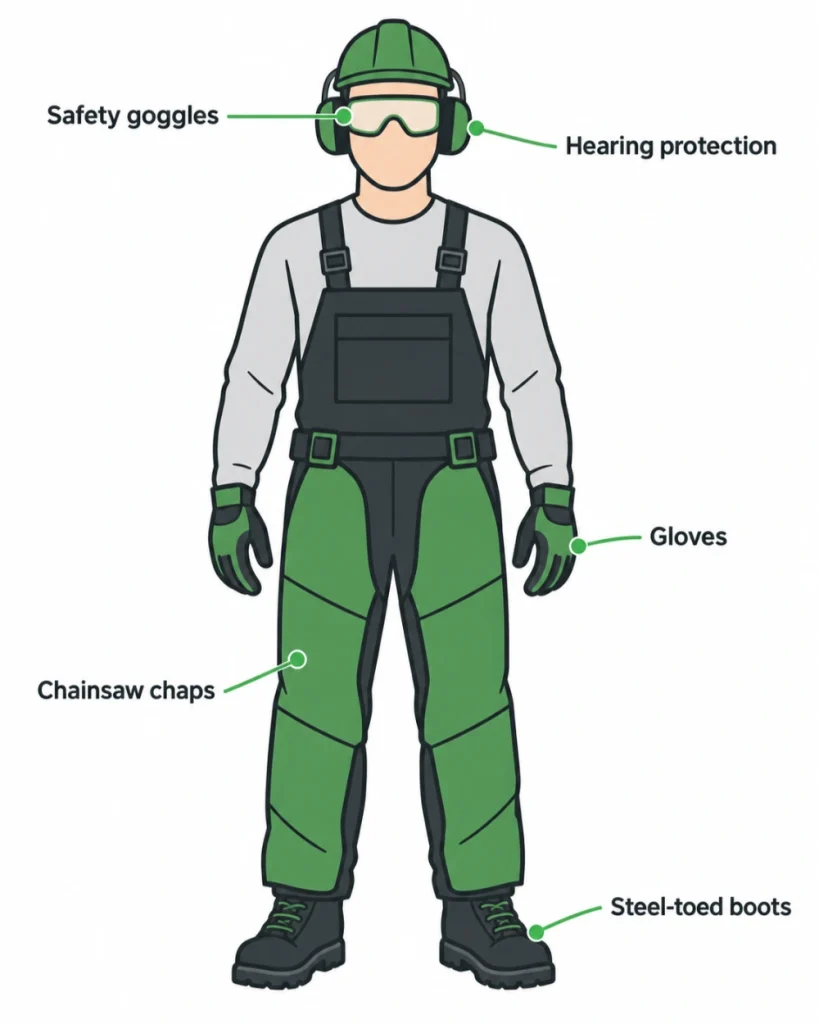
- Put on ANSI Z87.1-rated eye protection before touching a tool, not after. Add hearing protection for anything gas-powered, steel-toed boots for anything involving lifting or dropped material, and cut-resistant gloves if you’re handling roots or chips by hand.
- Set a 10–15 foot exclusion zone around the work area for grinding or chainsaw work, and mark it clearly if bystanders or pets are nearby. Nobody but the operator should be inside that radius while the tool is running.
- Use the technique that matches your tool, not a generic “be careful.” For a chainsaw, keep both hands on the saw and avoid contact between the bar tip and the wood to prevent kickback; for a grinder, feed the cutting wheel into the stump gradually instead of forcing it; for chemical treatment, drill holes 6–8 inches deep and follow the product’s exact fill line.
- Rake the area for missed debris, then backfill any hole with topsoil, mounding it slightly since loose soil settles. Dispose of treated wood chips or chemical residue according to your municipality’s yard waste rules, don’t add them to a home compost bin.
Stump Removal Safety Checklist
Before getting into the detail, here’s the fast-reference version of stump removal safety standards, the stump removal precautions to run through before, during, and after any job for a safe stump removal from start to finish.
Safety Equipment You’ll Need
Most stump removal safety failures trace back to missing or wrong equipment, not missing effort. Some of this gear applies no matter which method you use; the rest depends on whether you’re digging, grinding, or treating chemically.
| Equipment | Purpose | Standard / Note |
|---|---|---|
| Safety glasses or goggles | Protect eyes from flying wood chips and debris | ANSI Z87.1-rated |
| Hearing protection | Reduces noise exposure from grinders and chainsaws | Required for any gas-powered tool |
| Steel-toed boots | Protects feet from dropped tools or falling material | — |
| Cut-resistant gloves | Protects hands from splinters, sharp edges, and chemical contact | — |
| Chainsaw chaps | Reduces injury risk during chainsaw prep work | Recommended, not optional, for chainsaw use |
| Stump grinding shield | Deflects flying wood chips away from the operator | Attaches directly to the grinder |
| Dust mask or respirator | Blocks airborne wood dust and chemical fumes | Most relevant for chemical treatments |
| Exclusion zone markers | Keeps bystanders and pets out of the work radius | Cones, tape, or a simple barrier work fine |
The first four items apply to every stump removal job regardless of method. The grinding shield, respirator, and chainsaw chaps are method-specific, you don’t need a respirator for hand-digging, and you don’t need chaps for chemical treatment.
Stump Removal Safety Standards
Stump removal safety standards aren’t a single checklist item, they change depending on which phase of the job you’re in. Splitting the process into before, during, and after makes it clear what to focus on at each stage, instead of treating “be careful” as one vague instruction.
Before Removal
Before any tool touches the ground, stump removal safety starts with identifying what’s already in the way. A stump safety hazard that goes unnoticed at this stage, a buried line, an unstable slope, hidden rocks, is far harder to manage once work is underway.
Need Someone to Handle Your Stump Removal Safely?
SpinBlade’s certified arborists follow every stump removal safety standard on the job, so you don’t have to. Get a free quote and let the pros handle the risk.
During Removal
Once work begins, stump removal safety depends on controlling the space around the tools and the person using them, not just the tool itself. Manual handling matters just as much as the equipment, since physical-strain injuries are among the most common on a stump removal job.
After Removal
Once the stump is out, stump removal safety isn’t finished, the site still needs a final check, and you need a plan for anything that went wrong along the way.
Why Hire a Professional Stump Removal Crew?
A professional crew brings more than just a bigger grinder, they carry the training to read a site correctly, the insurance to cover anything that goes wrong, and the experience to know which method actually fits your stump instead of guessing. That combination is what turns a job with real risk into a routine one.
SpinBlade’s crew is led by Cole Horton, a Certified Utility Arborist (CUA) who trained through a 4-year apprenticeship with the Ontario College of Trades, backed by ISA (International Society of Arboriculture) certification standards across the team. Every stump removal job in Ottawa follows the same safety standards covered in this guide — utility locates, proper PPE, and method selection based on the actual stump, handled by people who do this daily instead of once.
Safety Standards by Removal Method
Stump removal method safety isn’t one-size-fits-all; manual, mechanical, and chemical approaches each carry a different set of risks. The table below gives a quick comparison before the detailed standards for each.
| Method | Primary Hazard | Key Standard |
|---|---|---|
| Manual | Physical strain, tool slippage | Proper lifting form, sharp/well-maintained tools |
| Mechanical (grinder) | Kickback, flying debris | Grinding shield, ANSI eye protection, exclusion zone |
| Chemical | Skin/eye contact, fumes | Ventilation, gloves, careful product handling |
Manual Removal Safety Standards
Manual removal, digging with a mattock or shovel, then cutting exposed roots, is one of the most accessible ways to learn how to remove a stump by hand. A chainsaw is often used for stump removal with chainsaw work to cut through the trunk base or thick roots before digging begins. Chainsaw safety principles apply here directly: sharp, well-maintained blades and a firm, controlled grip reduce the risk of slippage while cutting a stump.
The main risk with manual removal isn’t the tools themselves, it’s physical strain from repetitive digging and lifting. Take breaks, and don’t rely on speed over technique when learning how to cut a tree stump safely.
Mechanical Removal Safety Standards (Stump Grinder)
Stump grinder safety starts with a debris shield in place before the machine is engaged, a stump grinding shield deflects flying wood chips away from the operator and bystanders. Full stump grinding PPE includes ANSI-rated eye protection, hearing protection, and gloves, since grinders are both loud and capable of throwing debris at speed.
Kickback is the main hazard specific to this method: operate the grinder at a controlled pace and keep a firm stance rather than forcing the cutting wheel forward.
Chemical Removal Safety Standards
Chemical removal uses a product like potassium nitrate to gradually break down the stump over several weeks, rather than removing it immediately. It’s a slower way to kill a tree stump, but it’s also less physically demanding than digging or grinding. Even so, stump removal chemical products still require gloves, eye protection, and good ventilation while applying them.
Keep children and pets away from the treated area until the product has fully broken down, and dispose of any residue according to the product’s safety instructions.
Frequently Asked Questions
Conclusion
Stump removal safety comes down to matching the right standard to the right phase and the right method, not applying one generic set of precautions to every job. Whether you’re removing a stump manually, mechanically, or chemically, following the before-during-after structure in this guide covers the risks specific to your situation. If the job feels beyond what you’re equipped to handle safely, that’s exactly when professional stump removal safety expertise is worth the call.
Need Someone to Handle Your Stump Removal Safely?
SpinBlade’s certified arborists follow every stump removal safety standard on the job, so you don’t have to. Get a free quote and let the pros handle the risk.


