Deciding when to cut down a tree isn’t always straightforward, especially when you want to preserve the trees on your property. While some trees can recover from disease, damage, or poor growing conditions, others may become unstable or pose a safety risk. Knowing when to cut down a tree on your property can help you protect your home, prevent damage or harm, and avoid unnecessary removal. Several warning signs can help you determine when it’s time to consider taking a tree down.
6 Signs It’s Time to Cut Down a Tree
Not every unhealthy or damaged tree needs to be removed. However, certain conditions can make a tree hazardous or unlikely to recover. So, how do you know when a tree needs to be cut down?
Recognizing these warning signs can help you determine when tree removal may be necessary.
1. The Tree Is Dead or Dying
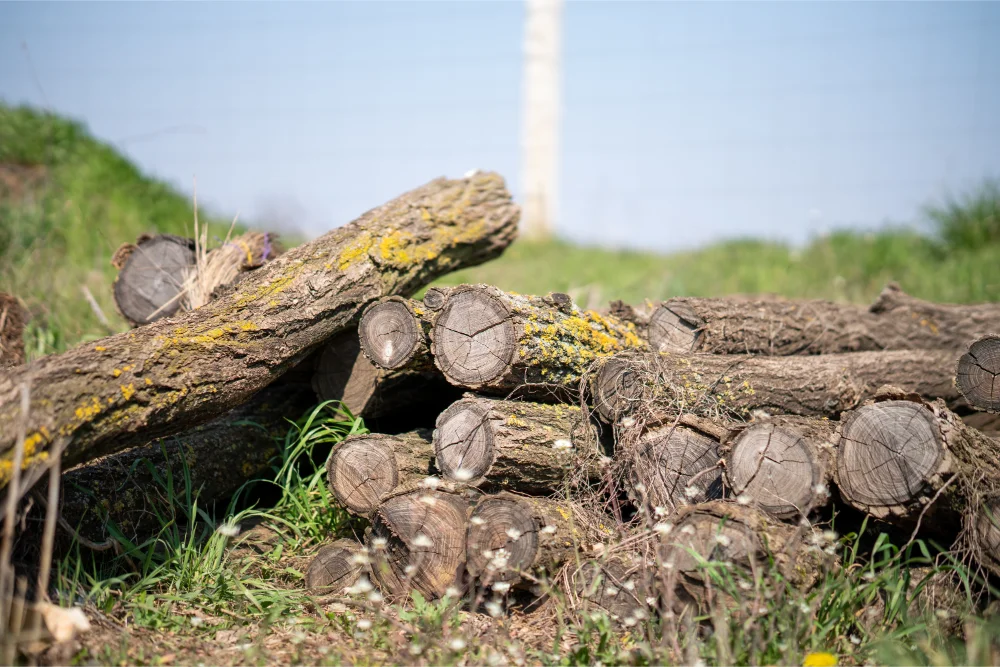
A dead or severely declining tree may eventually become unstable, increasing the risk of falling branches or the entire tree collapsing. While some dead trees can remain standing safely in suitable locations, those near homes, driveways, walkways, or other frequently used areas may need to be removed.
Look for signs such as:
If a tree is completely dead, it won’t recover. However, a dying tree may still be treatable, depending on the cause and extent of the damage. An arborist can assess its condition and determine whether treatment, pruning, or removing a dead tree is appropriate.
2. The Tree Has Severe Disease or Decay
Diseases and fungal infections can weaken a tree over time, sometimes affecting its structural stability. While many tree diseases can be managed with proper treatment, advanced decay or extensive damage may make a tree unsafe to keep.
Watch for signs such as:
A tree with disease doesn’t automatically need to be removed. However, when decay is extensive, the trunk is compromised, or the tree is unlikely to recover, removal may be the safest option. A professional assessment can help determine whether the problem can be managed or whether the tree should come down.
Concerned about Your Tree?
Don’t wait until a damaged or unstable tree becomes a safety concern. SpinBlade provides professional tree cutting services to help you safely remove trees that pose a risk to your property.
3. The Tree Has Structural Problems
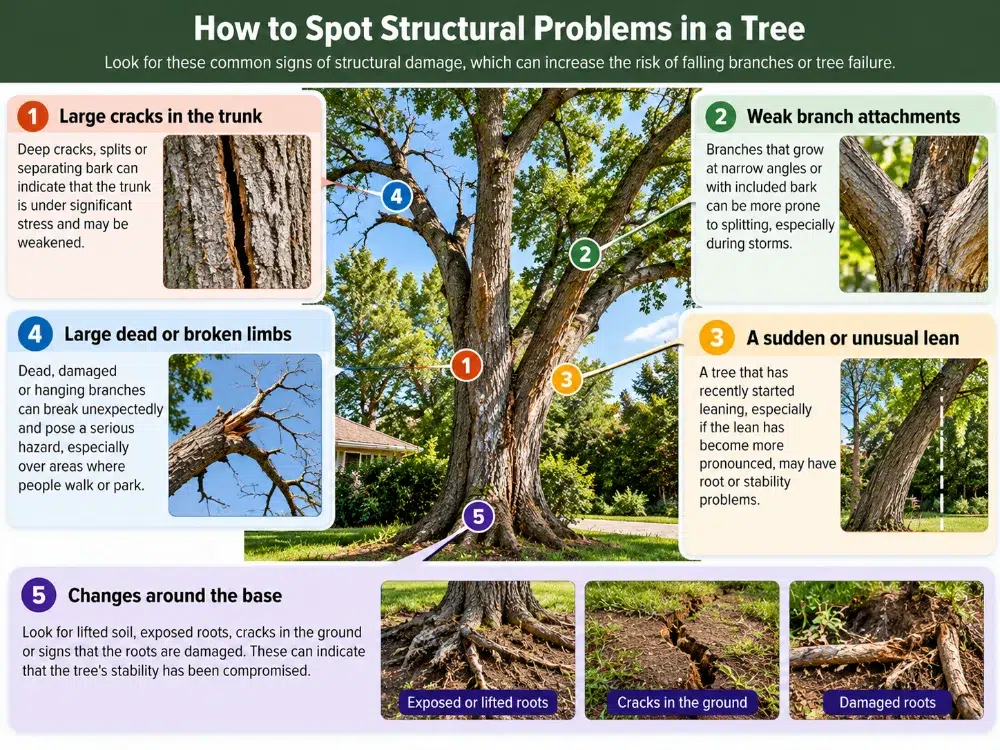
Structural defects can make a tree more likely to break or fall, particularly during strong winds, heavy rain, or snowstorms. Even a healthy-looking tree may have weaknesses that aren’t immediately obvious.
Some common warning signs include:
Not every structural defect means a tree needs to be cut down. Some problems can be addressed through pruning or other tree care measures. However, if the trunk is severely compromised or the tree is at risk of falling, removal may be necessary to protect people and nearby property.
4. The Tree Is Too Close to Your Home or Other Structures
A tree growing near your home isn’t necessarily a problem. However, as it grows, its branches, trunk, and roots can begin to interfere with nearby buildings, driveways, sidewalks, or utility lines. In some cases, pruning can address the issue, but removal may be necessary if the tree poses a significant risk or cannot be managed safely.
Consider removing a tree if:
Before deciding to remove a tree, consider whether pruning or other maintenance can resolve the problem.
5. The Tree Has Significant Root Damage
A tree’s roots provide the support and nutrients it needs to remain healthy and stable. When a substantial portion of the root system is damaged, the tree may become more vulnerable to disease, decline, or falling.
Root damage can result from construction, excavation, soil compaction, or changes in drainage. Some warning signs include:
Minor root damage doesn’t necessarily mean a tree needs to be removed. However, extensive damage, particularly when it affects the tree’s stability, can make removal necessary. If construction or excavation has affected a tree’s roots, have an arborist assess the damage before deciding when to cut down a treee.
6. The Tree Has Sustained Severe Storm Damage
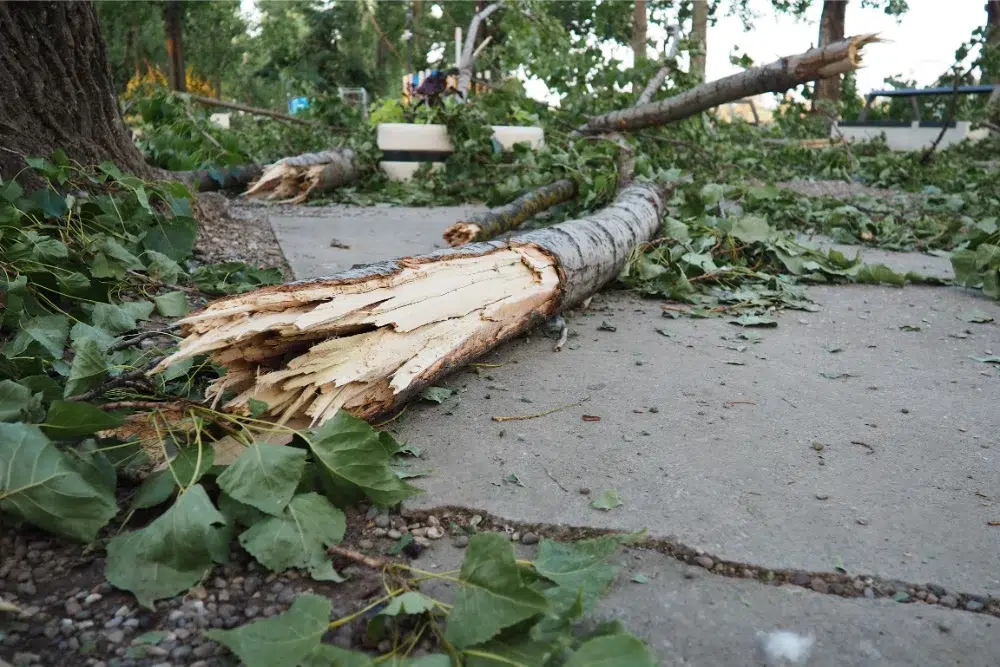
Strong winds, heavy rain, ice, and snow can cause significant damage to trees. While some trees recover from broken branches or partial canopy loss, severe storm damage can leave others unstable or unable to recover.
After a storm, look for signs such as:
If a tree has suffered extensive damage, removal may be the safest option, particularly if it is leaning or has large broken branches above areas where people walk or park. However, not every storm-damaged tree needs to be cut down. An arborist can evaluate the extent of the damage and determine whether the tree can recover.
Safety tip: Stay away from trees with hanging branches, split trunks, or signs of uprooting. These can fail without warning. Keep clear of damaged trees near power lines and contact the appropriate utility provider if necessary.
When Shouldn’t You Cut Down Trees?
Not every damaged, diseased, or inconveniently located tree needs to be removed. In many cases, pruning, treatment, or routine maintenance can address the problem while preserving the tree.
You may not need to cut down a tree if:
Before removing a tree, consider whether the issue can be resolved through maintenance.
How Much Does It Cost to Cut Down a Tree?
The cost of tree removal depends on several factors, including the tree’s size, condition, location, and accessibility. Trees near buildings or power lines may require additional equipment and specialized techniques, while removing large or hazardous trees can involve more labour.
If you’re considering removing a tree, getting a professional assessment and quote can help you understand the work involved. Read our guide to tree cutting costs for more information about the factors that affect pricing.
Get A Free Quote
Whether you’re dealing with a dead tree, storm damage, or a potential safety hazard, SpinBlade can help you determine the right approach. Contact us today to discuss your tree removal needs and request a free quote.
Frequently Asked Questions
Still scratching your head? Here are quick answers to some of the most common questions people have.
In Short,
Knowing when to cut down a tree involves more than looking for signs of disease or damage. Its structural stability, location, and potential risks to people and property all play a role in determining whether removal is necessary.
While pruning and treatment can resolve some problems, severely damaged, decaying, or unstable trees may pose risks that make removal the safer option. If you’re unsure whether a tree on your property needs to come down, consult a qualified arborist to assess its condition and recommend the appropriate next steps.