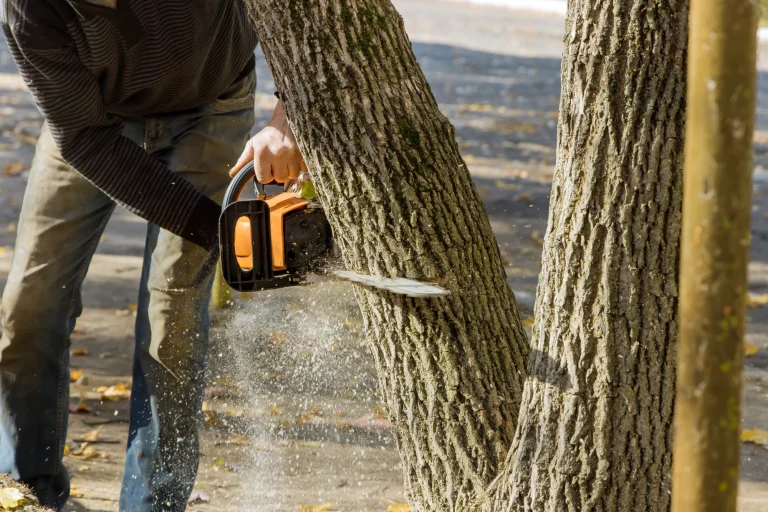
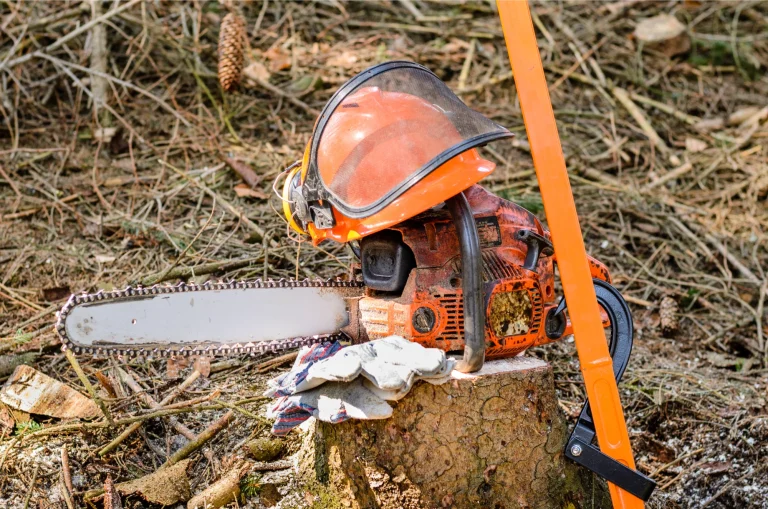
Cutting down a tree requires careful planning, the right equipment, and a clear understanding of the risks involved. Knowing how to cut down a tree safely starts with assessing the tree’s condition, evaluating the surrounding area, and preparing for potential hazards. While small trees in open spaces may be suitable for experienced homeowners, larger or unstable trees are best left to professionals.
Is It Safe to Cut Down a Tree Yourself?
Before deciding to cut down a tree, assess its size, condition, and surroundings. While some small trees may be suitable for removal by someone with the right training and equipment, other situations involve risks that require professional help.
Consider the following factors before proceeding:
If you cannot confidently determine how the tree will fall or whether the area is safe, don’t attempt to remove it yourself. Hiring a professional tree service is the safer option for trees that are large, unstable, or difficult to access.
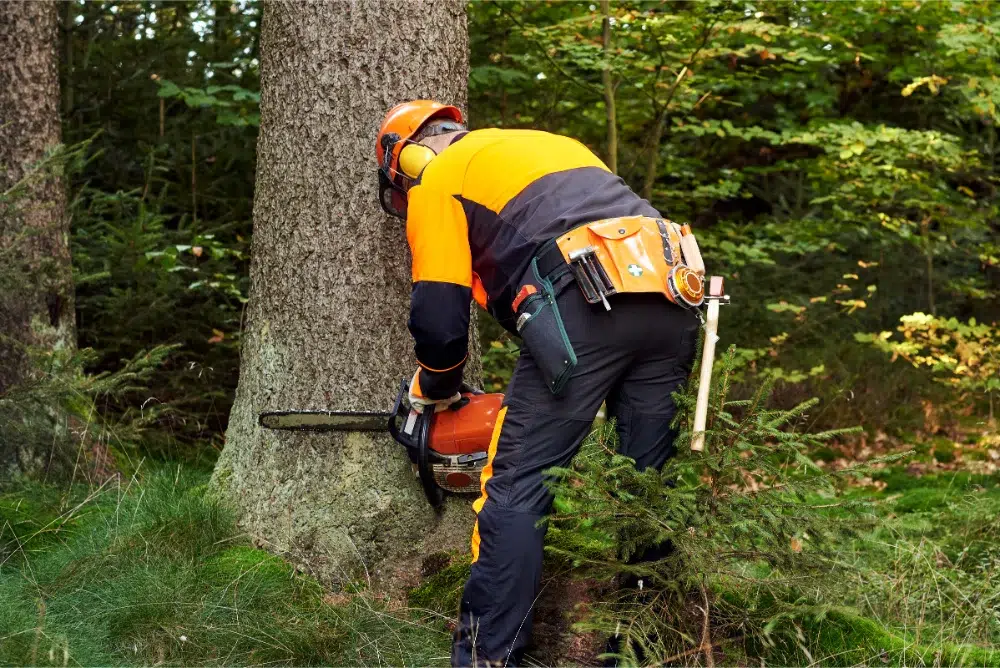
Common tree-felling mistakes worth highlighting
OSHA and the Canadian Centre for Occupational Health and Safety identify several hazards that make tree felling dangerous:
Tree Felling vs. Other Tree Removal Methods
Directional tree felling involves cutting a tree at its base so it falls into a planned area. It may be suitable for trees in open spaces with few obstacles, provided the tree’s condition allows for controlled felling.
When space is limited or a tree is close to buildings, fences, or other hazards, sectional tree removal may be a better option. This method involves dismantling the tree in smaller pieces, often using ropes, rigging equipment, or a crane to control their descent.
The right tree cutting method depends on the tree’s size, condition, natural lean, and surroundings. If a tree is unstable or its fall cannot be reliably managed, consult a qualified tree professional to determine the safest removal approach.
Not Sure How to Remove a Tree Safely?
Tree removal requires careful planning, the right equipment, and an understanding of potential hazards. Contact SpinBlade to discuss your project and explore your options for professional tree removal.
What Do You Need to Cut Down a Tree Safely?
Tree cutting requires more than a chainsaw. Appropriate protective equipment, properly maintained tools, and a carefully prepared work area are all essential to reducing the risk of injury.
Personal Protective Equipment
Anyone operating a chainsaw needs suitable protective equipment designed for the hazards involved. This typically includes:
Protective equipment can reduce some risks, but it cannot eliminate the dangers of tree felling or replace proper training.
Tools and Equipment
A properly maintained chainsaw suited to the job is essential for cutting wood. However, choosing an appropriate tool also means understanding how to operate it safely and recognize hazards such as kickback.
Before beginning any work, check that the equipment is in good condition and that you understand its operating instructions. If you’re unfamiliar with chainsaw operation or tree felling techniques, seek appropriate training rather than relying on written instructions alone.
A Clear Work Area
The surrounding area should be assessed and prepared before any cutting begins. Remove obstacles where possible, keep bystanders well outside the work zone, and make sure planned escape routes are clear.
Pay particular attention to overhead branches, uneven ground, nearby structures, and anything that could interfere with the tree’s fall. If the area cannot be made sufficiently safe, consult a professional tree service.
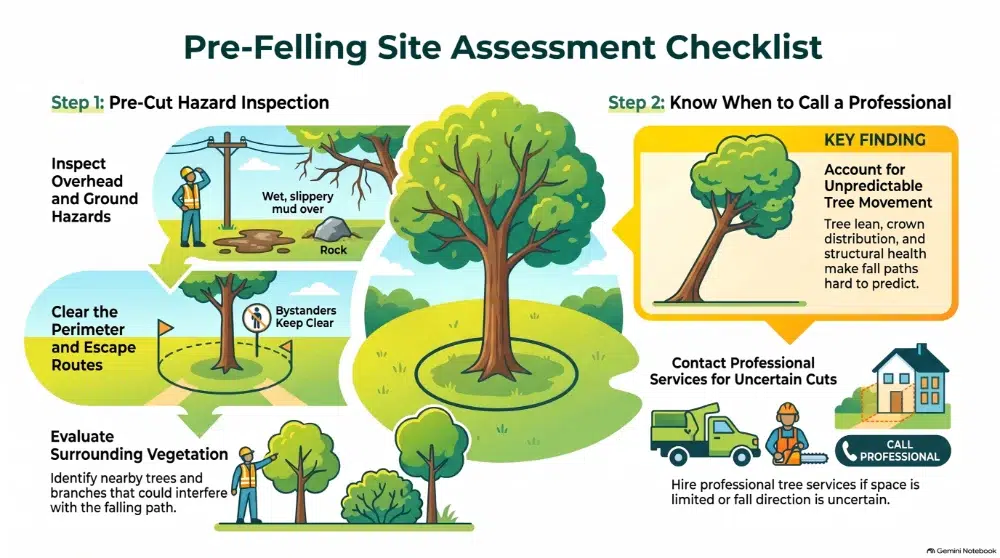
How to Prepare Before Felling a Tree
Once you’ve assessed the tree and prepared the work area, the next step is to plan how the tree could fall and identify potential hazards. Careful preparation helps you recognize situations that may be too dangerous to handle without professional equipment and training.
1. Assess the Tree’s Condition
Before considering tree felling, inspect the tree from a safe distance to identify potential structural weaknesses. A tree’s condition can affect how it behaves during cutting, making some trees much less predictable than others.
Look for warning signs such as:
If the tree shows signs of significant decay, structural damage, or instability, have a qualified arborist assess it before proceeding. Avoid attempting to fell a tree that may behave unpredictably.
2. Evaluate the Surrounding Area
The tree’s surroundings can influence whether removal is feasible and what hazards need to be considered. Even a relatively small tree can pose a risk if it is close to a building, road, fence, or other obstacle.
Assess the available space, the terrain, nearby vegetation, and any overhead hazards. Consider whether the tree could become lodged in another tree or strike something outside the intended work area.
If the tree cannot fall into a clear, open area without risking damage or injury, professional removal is the safer choice.
3. Plan the Fall Direction
Understanding where a tree is likely to fall is a crucial part of tree felling safety. Its natural lean, crown distribution, wind conditions, and trunk structure can all influence its movement.
However, a tree will not necessarily fall in the direction you expect. Improper cutting, internal decay, or contact with nearby branches can cause it to move unpredictably.
For this reason, determining a safe fall direction requires more than simply choosing an open space. If you’re unsure whether the tree can be felled safely, don’t attempt to control its fall yourself. A trained professional can evaluate the site and determine the appropriate removal method.
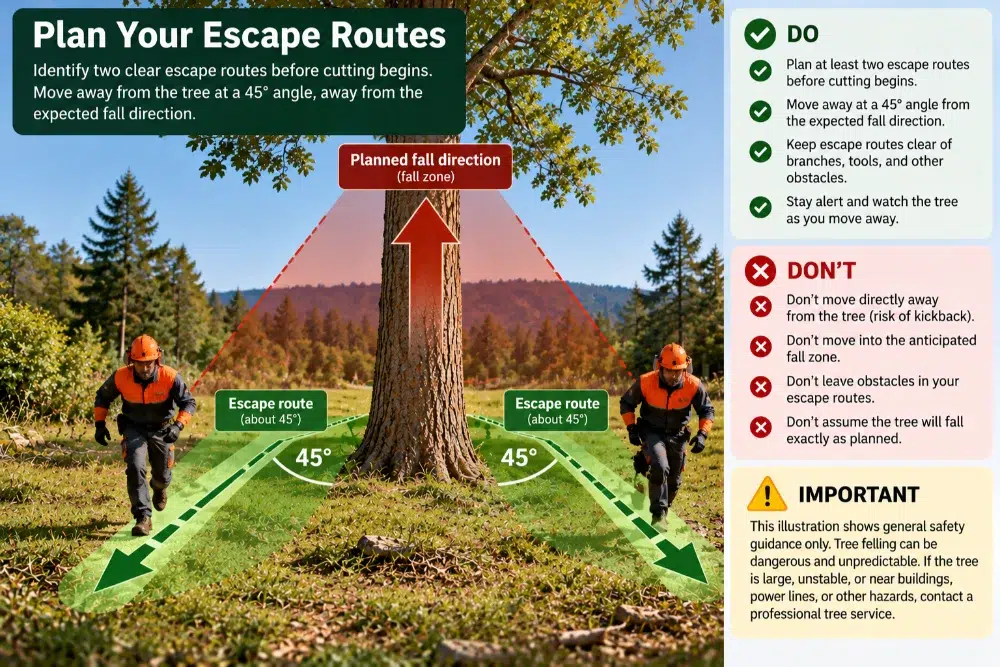
4. Identify Escape Routes
Anyone carrying out tree felling must plan how to move away from the tree if it begins to fall. Escape routes should be identified before cutting starts and kept clear of branches, tools, equipment, and other obstacles.
The route must lead away from the immediate danger area rather than toward the tree’s expected path. However, an escape route cannot compensate for an unsafe felling plan or make a hazardous tree safe to remove.
If you cannot establish a safe work area and a reliable way to withdraw, stop and contact a professional tree service.
How to Cut Down a Tree: Understanding Basic Tree Felling Techniques
Understanding how to fell a tree involves more than knowing where to make a cut. The tree’s condition, natural lean, surrounding obstacles, and available space all influence how it may move during removal. Basic tree felling techniques are designed to help control the direction of a fall, but they cannot eliminate the risks associated with cutting.
What Are Notch Cuts and Back Cuts?
Two terms commonly used in the tree cutting process are the notch cut and the back cut. A notch cut is made on the side facing the intended fall direction, while a back cut is made from the opposite side. Together, these cuts help influence how the tree separates from its stump and begins to fall.
Why Tree Size and Condition Matter
The tree cutting steps used for a small, healthy tree in an open area may not be appropriate for a large, leaning, damaged, or decaying tree. Larger trees can carry substantial weight, while internal decay and structural weaknesses may make their movement difficult to predict.
If you’re researching how to cut a large tree down, it’s important to recognize when the job exceeds what you can safely manage. Trees near buildings, fences, roads, or utility lines may require specialized equipment and professional removal techniques.
When Should You Hire a Professional Tree Service?
Although some straightforward tree-removal jobs may be manageable for trained individuals with suitable equipment, many situations require professional assistance. Knowing when to stop and call for help is an important part of how to cut down a tree safely.
Consider hiring a professional if:
A qualified tree service can assess the tree, identify potential hazards, and determine the appropriate removal method for the site.
Need Help Removing a Large or Hazardous Tree?
Tree removal can become dangerous when a tree is unstable, damaged, or close to buildings and other obstacles. Contact SpinBlade to discuss your project and find a suitable solution for your property.
Frequently Asked Questions
Still scratching your head? Here are quick answers to some of the most common questions people have.
In Short,
Knowing how to cut down a tree safely starts with recognizing the risks before any cutting begins. Assessing the tree’s condition, identifying hazards, preparing the work area, and planning escape routes are all essential considerations. Basic felling techniques can help explain how tree removal works, but they cannot guarantee a controlled fall.
When a tree is large, damaged, difficult to access, or close to structures or power lines, professional removal is the safer choice.