


Before a foundation is poured, a trench is dug, or a road is mapped out, the land itself has to be reshaped. Commercial land clearing is the process that turns raw, uneven terrain into a safe, workable construction site, making sure everything that follows sits on solid, compliant ground. From stripping vegetation to managing drainage and access, it’s the behind-the-scenes work that keeps large-scale projects on schedule. In this article, we’ll break down what commercial land clearing involves, how it’s done, what it costs, and the safety and environmental standards that shape every phase.
What Is Commercial Land Clearing?
Commercial land clearing is the large-scale process of removing trees, brush, stumps, debris, and surface obstacles to prepare a site for construction or development. Unlike residential projects, which focus on precision around homes and landscaping, commercial land clearing is built around scale, speed, and compliance. It creates safe access for crews, levels the ground for grading, and ensures the site meets environmental, municipal, and engineering requirements before any building begins.
Commercial Land clearing often includes:
- vegetation removal
- topsoil stripping
- rough grading
- erosion-control planning
- Stump and root system removal
- Rock and debris extraction
- Clearing access roads for equipment and crews
- Establishing drainage paths or temporary water management
- Site preparation for utility installation
Whether the goal is a warehouse, retail center, industrial facility, roadway, or municipal project, commercial land clearing forms the structural foundation for everything that comes next.
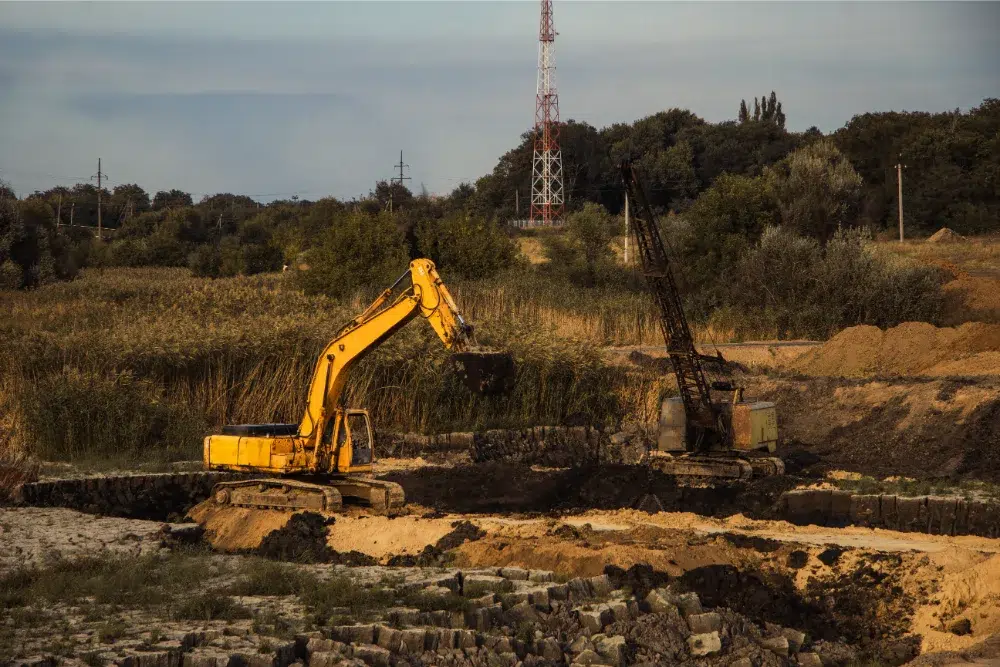
Project Scale and Purpose
Every commercial site comes with its own challenges, and the scale of work determines how aggressive or precise the clearing needs to be. Commercial land clearing needs to adapt to the project’s purpose, surrounding infrastructure, and long-term development plans.
When the goals and scale shift, the clearing strategy shifts with them, the right plan upfront keeps commercial projects efficient, safe, and on schedule.
Commercial Land Clearing Methods
Large-scale development requires a more strategic approach than simply removing trees. Commercial land clearing methods vary based on vegetation density, soil type, access routes, and project deadlines.
Mechanical Clearing
The backbone of most commercial projects. Heavy machinery like dozers, excavators, and forestry mulchers handle large trees, deep roots, and dense brush in bulk.
Mass Grading & Earthmoving
After vegetation removal, earthmoving equipment shapes the terrain to meet engineering specs for roads, foundations, utilities, or drainage systems.
Selective Clearing
Used in urban, roadside, or utility-adjacent sites where only targeted vegetation can be removed to avoid damaging infrastructure.
Controlled Clearing
(Chemical/Environmental)
Rarely used alone, but sometimes applied to prevent regrowth in invasive or high-root-density zones. Always regulated and professionally handled.
Commercial projects rarely rely on just one method—multi-step clearing ensures the site is not just cleared but structurally ready for construction.
Don’t let site prep delay your build.
Our crews move fast, stay compliant, and keep your project on track with efficient commercial land clearing. Schedule your assessment today
Planning & Permitting for Commercial Land Clearing
Large-scale development doesn’t move an inch without paperwork. Commercial land clearing involves multiple layers of planning and compliance, and skipping any of them can stall a project before crews even hit the site. Developers and contractors have to coordinate environmental assessments, review soil conditions, and map out erosion-control strategies long before the first tree comes down.
Most commercial projects require:
- Specialty equipment planning, ensuring the project has access to the heavy machinery required for large trees, deep root systems, rock-heavy soil, and high-volume debris removal.
- Environmental assessments to identify protected vegetation, wildlife habitats, or sensitive wetlands.
- Soil testing and drainage evaluations to ensure the land can support new structures and won’t create runoff problems.
- Erosion-control and sedimentation plans that outline how the site will be stabilized once vegetation is removed.
- Municipal and provincial permit approvals for tree removal, grading, access roads, and stormwater management.
Permitting delays are one of the biggest causes of budget overruns in commercial development. Getting professionals involved early prevents these slowdowns and keeps your project aligned with environmental, engineering, and municipal requirements.
1. Commercial Land Clearing Equipment
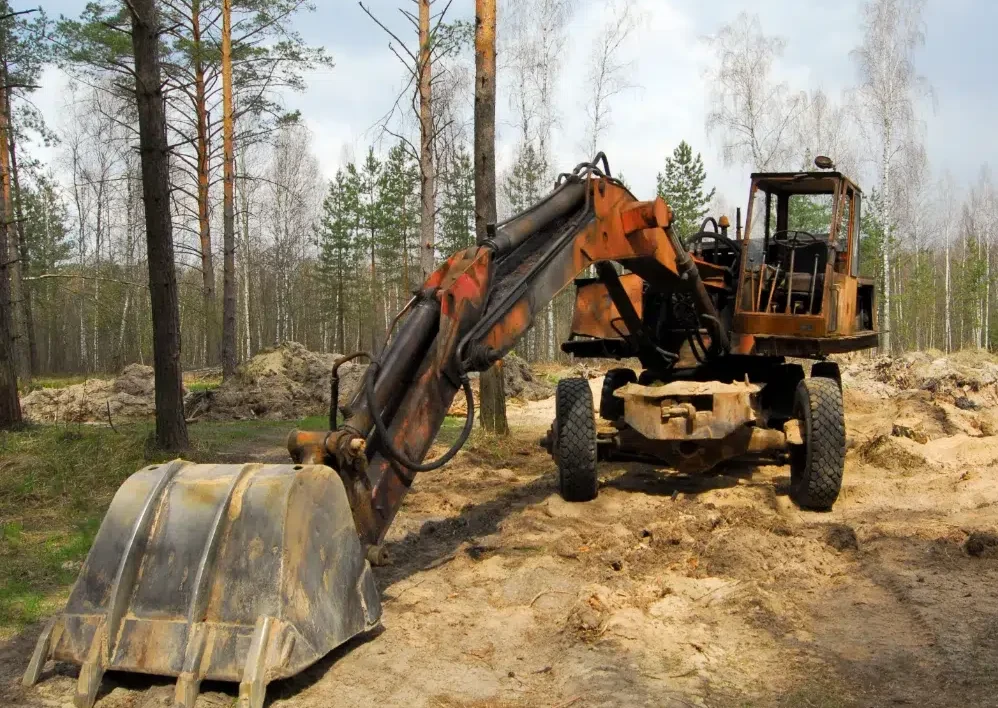
Large-scale work needs large-scale machinery. Commercial projects rely on coordinated clearing equipment fleets operated by certified professionals to handle tough vegetation, deep roots, uneven terrain, and strict deadlines.
Commercial land clearing almost always involves multiple machines working together — dozers opening paths, excavators working roots, mulchers managing vegetation — all timed to maintain productivity and site safety.
2. Environmental & Safety Responsibilities
With commercial projects, responsibility widens far beyond the property line. Commercial land clearing must follow strict federal and provincial standards to protect waterways, wildlife, public safety, and long-term soil stability. Poor planning can trigger fines, erosion, flooding, or halted permits — all things no developer wants on their timeline.
Professional clearing crews typically implement measures such as:
- Sediment traps and erosion blankets to keep loose soil from washing into streams or drains.
- Recycling or repurposing cleared wood into mulch, compost, or biomass instead of sending it to landfill.
- Maintaining protective buffer zones around wetlands, creeks, and environmentally sensitive areas.
- Using certified operators to minimize soil compaction and avoid damage to underground utilities or nearby infrastructure.
For official guidelines, refer to:
- Government of Canada – Environmental Protection and Management
- Canadian Construction Association – Site Management Standards
3. What Season Is Best for Commercial Land Clearing?
Land clearing can technically be done year-round, but the season you choose affects cost, timelines, equipment performance, and how cooperative the land feels when heavy machinery starts pushing it around. Picking the right season keeps projects on schedule and avoids avoidable budget bloat.
Best Seasons for Commercial Land Clearing
| Season | Good Side | Bad Side |
|---|---|---|
| Spring | Soft ground makes excavation and stump removal easier; vegetation hasn’t fully regrown. | Wet soil slows machinery; spring thaw causes instability, ruts, and drainage issues. |
| Summer | Dry, stable soil allows fast clearing with minimal delays; long days increase productivity. | Peak construction season raises prices; dense foliage means more vegetation to remove and haul. |
| Fall | Cooler weather and reduced foliage improve efficiency; ideal for setting erosion control before winter. | Shorter daylight hours; early storms can interrupt clearing and grading. |
| Winter | Frozen ground supports heavy machinery and reduces soil compaction. | Frozen roots are difficult to remove; snow and ice hide hazards and slow work. |
Takeaway: Late summer through early fall usually offers the best balance of dry ground, predictable schedules, and efficient vegetation removal for most commercial projects.
4. How Long Does Commercial Land Clearing Take?
Timelines vary widely depending on project size, land conditions, environmental constraints, and how aggressively contractors can schedule crews and machines.
Small Commercial Sites (½–2 acres)
Best examples: retail pads, small industrial sites, parking area expansions.
Medium Commercial Sites (2–10 acres)
Large-Scale or Infrastructure Sites (10+ acres)
Commercial timelines depend less on acreage and more on how much the land fights back — trees, roots, rocks, slopes, and regulations all dictate how long crews stay on-site.he first time — something DIY or under-equipped crews rarely achieve.
Don’t let site prep delay your build.
Our crews move fast, stay compliant, and keep your project on track with efficient commercial land clearing.
Schedule your assessment today
Cost of Commercial Land Clearing
No two commercial sites behave the same. The cost of commercial land clearing depends on land size, vegetation volume, terrain complexity, compliance requirements, and debris management. Larger vegetation, steep slopes, and tight urban access all push the price upward.
Factors That Affect Commercial Clearing Costs
- Tree Size & Root Depth: Larger hardwoods and deep root systems require heavy equipment and more time.
- Brush Density: Thick undergrowth multiplies mulching and hauling needs.
- Terrain: Steep, rocky, or uneven land slows equipment and increases re-grading.
- Accessibility: Urban sites with limited machine access cost more than open rural land.
- Debris Volume: Timber disposal, chipping, mulching, or hauling all add fees.
- Specialty Machinery: Rock breakers, long-reach excavators, and oversized mulchers increase transport and operator costs.
- Environmental Restrictions: Wetlands, watercourses, or protected species zones require mitigation planning.
Average Commercial Land Clearing Costs by Province (Canada)
These are typical commercial-scale ranges, not residential ones — the numbers reflect larger machinery, compliance, and debris volume.
- British Columbia: $8,000–$25,000+ per acre (forest density + mountain access)
- Alberta: $6,000–$18,000 per acre (rural sites cheaper, urban higher)
- Saskatchewan: $5,000–$15,000 per acre (brush-heavy farmland pushes costs up)
- Manitoba: $6,000–$16,000 per acre (soft soil and drainage issues impact pricing)
- Ontario: $8,000–$25,000+ per acre (urban, rocky, or forested land increases costs fast)
- Quebec: $6,500–$20,000 per acre (varies heavily by terrain and permit load)
- New Brunswick: $5,000–$14,000 per acre (mixed hardwood increases debris volume)
- Nova Scotia: $6,000–$17,000 per acre (coastal soil conditions influence grading needs)
- Prince Edward Island: $5,000–$12,000 per acre (brush density + access constraints)
- Newfoundland & Labrador: $7,000–$20,000 per acre (rocky, uneven ground = specialty equipment)
- Yukon, NWT, Nunavut: $10,000–$30,000+ per acre (remote transport + harsh conditions)

Hiring SpinBlade For Commercial Projects
A certified, well-equipped team reduces risk, protects your budget, and keeps your project moving. At SpinBlade, we handle:
In short, SpinBlade handles high-risk commercial clearing safely and efficiently, keeping your project on schedule and your site fully compliant. Learn more about our land clearing services.
FAQ: Commercial land clearing
Before committing to a large site prep project, developers usually hit the same roadblocks. Here are quick, straightforward answers to common questions:
In Short,
Every major build starts long before the first concrete truck arrives. Commercial land clearing is the step that transforms raw, uneven, overgrown land into a stable, compliant, construction-ready site. When it’s planned properly and handled by trained professionals, it speeds up every phase that follows, keeps your project aligned with environmental standards, and cuts down the risk of costly delays.


