


Every great outdoor project starts with a blank slate, whether it’s carving out space for a new home, reshaping overgrown acreage, or transforming an empty lot into something useful. But before the soil is graded or a single foundation is poured, the land itself needs to be cleared and prepared. In this guide, you’ll learn what land clearing really involves, the different types of projects it supports, and the equipment and techniques professionals use to do it safely and efficiently.
What Is Land Clearing?
Land clearing is the process of removing trees, stumps, rocks, and vegetation to make a property suitable for construction, landscaping, or development. Though making is a key aspect, it’s also about creating stability, safety, and access.
What typically gets cleared:
- Overgrown weeds and underbrush that attract pests or create fire hazards
- Trees and dense brush blocking access or sunlight
- Stumps and roots that interfere with grading or foundations
- Rocks, boulders, and debris that make excavation difficult
Whether it’s a suburban lot or a sprawling commercial site, land clearing ensures that the ground beneath your project is strong, even, and compliant with local regulations.
What‘s The Purpose Of Land Clearing?
Beyond the visual transformation, land clearing delivers real, practical benefits that shape the success of any project. It helps eliminate hazards, improve drainage, and prepare the soil for long-term stability. Proper clearing also prevents future issues like erosion or regrowth that could damage structures or landscaping down the line.
Key Benefits of Land Clearing:
Choosing the Right Land Clearing Method
The way you tackle a land clearing project depends on your site’s size, purpose, vegetation, and terrain. Understanding these factors helps you choose a safe, efficient approach and avoid wasting time or money on the wrong tools.
What Types of Land Can Be Cleared?
The bigger your project and the heavier your goals, the more power you’ll need.
Takeaway: Whether you’re clearing for structure, crops, or growth, matching the right land clearing method and machinery to your project scale ensures safety, efficiency, and long-term results.
Types of Land Clearing Techniques
Land clearing can be done in several ways depending on the size of the property, the density of vegetation, and the final purpose of the land. Each technique has its own benefits, costs, and ideal use cases, so choosing the right one makes the entire project faster, safer, and more efficient.
Which land clearing method is cheapest?
The cheapest land clearing method is usually controlled burning, since it eliminates vegetation without the need for heavy machinery or debris hauling. It requires minimal equipment and significantly reduces labor costs compared to mechanical or manual clearing. However, it’s only cheap when legal and safe to perform, as permits and environmental restrictions may limit its use.
Land Conditions and Terrain
The ground and vegetation on your property decide how tough the job will be, and what methods are most efficient.
Takeaway: Match your tools to what’s on and under the ground, using the wrong equipment can harm your soil or leave roots that regrow later.
Environmental and Regulatory Factors
Permits, erosion risks, and local rules can shape how land clearing gets done. Urban areas or properties near waterways often have strict limits on what can be removed and how debris is handled.
Popular sustainable approaches:
Takeaway: Check your local regulations before starting. The safest method isn’t just efficient—it’s the one that follows the rules and protects your land long-term.
Who Should Handle It
DIY clearing is possible for small areas, but heavy equipment, slopes, or large trees call for professionals. Certified arborists and land-clearing contractors can evaluate your site, choose the right method, and ensure nothing gets overlooked.
Takeaway: If your project involves heavy roots, machinery, or permits, it’s cheaper (and safer) to hire an expert than fix mistakes later.
Ready to clear the way for your next project?
SpinBlade’s certified team handles everything from debris removal to site prep—safely, efficiently, and built to last.
Land Clearing Equipment and Techniques
Once you know what kind of project you’re working on, the next step is choosing the right tools for the job. The right land clearing equipment doesn’t just make the process faster, it determines how clean, stable, and safe your site will be once the work is done. Whether you’re tackling a small backyard or a multi-acre property, every method relies on the right balance between power and precision.
Heavy Equipment for Land Clearing
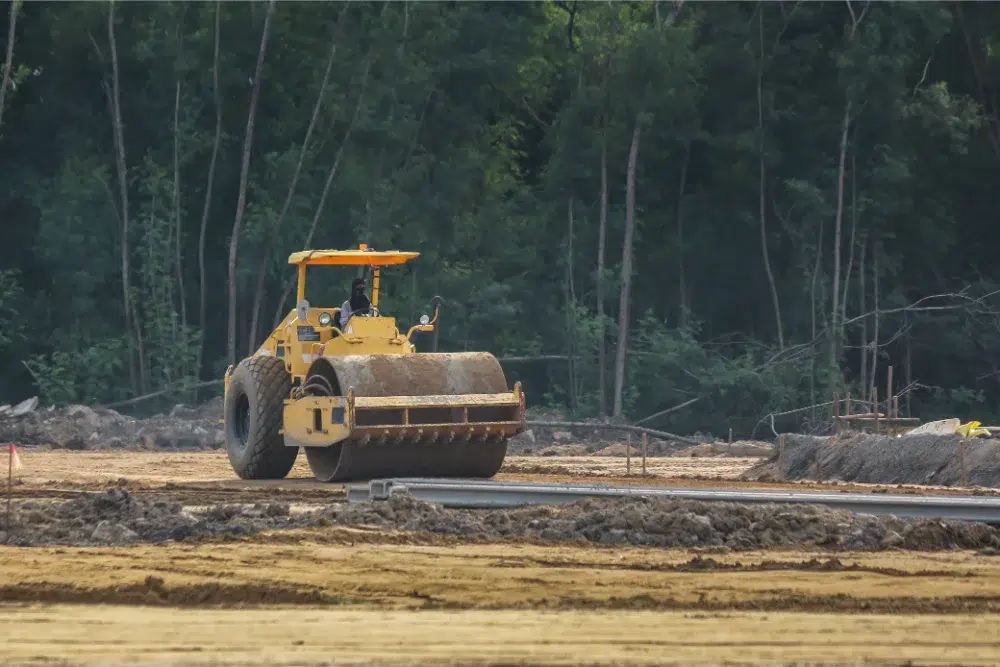
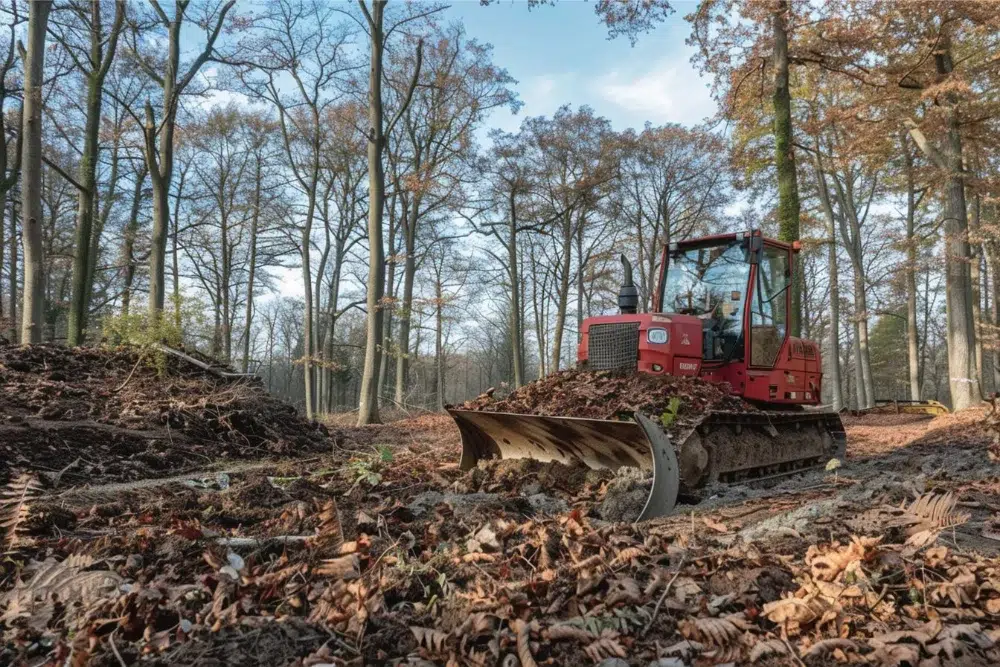
Large-scale or commercial projects depend on specialized machinery designed to handle serious terrain. These machines remove trees, grind debris, and level the surface efficiently, often completing in hours what manual work would take days.
| Equipment | Primary Use | Ideal For |
|---|---|---|
| Bulldozer | Pushes over trees and levels soil | Large open plots and commercial prep |
| Excavator | Digs up stumps, roots, and rocks | Uneven or wooded ground |
| Forestry Mulcher | Grinds brush into mulch | Eco-friendly clearing and erosion control |
| Skid Steer with Brush Cutter | Cuts small trees and brush | Residential lots and landscaping prep |
Heavy equipment brings consistency and scale, but it also requires professional handling to prevent damage to the soil or surrounding structures. Certified operators know how to maintain balance between efficiency and environmental care.
Manual and Selective Clearing Techniques
Smaller or residential projects often rely on a mix of manual tools and compact machines. When the goal is to preserve certain trees or protect landscaping, lighter and slower methods make more sense.
Common manual clearing methods include:
- Hand tools and chainsaws: Used to remove smaller vegetation or trees near structures.
- Grubbing and root removal: Essential to prevent regrowth before replanting or construction.
- DIY stump removal: Possible for small stumps, though it’s often time-consuming and physically demanding.
Eco-Friendly and Controlled Approaches
Modern land clearing has evolved beyond brute force. Many projects now incorporate environmentally responsible practices that reduce waste and protect the ecosystem.
Popular sustainable approaches:
- Mulching on-site debris: Converts waste into natural ground cover.
- Erosion control mats and barriers: Protect topsoil and prevent runoff.
- Low-impact machinery: Minimizes soil compaction and habitat disruption.
These techniques ensure your land clearing project supports both your goals and the health of the surrounding environment, something more builders and homeowners are prioritizing today.
When to Hire a Professional
Land clearing can start out simple, until you hit stubborn roots, rocky soil, or dense vegetation that your tools can’t handle. That’s when bringing in a professional isn’t just convenient, it’s smart. A certified arborist or land-clearing crew has the experience, equipment, and safety training to handle what DIY methods can’t.
Professionals know how to remove trees, stumps, and debris without disturbing the soil or damaging nearby structures. They also understand local regulations and environmental requirements that many homeowners overlook.
How Working With Experts Like SpinBlade Helps
For safe, efficient results on any project, learn more about SpinBlade’s professional land clearing services and see how our certified team can prepare your property the right way.
Ready to clear the way for your next project?
SpinBlade’s certified team handles everything from debris removal to site prep—safely, efficiently, and built to last.
How much does land clearing cost?
Land clearing prices in Canada vary a lot depending on the province, the type of vegetation, access, and whether you’re clearing a small house lot or multiple acres. As a rough guide, many Canadian contractors quote around 1,500–5,000 CAD per acre for typical wooded land, with dense forest or complex terrain going up to ~6,000–7,000 CAD per acre or more.
For smaller residential lots (for example ½–1 acre around a future house), it’s common to get package prices instead of a strict per-acre rate, often running into the several thousand to tens of thousands of dollars depending on tree density and site complexity.
Below is a ballpark table using public info from Canadian contractors and guides. These are examples only – actual quotes can fall below or above these numbers.
| Province / Region | Typical Pricing Format | Example Range (CAD) | Notes |
|---|---|---|---|
| Canada – general ballpark | Per acre | $1,500 – $5,000+ / acre | Typical contractor range for many wooded lots; heavily forested or rocky sites can push costs higher. |
| British Columbia | Per acre | $1,500 – $3,000 / acre (lightly wooded); up to ~$6,700 / acre (dense forest) | Excavation/land-prep guide for BC notes land clearing in this range depending on how forested the property is. |
| Alberta & Saskatchewan (prairies) | Per acre or per hour | ~$1,500 – $3,000 / acre for forestry mulching | Prairie contractors quoting forestry mulching at $150–400/hour or $1,500–3,000 per acre, depending on brush density, slope, and access. |
| Ontario | Per acre | $1,500 – $5,000 / acre | Ontario contractor Brock Excavation gives a typical land-clearing range of $1,500–5,000 per acre, depending on land size, density, and stump work. |
| Quebec | Per ft² / per hectare | Building land: about $0.50 – $1.00/ft²; shrub land: up to $5,000 per hectare (~$2,000/acre) | Quebec pricing guide lists building-lot clearing by square foot and shrubland clearing per hectare; heavily treed urban lots can be much more expensive per acre. |
| Nova Scotia (example) | Per project (house lot) | ~$8,000 – $15,000 per lot | Custom-home cost breakdown shows land clearing for a new house site in this range, depending on lot size and tree density (not strictly per-acre, but a good order-of-magnitude example). |
| Other provinces & territories | Per acre / per project | Highly variable | Fewer published numbers; many projects still fall somewhere within the broad Canadian ranges above. Getting 2–3 local quotes is essential. |
What factors affect the price?
Land size
Larger areas usually cost more in total but less per acre because the contractor can spread mobilization and equipment costs over more land. Very small projects (like a fraction of an acre behind a house) can feel expensive per square foot because setup and permits cost almost the same as for bigger jobs.
Tree size & density
Clearing light brush and small saplings is much cheaper than removing mature, dense forest with big trunks and deep roots. More and bigger trees mean more cutting time, more stump work, and more material to process or haul away.
Equipment required
If the job can be done with light machinery or a mulcher, it will be cheaper than a site that needs excavators, bulldozers, winches, or rock breakers. Difficult terrain (steep slopes, rocks, wetlands) often forces contractors to use heavier, more expensive equipment and work more slowly.
Stump removal
Some “land clearing” quotes only cover cutting and pushing over trees, not grinding or pulling stumps. Stump grinding or extraction adds separate costs because it’s labour-intensive and sometimes charged per stump or as an extra line item per acre.
Hauling debris
Leaving mulched material on site is cheaper than loading, hauling, and dumping logs, branches, and stumps. If local rules or your future plans require a clean, debris-free site, expect extra costs for trucking, landfill or green-waste fees, and extra machine time.
FAQ: Land Clearing
Even with the basics covered, land clearing can raise a few practical questions, especially when you’re comparing costs, timelines, or specific uses. Here are quick answers to help guide your next step.
In Short,
Whether you’re shaping a backyard, opening space for a new build, or preparing farmland, land clearing is the first step toward turning raw ground into usable property. Done right, it creates a stable, safe foundation for whatever comes next, without harming the surrounding environment.
If you’re ready to get started, SpinBlade’s land clearing experts can help you plan and execute your project safely, efficiently, and in compliance with local standards, leaving your land clean, balanced, and ready to build on.


