Tree topping is often presented as a quick way to make an overgrown tree smaller, safer, or easier to manage. But tree topping involves removing large sections of the canopy, which can leave the tree stressed, vulnerable to decay, and prone to weak regrowth. In this article, we’ll explain what topping a tree actually involves, why it can cause long-term damage, and what homeowners should consider instead.
What Is Tree Topping?
Tree topping is a type of severe pruning that removes large branches or major portions of a tree’s canopy, usually to reduce its overall height or spread. Instead of selectively removing individual branches, topping cuts through larger limbs and leaves behind stubs that can take years to recover from, or may never properly recover.
What Does Topping a Tree Involve?
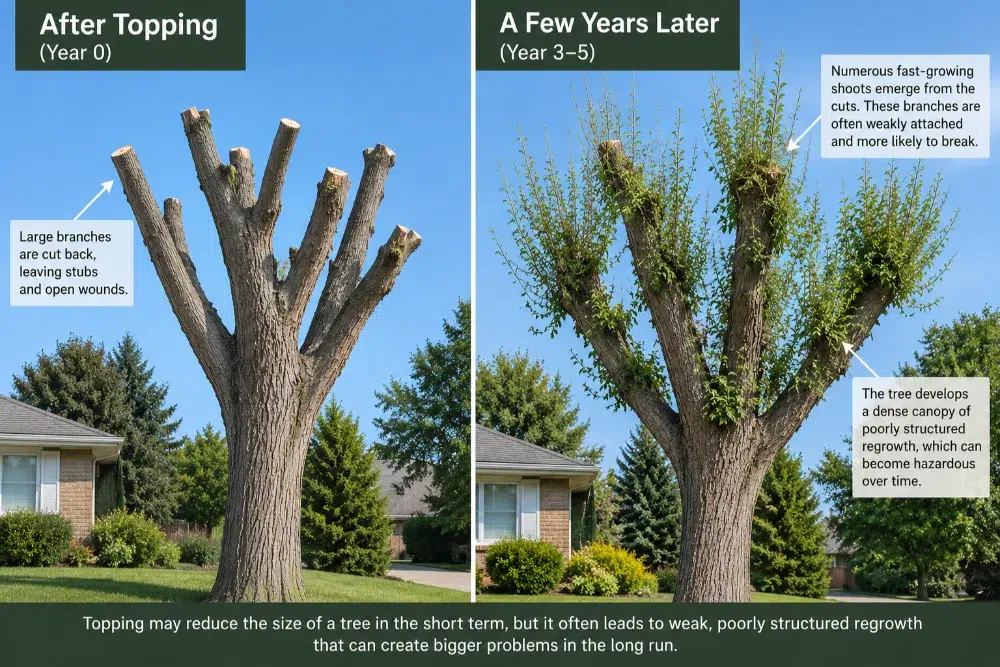
When topping a tree, workers typically cut the main leader or large branches back to arbitrary points, leaving the tree much shorter and with little of its original canopy.
This can result in:
The immediate result can make topping look effective because the tree is noticeably smaller. The problem is what happens afterward.
Why Do Homeowners Choose Topping?
Homeowners don’t usually ask for topping because they want to damage their trees. More often, they’re trying to solve a legitimate concern and have been given the wrong solution.
Common reasons include:
The problem is that simply removing the top of a tree doesn’t necessarily address any of these underlying concerns. In many cases, it can create new structural and health problems that make the tree more difficult to manage later.
Is Your Tree Showing Signs of Topping Damage?
Large wounds, excessive regrowth, and an altered canopy can be signs that a tree has been heavily topped. SpinBlade can assess its condition and help determine the best way forward.
How Tree Topping Causes Damage
The problems with topping don’t necessarily appear immediately. A tree may look smaller and healthier right after the work, but the damage often becomes more apparent as it responds to the drastic loss of its canopy.
1. It Puts the Tree Under Stress
Trees rely on their leaves to produce the energy they need to grow and maintain themselves. Removing a large portion of the canopy suddenly reduces that capacity and forces the tree to respond.
One common response is rapid production of new shoots below the cuts. While this can make the tree look like it’s recovering, this growth is often poorly structured and requires significant energy from an already stressed tree.
2. It Creates Large Wounds
Topping cuts are often much larger than those made during routine pruning. These wounds expose a substantial area of wood to the environment and can take much longer for the tree to compartmentalize.
Large wounds can also create opportunities for decay organisms to enter the wood. Once decay develops inside major limbs or the trunk, the resulting structural problems may not be visible from the ground.
3. Regrowth Can Be Weak
The shoots that develop after topping are one of the biggest reasons the practice can create long-term problems. Rather than growing from a naturally developed branch structure, these shoots often emerge rapidly from areas around the topping cuts.
As they grow, they can develop weak attachments and become heavy themselves. What started as an attempt to reduce the tree can therefore create a new set of branches that require ongoing management.
4. It Can Shorten the Tree’s Lifespan
The combination of stress, large wounds, decay, and weak regrowth can gradually compromise the tree’s health and structure. A topped tree may survive, but repeated topping can continue adding stress and damage each time the canopy is cut back.
Tree Topping vs. Proper Pruning
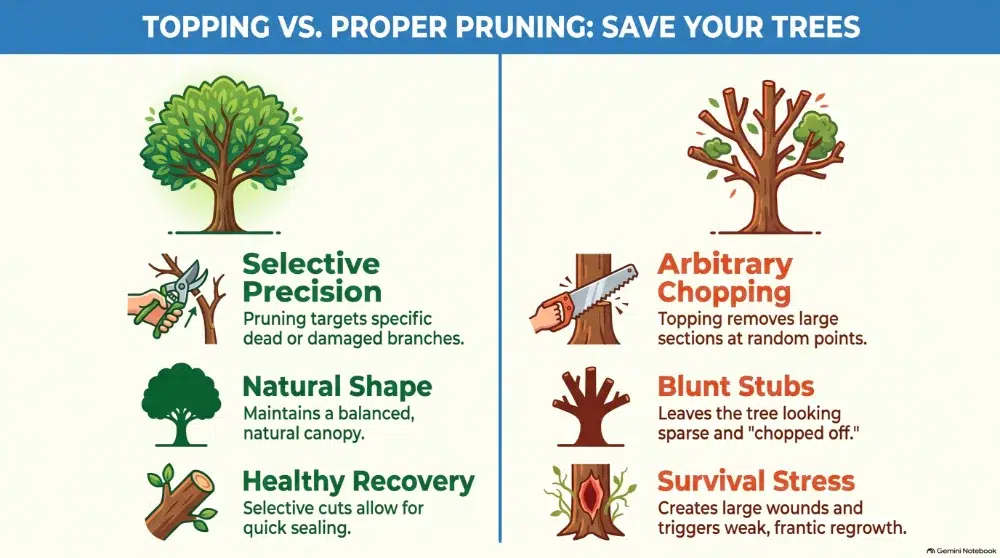
The difference between topping and proper pruning comes down to how much is removed and why. Proper pruning focuses on specific branches and works with the tree’s natural structure rather than drastically altering its canopy.
How Proper Pruning Works
proper pruning is usually more selective. A tree professional may remove a dead branch, reduce a particular branch that is interfering with a structure, or selectively thin or reduce portions of the canopy where appropriate.
How much should actually be removed depends on the tree and the reason for pruning. The goal isn’t simply to make the tree smaller. It’s to address a specific problem while retaining as much healthy canopy and natural structure as possible.
Why Topping Is Different
Topping takes a much more drastic approach. Rather than deciding which individual branches need attention, large sections of the canopy are removed at once.
That sudden loss of foliage is what sets off many of the problems associated with topping. The tree has lost a substantial part of the living tissue it relies on, and its response can lead to rapid, poorly structured regrowth.
When to Call a Tree Care Professional
Some tree problems are difficult to assess from the ground, especially when large branches, significant height, or previous topping damage are involved. Professional tree pruning can look beyond the tree’s current appearance to assess its structure, health, and the safest way to address the reason you were considering topping in the first place.
A Professional Can Help When:
When the work goes beyond a few small, accessible branches, having a qualified professional assess the tree can help you avoid unnecessary damage and costly problems later.
Looking for a Safer Way to Reduce Your Tree’s Size?
SpinBlade can identify the branches causing the problem and recommend appropriate pruning or other solutions.
Frequently Asked Questions
Still scratching your head? Here are quick answers to some of the most common questions people have.
In Short,
Tree topping may make a tree smaller, but smaller doesn’t mean healthier or safer. Removing large sections of the canopy can put the tree under significant stress, create large wounds, encourage weak regrowth, and contribute to long-term decline.
If a tree is too large, interfering with your property, or developing hazardous branches, the better approach is to identify the specific problem and address it with appropriate pruning—or removal when necessary. A good tree-care professional should be focused not just on changing the tree’s appearance, but on protecting its health and structure for the years ahead.