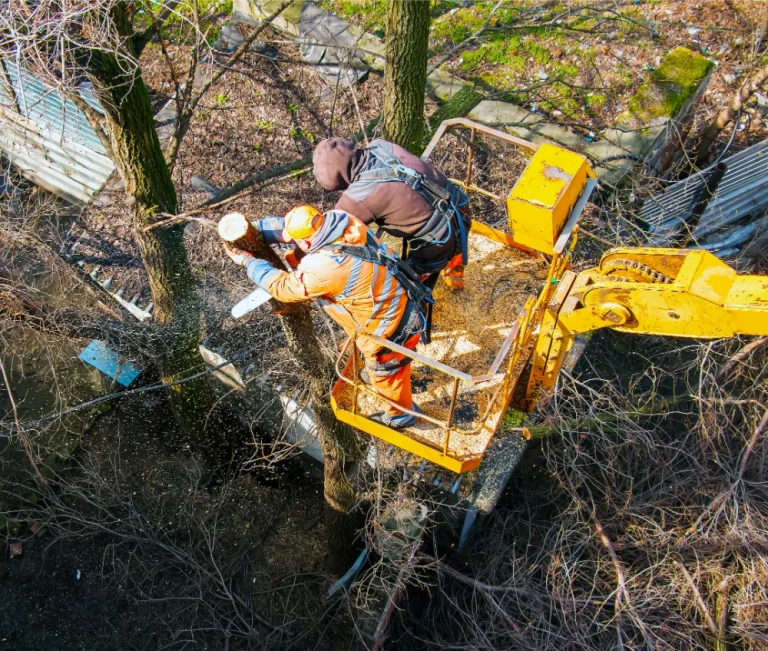
Choosing the wrong tree removal technique is how properties get damaged and people get hurt. The right method depends on the tree’s size, its lean, what’s around it, and who’s doing the work, and understanding safe tree removal techniques is what separates a professional job from a dangerous one. This guide covers every tree removal technique used by certified arborists, how to remove a tree safely regardless of its size or location, and when each method applies.
What Is Tree Removal?
Tree removal is the process of safely cutting down and eliminating a tree from a property, dead, diseased, hazardous, or simply in the wrong spot. It involves more than just cutting: a professional hazard assessment checks the tree lean, structural integrity, dead branches and widow makers, and proximity to structures before any technique is chosen.
For a deeper look at what the process involves from start to finish, see our guide to what is tree removal.
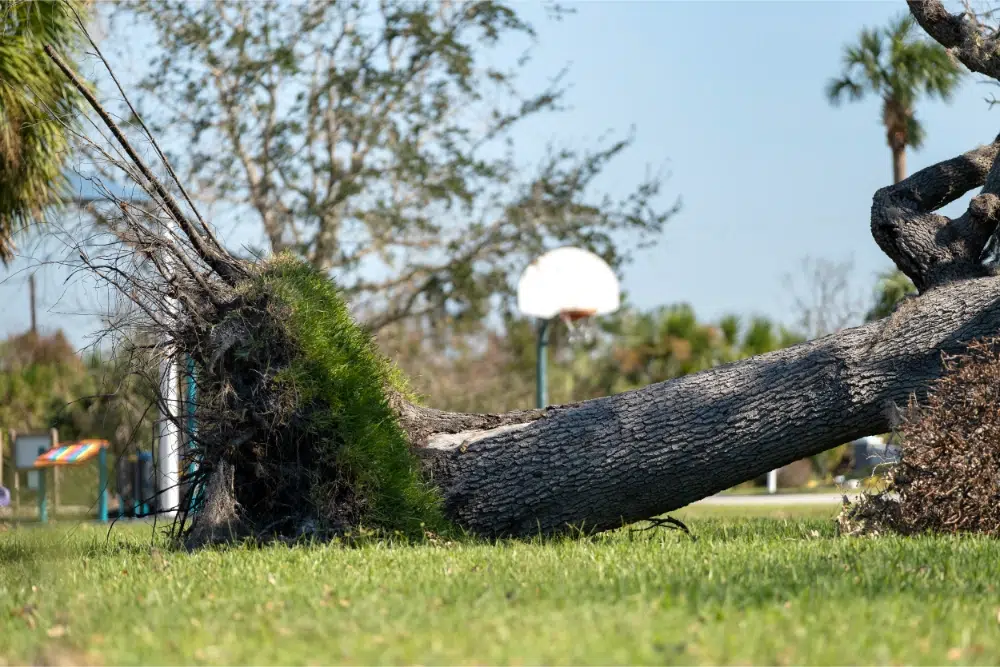
Tree Removal Techniques
The technique an arborist chooses determines how safely and cleanly a tree comes down. Tree removal methods are selected based on the tree’s size and structural condition, the available space, what’s surrounding it, and the access available for equipment.
Here is every tree removal technique used by professional arborists, from the most common to the most specialized, each one explained with what it involves, when it’s the right call, and when it isn’t.
Straight Felling
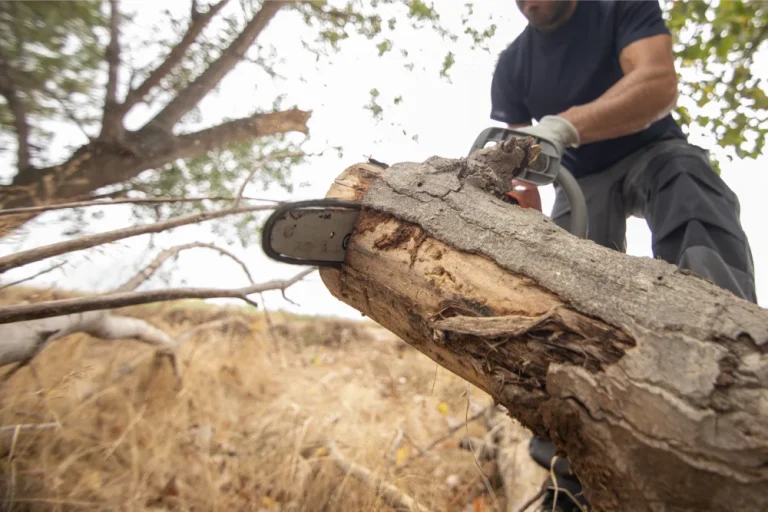
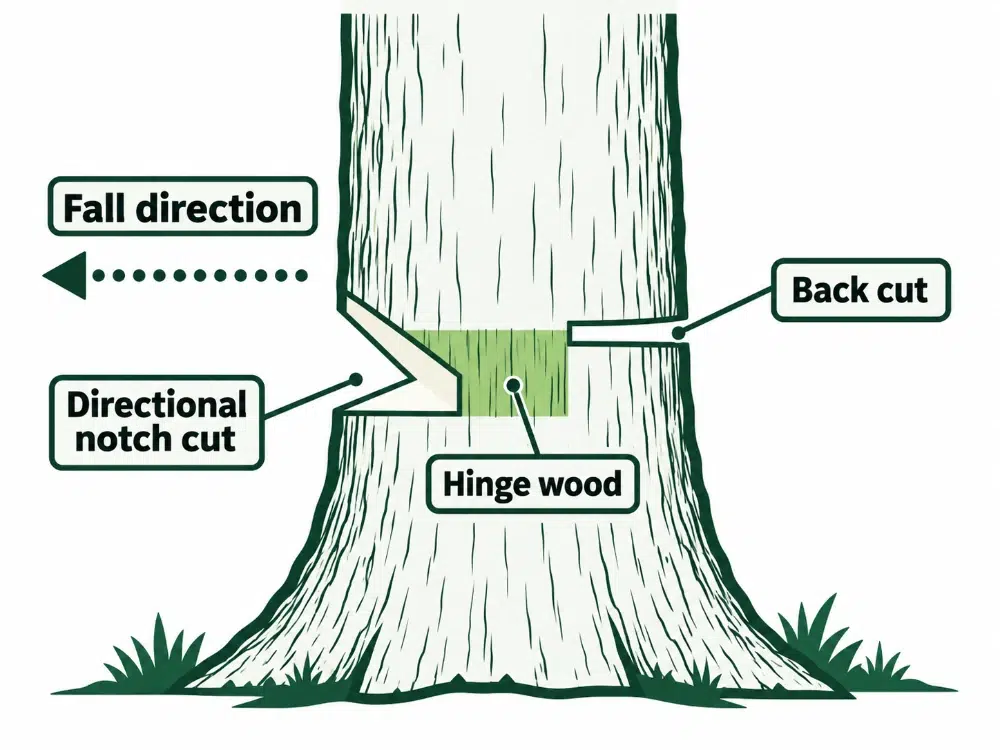
Straight felling is the most traditional of all tree felling techniques, the tree is cut at the base using a directional notch cut and a back cut, leaving a hinge of wood that steers the fall in a planned direction. The notch cut, back cut, and hinge wood work together to control exactly where the tree lands, making this one of the most efficient tree removal techniques when conditions allow.
When to Use It
- Large open areas with a clear fall zone at least 1.5 times the tree’s height
- Trees with a natural lean in a safe direction
- When speed and cost efficiency matter and access is not an obstacle
- Rural or open-property removals where surrounding space is available
When Not to Use It
- Trees near structures, fences, power lines, or other trees
- When there is no clear drop zone in the intended fall direction
- Trees with significant structural decay or unpredictable lean
- Urban and suburban residential properties where clear space is rarely available
Sectional Dismantling
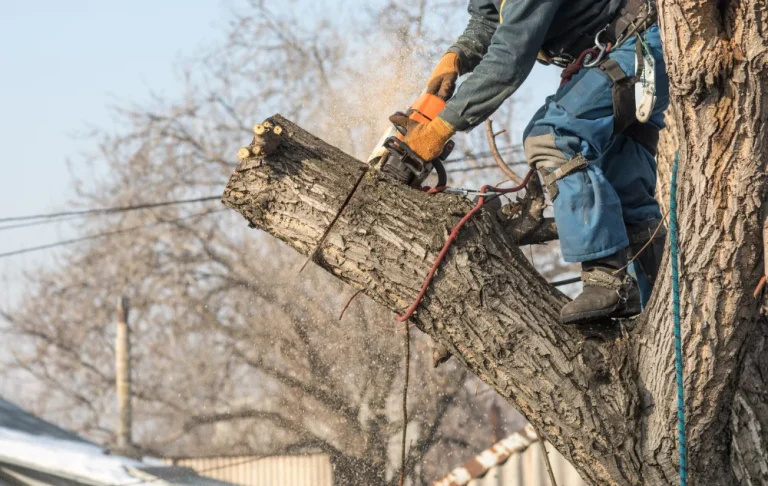
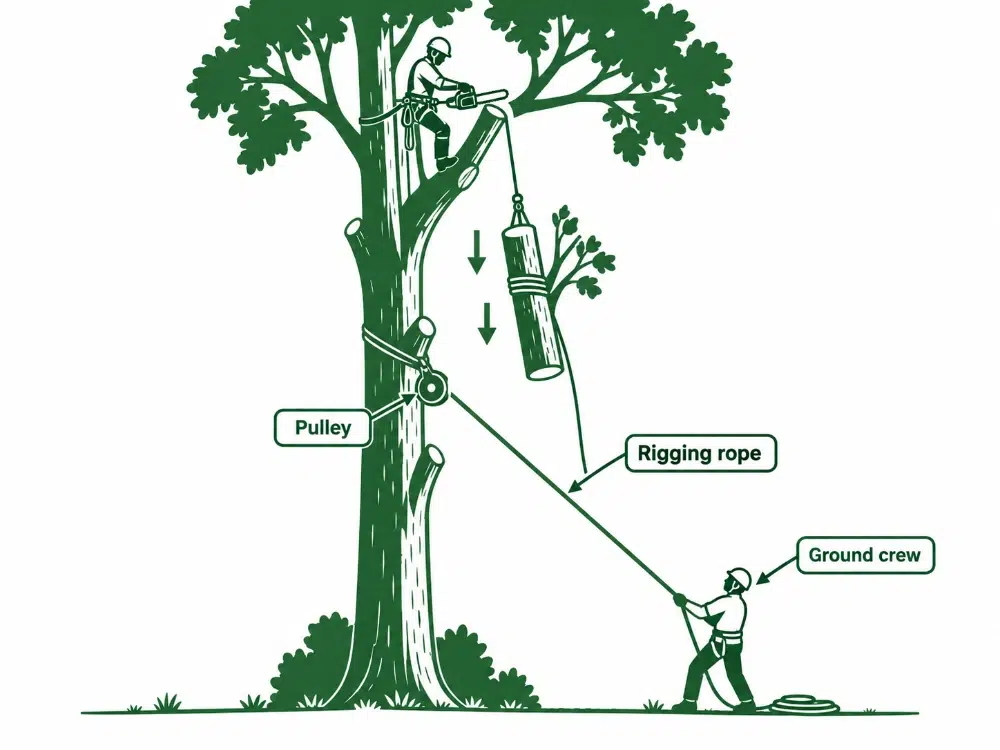
Sectional dismantling is the workhorse of residential tree removal and one of the most important tree removal techniques to understand, a certified arborist climbs the tree and removes it from the top down in sections, using rigging ropes and lowering devices to bring each piece to the ground in a controlled manner. This is how dismantling and removing trees is done in tight spaces where straight felling would be impossible, and it requires both climbing skill and rope rigging expertise to execute safely.
When to Use It
- Trees near buildings, fences, parked vehicles, or other structures
- When learning how to remove a tree in tight spaces — this is the standard professional answer
- Residential properties where surrounding landscaping or lawn needs to be protected
- Any situation where a controlled, piece-by-piece approach is required
When Not to Use It
- Trees in such advanced structural decay that they cannot safely support a climber
- When access for a climber is not possible due to the tree’s condition
- Very large trees where the rigging loads would exceed what a climbing system can safely handle, crane-assisted removal is the better choice here
Speedline Removal
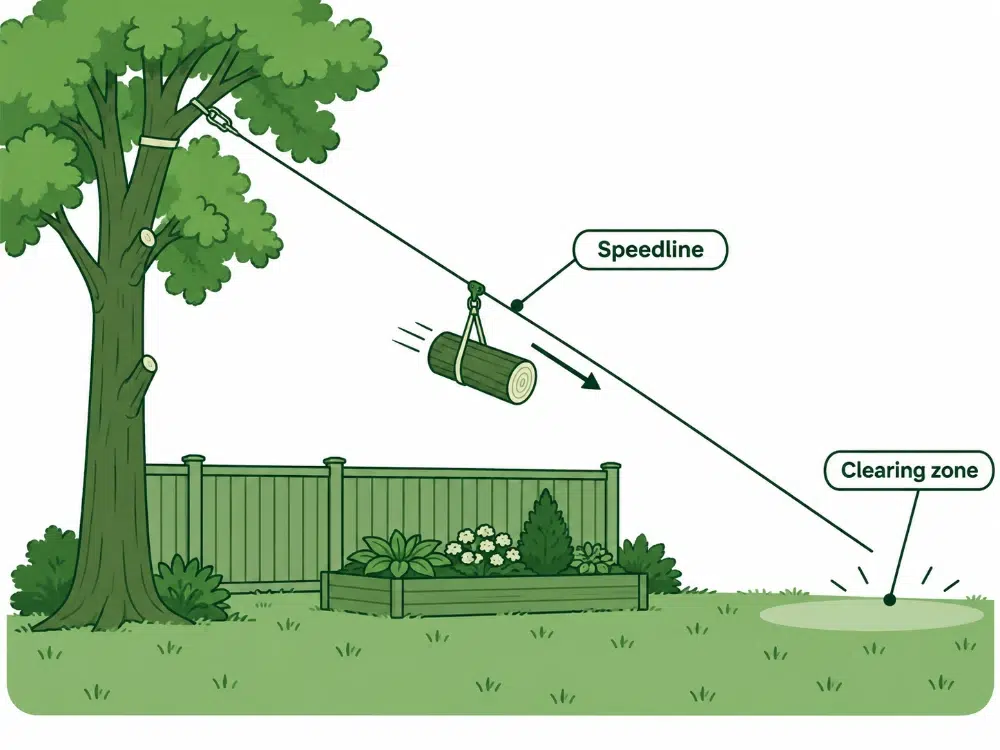
Speedline removal is a rigging variation used during aerial dismantlement, instead of lowering each section straight down, a climber sends cut sections along a tensioned line (similar to a zip line) that guides them over obstacles like fences, gardens, or parked cars directly to a clearing or a chipper. This is one of the tree felling techniques that dramatically speeds up the cleanup process and protects landscaping underneath the tree that would otherwise be in the drop zone.
When to Use It
- When obstacles directly below the tree, a fence, garden, or structure, make straight lowering impractical
- Properties with confined access where debris needs to be transported efficiently
- When the ground crew needs to clear sections faster than standard lowering allows
When Not to Use It
- Open areas where sections can be safely lowered directly without bypassing obstacles
- When the setup time for a speedline system outweighs the benefit for a small or simple removal
Crane-Assisted Removal
Crane-assisted removal is used for large tree removal methods where the size, weight, or hazardous condition of the tree makes climbing unsafe or impractical, a ground team cuts sections while a crane lifts and removes each one from the site with precision. This is one of the safest large tree removal methods for trees near structures, because the crane controls every section’s movement and eliminates the need for a climber on a structurally compromised tree.
When to Use It
- Very large trees where rigging loads would exceed safe climbing limits
- Structurally compromised trees that cannot safely support a climber
- Trees in confined urban spaces where sections cannot be lowered conventionally
- High-value properties where minimizing ground disturbance is critical
- The go-to technique when understanding how to remove a large tree safely near a building
When Not to Use It
- Properties where a crane cannot physically access the site
- Smaller trees where sectional dismantling is both safer and more cost-effective
- When budget constraints make crane mobilization disproportionate to the job size
Aerial Lift / Bucket Truck Removal
A bucket truck (also called a cherry picker or aerial lift) positions a certified arborist at height without requiring them to climb, the arborist works from the bucket to remove branches and sections, which are then lowered by rope or allowed to fall into a controlled drop zone. This method is common for medium-sized trees and residential tree removal situations where the tree can be safely accessed from a road or driveway without requiring a crane.
When to Use It
- Trees that cannot be climbed safely but don’t require a crane
- Street trees and trees along accessible property lines
- When removing upper sections quickly is the priority
- Situations where a climber would be exposed to additional risk
When Not to Use It
- Properties where ground access for a truck is not available
- Trees in backyards or enclosed spaces a bucket truck cannot reach
- Very large or heavily canopied trees where crane-assisted removal is more appropriate
Concerned About How a Tree Will Come Down?
The cutting technique determines where weight moves and how sections are controlled. Get professional guidance before work begins.
Chemical Removal and Girdling
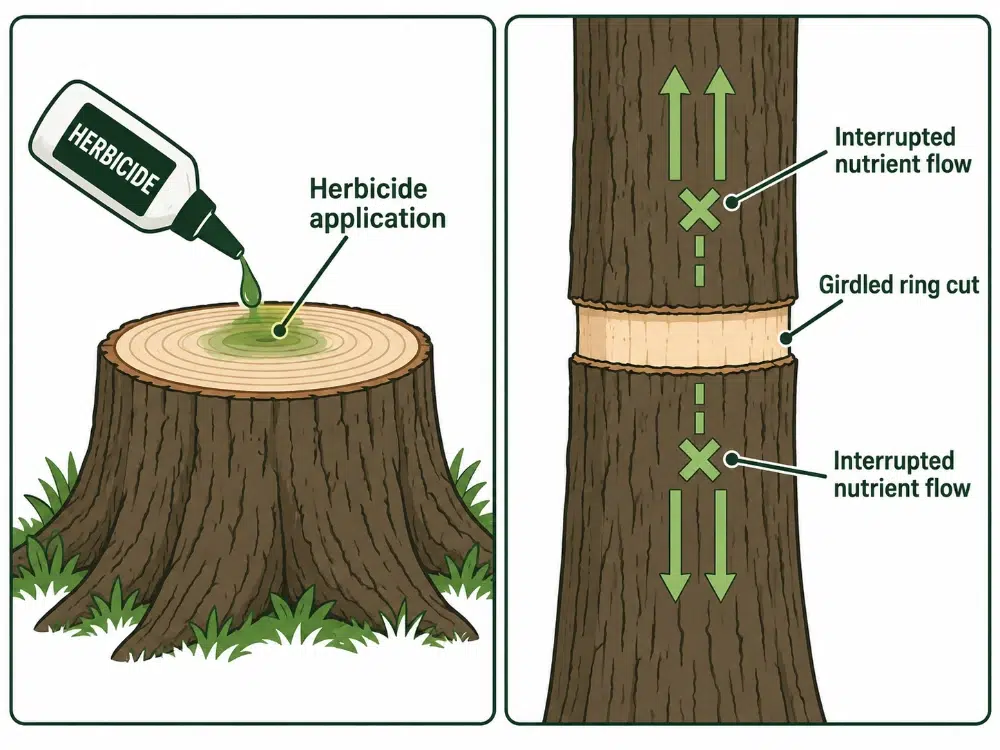
Chemical removal involves applying herbicide directly to a freshly cut stump or injecting it into the tree to kill it from within, while girdling removes a ring of bark around the trunk to cut off nutrient flow and kill the tree over a growing season, both methods are used when immediate physical removal is not possible or safe. These are not quick methods: they are used in forestry, land management, and situations where a dead tree is later removed once it has dried out and become safer to work with.
When to Use It
- Forestry and large-scale land clearing where individual physical removal is not practical
- Trees in locations that are too hazardous to approach for immediate removal
- Invasive species management where mass elimination is the goal
- When a dead tree is easier and safer to remove than a living one
When Not to Use It
- Residential properties where a dead standing tree creates an extended hazard period
- When the tree needs to come down quickly for safety reasons
- Near water sources or environmentally sensitive areas where herbicide use is restricted
Controlled Explosive Removal
Controlled explosive removal uses precisely placed charges within a tree’s trunk to control the direction and speed of its fall, it is one of the rarest tree removal techniques in professional arboriculture and is only ever performed by specialists with explosive ordnance training. This method is used in very specific scenarios: emergency situations, remote forestry operations, or cases where a hazardous tree cannot be safely approached by any conventional means.
When to Use It
- Large hazardous trees in remote locations where conventional equipment cannot access
- Emergency situations requiring immediate removal where other methods pose unacceptable risk
- Specialist forestry and military or utility corridor operations only
When Not to Use It
- Any residential, commercial, or urban property, this is not a method for standard tree removal
- Any situation where a licensed explosive specialist is not running the operation
- Any case where conventional tree removal techniques are viable
Techniques and Tools Used in Professional Tree Removal
Every tree removal technique requires the right tools, and a certified arborist’s equipment list goes well beyond a chainsaw. Here is what professional crews use and what each tool is for.
| Tool | Purpose |
|---|---|
| Chainsaw | Primary cutting tool for felling and sectional dismantling, size and bar length chosen based on tree diameter |
| Handsaw | Precision cuts in tight spaces where a chainsaw is impractical |
| Felling wedges and felling bars | Inserted into the back cut to control fall direction and prevent chainsaw pinching, also used in controlled felling to adjust fall direction mid-cut |
| Rigging ropes | Used in sectional dismantling to lower sections safely, rated for high loads |
| Lowering devices and pulleys | Control the speed and direction of sections during rigging |
| Speedline system | Tensioned line that transports sections over obstacles to a clearing zone |
| Crane | Lifts and removes large sections in crane-assisted removal |
| Bucket truck / aerial lift | Provides safe access to the canopy without climbing |
| Wood chipper | Processes branches and debris on-site into wood chips |
| Stump grinder | Grinds the remaining stump below grade after the tree is down, stump grinding is the standard post-removal step before replanting or landscaping the area |
| Safety helmet, chainsaw chaps, harness, PPE | Personal Protective Equipment required for every job under ANSI Z133 standards, safety helmet, chainsaw chaps, harness, eye and hearing protection are all mandatory |
How Much Does Tree Removal Cost?
The cost of tree removal depends on the technique required, the tree’s size and condition, and the access available on the property. Crane-assisted removal costs more than straight felling; a large tree in a tight space costs more than a small tree in an open yard. For a detailed breakdown of pricing by tree size and situation, see our guide to the cost of tree removal in Canada.
Ottawa’s Certified Tree Removal Experts
SpinBlade has been providing professional tree removal services in Ottawa since 2017, founded by Cole Horton, a Certified Utility Arborist (CUA). Our licensed and insured crew handles every type of removal — straight felling, sectional dismantling, crane-assisted removal, and everything in between — with the same ISA-certified standard on every job. If you need a tree removed safely and properly, we’re the team for it.
Frequently Asked Questions
Conclusion
Understanding tree removal techniques is the first step to making sure the right tree removal technique gets used on your property. The difference between straight felling and sectional dismantling, or between a bucket truck and a crane, comes down to what the tree and the site actually call for, and getting that call right is what certified arborists are trained to do.
SpinBlade’s licensed and insured crew holds CUA and ISA certification; Cole Horton, founder and Certified Utility Arborist (CUA), built the company on the principle that the right tree removal technique is determined by the tree and the site, not convenience. Every tree removal technique decision starts with a proper assessment before anyone picks up a chainsaw.
Concerned About How a Tree Will Come Down?
The cutting technique determines where weight moves and how sections are controlled. Get professional guidance before work begins.