Many trees that appear to be declining aren’t suffering from disease or insects, they’re slowly being strangled underground by girdling roots. Because the damage develops gradually over many years, this hidden problem often goes unnoticed until the tree begins to show obvious signs of stress. Understanding how girdling roots form, how to recognize them early, and what can be done before it’s too late can help protect the health and longevity of your trees.
What Are Girdling Roots?
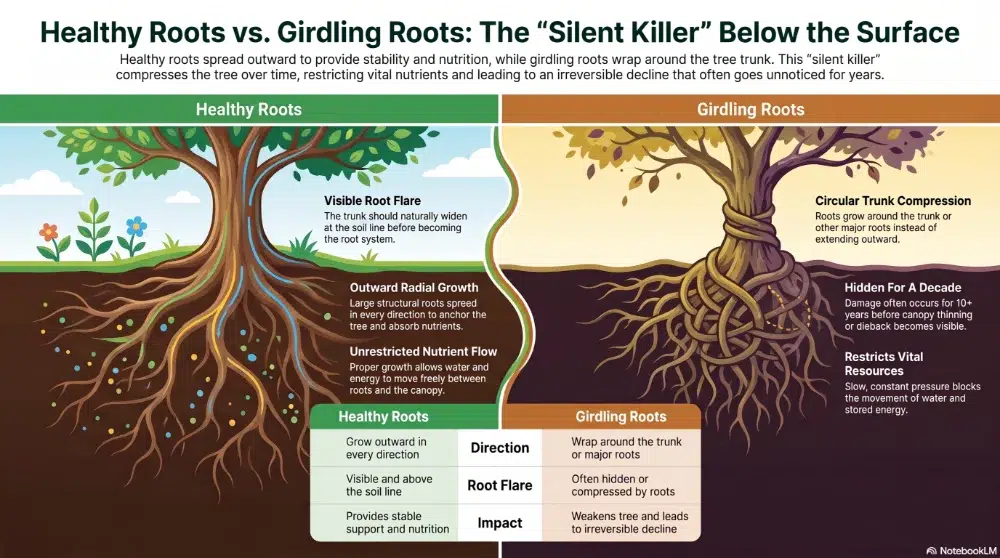
Unlike many tree problems that may be spotted above ground, girdling roots develop below the soil surface and may remain hidden for years. They form when one or more roots begin growing around the trunk or other major roots instead of extending outward.
As the tree grows, these roots gradually compress the trunk, restricting the movement of water, nutrients, and stored energy between the roots and the canopy. Over time, this slow pressure weakens the tree and can eventually lead to irreversible decline.
How Healthy Roots Are Supposed to Grow
A healthy tree develops large structural roots that spread outward from the trunk. These roots anchor the tree while absorbing the water and nutrients needed to support healthy growth.
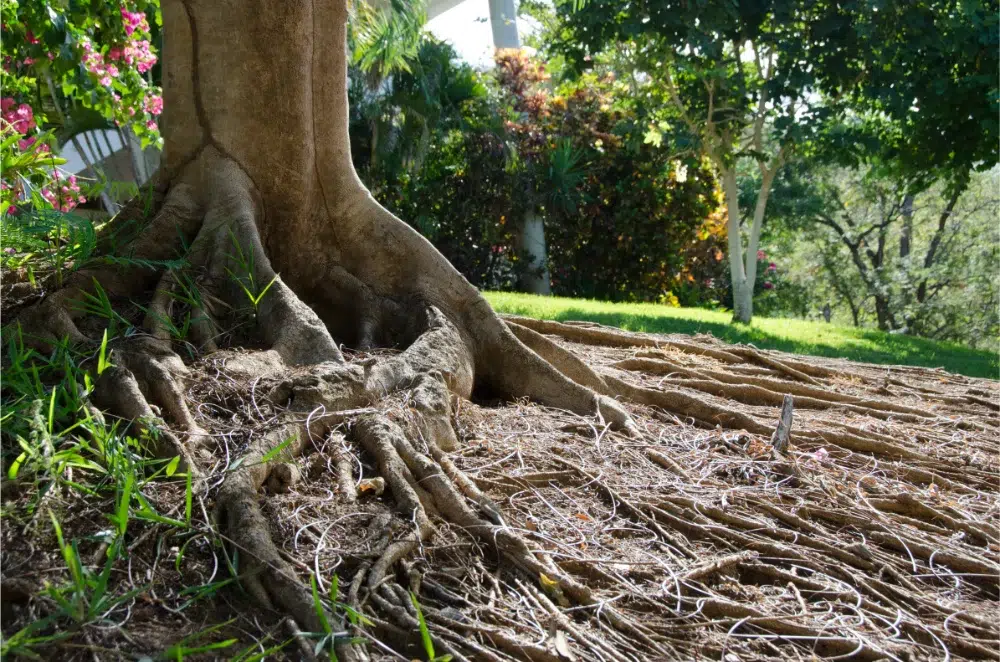
One of the easiest signs of proper root development is a visible root flare, the point where the trunk naturally widens before becoming the root system. This flare should remain above the soil line.
Healthy roots should:
What Happens When Roots Begin to Girdle
A girdling root develops when a root circles back toward the trunk instead of growing away from it. As both the trunk and the root increase in size, the pressure steadily becomes stronger.
This compression gradually interferes with the tree’s vascular system by limiting:
Because the process is slow, trees often appear healthy for many years before noticeable decline begins.
Why Girdling Roots Develop
Most girdling roots on trees don’t form overnight. In many cases, the conditions that cause them begin while the tree is still in the nursery or during planting, long before any symptoms become visible.
1. Container-Grown Nursery Trees
Trees grown in containers are one of the most common sources of stem girdling roots. As roots reach the edge of the pot, they naturally begin circling instead of extending outward.
If these circling roots aren’t corrected before planting, they often continue growing in the same pattern after the tree is installed.
2. Planting Too Deep
Planting a tree below its natural soil level is another leading cause of root girdling.
When the root flare is buried, new roots may develop around the trunk instead of from the proper root system. As these roots enlarge over time, they can begin wrapping around the trunk and restricting its growth.
Quick Tip: If you can’t see the root flare at the base of the trunk, the tree may have been planted too deeply.
3. Compacted Soil and Limited Growing Space
Roots naturally follow the path of least resistance. In compacted soil or small planting areas, they may be forced into abnormal growth patterns rather than spreading outward.
Common causes include:
Maintaining good root and soil health gives roots the space they need to develop properly and reduces long-term stress that can contribute to girdling.
Healthy Trees Start Below the Surface
A healthy canopy depends on healthy roots. If you notice unusual growth, thinning leaves, or other signs of decline, SpinBlade can identify hidden root issues and help you take action before they threaten your tree’s long-term health.
How to Identify Girdling Roots
The earlier girdling roots symptoms are identified, the better the chance of protecting the tree. While the roots themselves are often hidden below the soil surface, the trunk and canopy usually provide clues that something is restricting healthy growth.
1. Check the Base of the Tree
The area where the trunk meets the soil is often the best place to look for signs of trouble. Although a professional inspection may require carefully exposing the root flare, several warning signs can sometimes be spotted without digging.
Keep in mind: Not every girdling root is visible from the surface. Some develop entirely below ground, making professional assessment the most reliable way to confirm the problem.
Watch for Changes in the Canopy
As the root system becomes less effective, the canopy often begins showing symptoms of stress. These changes usually develop gradually and can easily be mistaken for drought, insects, or disease.
Common signs include:
These symptoms often become more noticeable during hot, dry weather, when the tree struggles to move enough water to support its canopy.
| Early Warning Signs | Advanced Symptoms |
|---|---|
| Small leaves | Significant canopy thinning |
| Reduced annual growth | Large dead branches |
| Sparse foliage | Extensive crown dieback |
| Mild stress during drought | Increased risk of structural failure |
Why Girdling Roots Are Often Misdiagnosed
Because the symptoms develop slowly, girdling roots are frequently mistaken for other tree health issues. Homeowners may assume the tree simply needs more water, fertilizer, or pest treatment when the real problem lies beneath the soil.
A thorough inspection considers both the canopy and the root zone before determining the cause of decline. Understanding why soil health matters is also important, since poor soil conditions can contribute to tree stress while producing symptoms that look similar to those caused by girdling roots.
Can Girdling Roots Be Fixed?
Whether a tree can recover depends largely on how early the problem is identified. In some cases, early intervention can relieve pressure on the trunk and slow further decline. However, when girdling has been occurring for many years, the damage may be too extensive to reverse.
Early Intervention Can Save a Tree
If caught before significant decline occurs, there are several approaches that may improve the tree’s long-term health. Determining how to fix girdling roots requires evaluating the size, location, and severity of the roots involved, as removing the wrong root can sometimes do more harm than good.
A certified arborist may recommend:
In many cases, younger trees respond better to treatment because the compression has not yet caused extensive damage.
Important: Never cut large roots without professional guidance. Structural roots help anchor the tree, and improper pruning can reduce stability or create new health problems.
When Girdling Roots Removal Is No Longer Enough
Unfortunately, not every tree can be saved. If a large portion of the trunk has already been compressed, restoring normal water and nutrient movement may no longer be possible, even after girdling roots removal.
A tree may be beyond recovery if it has:
In these situations, removal may be the safest option, particularly if the tree could pose a risk to nearby people or property.
Preventing Girdling Roots in New Trees
The best way to deal with girdling roots is to prevent them from developing in the first place. Proper planting techniques and routine inspections can significantly reduce the risk of future problems.
Some of the most effective preventative measures include:
If you have concerns about a tree on your property, a professional inspection can identify hidden root problems before they lead to irreversible damage.
Concerned About a Declining Tree?
Not every tree with girdling roots needs to be removed, but early intervention can make a significant difference. SpinBlade provides expert tree assessments to determine the cause of decline and recommend practical solutions tailored to your property.
Frequently Asked Questions
Still scratching your head? Here are quick answers to some of the most common questions people have.
In Short,
Because they develop slowly and out of sight, girdling roots are one of the most overlooked causes of tree decline. What begins as a small root growing in the wrong direction can eventually restrict the flow of water and nutrients, leaving an otherwise healthy tree stressed, unstable, and beyond recovery. Regular inspections around the base of your trees and early intervention offer the best chance of preventing long-term damage.