


Tree stumps can be an unsightly obstacle in your yard, detracting from the overall beauty of your landscaping. By employing effective stump grinding techniques, you can seamlessly remove these obstacles and pave the way for a more aesthetically pleasing outdoor space. Stump grinding offers a practical solution to remove a tree stump without causing damage to the surrounding area, making it a preferred choice for many homeowners.
What is Stump Grinding?
Stump grinding is the process of removing a tree stump by using a specialized grinder to break it down into small wood chips, leveling it with or below the ground surface. Unlike complete stump removal, this method leaves roots intact, making it quicker and less invasive. Stump grinding enhances yard aesthetics, improves safety, and prevents pest infestations while allowing flexibility for future landscaping. In the next sections, we’ll explore all the effective stump grinding techniques to help you choose the best option for your needs.
Check out our blog post to learn more about stump grinding.
Benefits of Stump Grinding
Stump grinding is a fast, cost-effective method to remove tree stumps, enhancing yard aesthetics while minimizing disruption to surrounding plants. It clears space for new landscaping projects, reduces tripping hazards, and allows roots to decay naturally, enriching the soil without chemicals. Additionally, stump grinding helps prevent pest infestations, making your property safer and more attractive.
Check out our detailed blog post to learn more about the benefits of stump grinding.

12 Stump Grinding Techniques
Understanding the right stump grinding technique for your situation is what separates a clean, professional result from one that causes unnecessary damage or leaves the job unfinished. Each method below is suited to specific stump conditions, sizes, and site constraints. ISA-certified arborists select the appropriate technique based on a thorough site assessment, and knowing what each one involves helps you have a more informed conversation with the professional you hire.
1. Shallow Grinding Technique
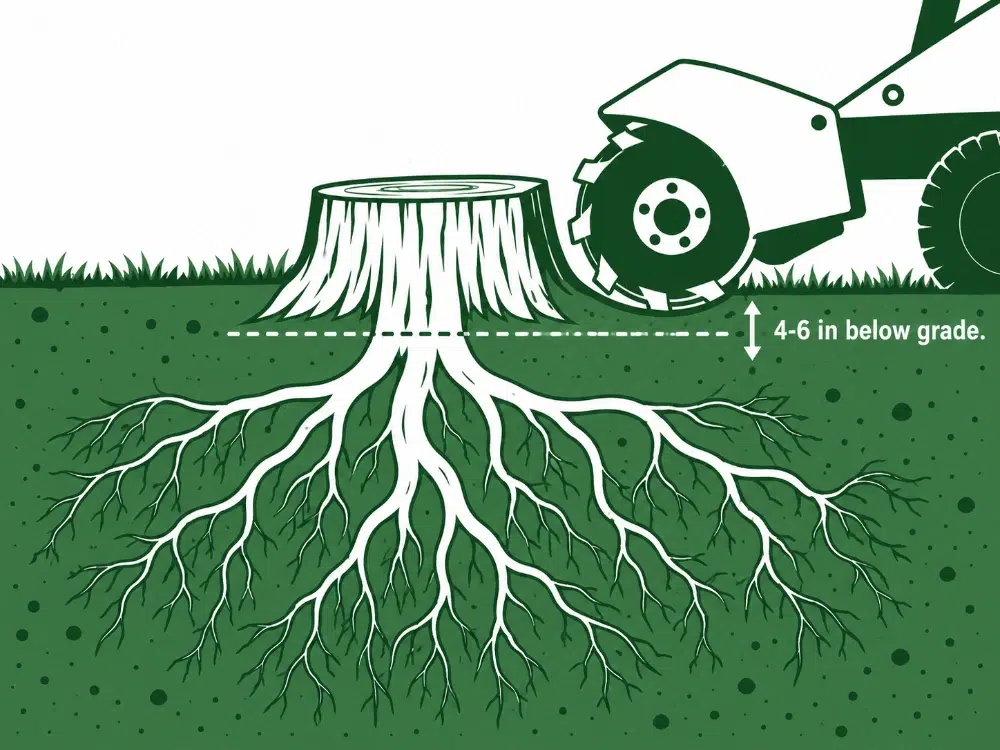
Shallow grinding is a surface-level stump grinding technique that targets the visible portion of the stump and grinds it down to approximately 4–6 inches below grade. It’s the least invasive of all stump grinding techniques, making it ideal for situations where minimal soil disturbance is a priority. The root system is left largely intact, which means the stump will decompose naturally over time, but regrowth is unlikely at this depth for most species.
How to do it:
- Set the cutting wheel to grind 4–6 inches below ground level
- Use a slow, controlled sweep motion across the stump surface
- Keep overlapping passes by 50% to ensure even removal and a smooth finish
- Remove rocks from the grinding area beforehand — rocks dull cutter teeth quickly and can become flying debris
When it’s relevant:
2. Deep Grinding Technique
Deep grinding is the most thorough of the stump grinding techniques, taking the cutting wheel 12–18 inches below grade to address not just the stump but the upper root structure as well. This depth ensures that the root system is disrupted enough to prevent regrowth and prepares the site for construction, new planting, or landscaping projects that require a fully cleared area. It requires more powerful equipment and a skilled operator to execute safely.
How to do it:
- Conduct a full site assessment and call utility locates before grinding — underground lines must be marked before any deep grinding begins
- Use a self-propelled or tow-behind stump grinder with sufficient horsepower for the stump size and wood density
- Work in progressive passes, gradually increasing depth rather than forcing the cutting wheel to full depth immediately
- Wear full PPE, safety glasses, hearing protection, face shield, work gloves, and sturdy boots
When it’s relevant:
3. Side-to-Side Grinding Technique
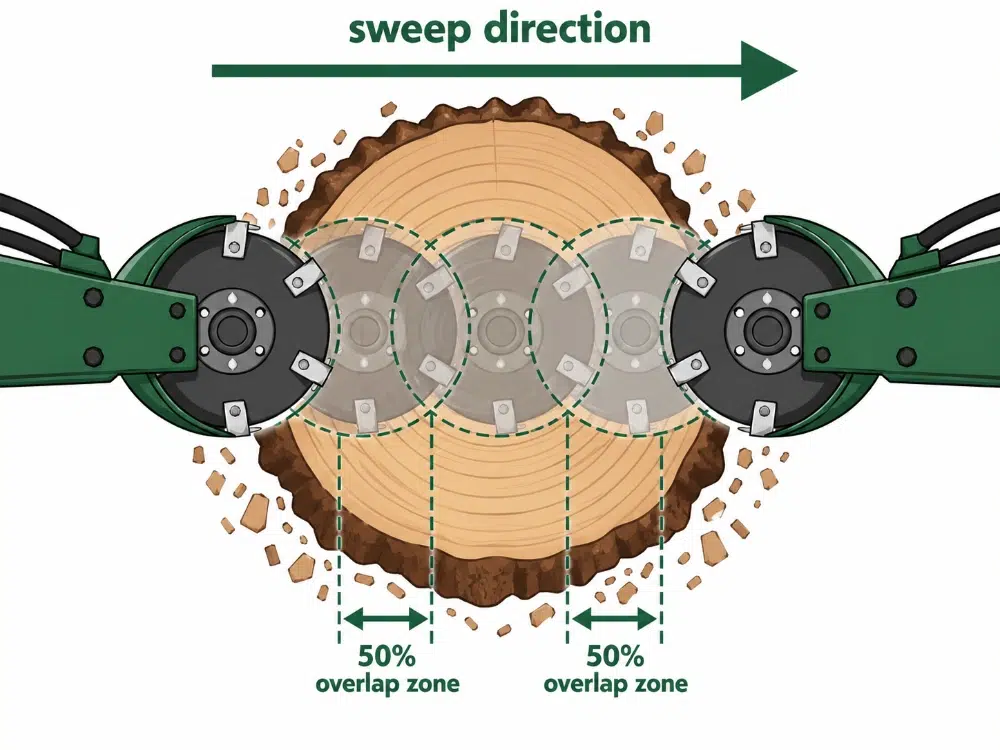
The side-to-side sweep technique is the most widely used stump grinding method among professional arborists. It involves moving the cutting wheel laterally from one side of the stump to the other in a controlled, sweeping motion, covering the full width of the stump on each pass before advancing forward. The result is a more even grind, better control over depth, and a cleaner finish than unstructured grinding.
It’s considered one of the most dependable tree stump grinding methods for achieving an even, level finish.
How to do it:
- Position the stump grinder so the cutting wheel is directly above the highest point of the stump
- Engage the cutting wheel and slowly sweep from left to right across the full width of the stump
- Raise the head slightly after each pass and overlap the previous pass by 50% before advancing
- Continue until the desired grinding depth is reached
When it’s relevant:
4. Cross-Grinding
Cross-grinding combines horizontal and vertical grinding passes to address stumps with irregular shapes, multiple trunk bases, or particularly tough wood. By alternating the direction of the cutting wheel, cross-grinding ensures comprehensive coverage of the stump surface — reducing the chance of leaving unground sections that could lead to regrowth or uneven decomposition.
How to do it:
- Begin with standard horizontal sweep passes to remove the bulk of the stump material
- Rotate the grinder 90 degrees and make a second set of passes perpendicular to the first
- Repeat the alternating pattern, gradually deepening with each cycle
- Pay close attention to irregular edges and root flares that may require targeted passes
When it’s relevant:
5. Pocket Grinding
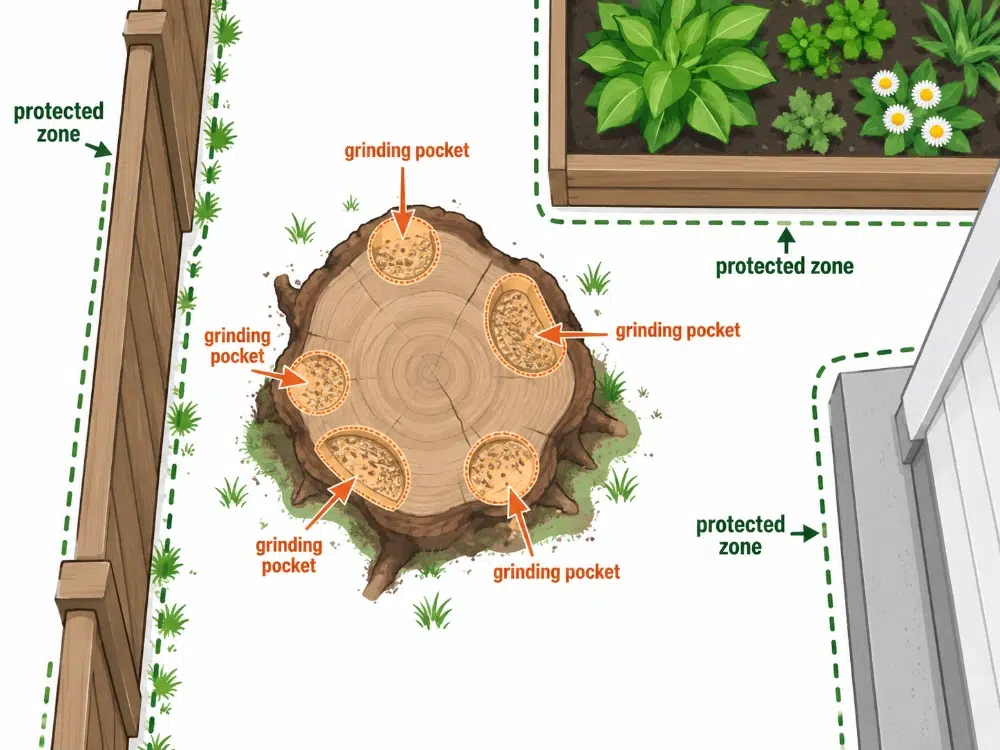
Pocket grinding is a precision stump grinding technique used when a stump is located in close proximity to other landscaping features, structures, or plants that must not be disturbed. Rather than grinding the entire stump surface at once, the operator works in small, concentrated sections, creating targeted “pockets” of removal while maintaining control over the cutting wheel’s reach.
How to do it:
- Identify the boundaries of the work area and mark any plants, structures, or hardscaping that must be protected
- Work in small, methodical sections rather than sweeping the full width of the stump
- Adjust grinding depth per section based on proximity to obstacles
- Move slowly and deliberately — this technique prioritizes precision over speed
When it’s relevant:
6. Vertical Grinding Technique
Vertical grinding applies the cutting wheel directly downward into the stump, using the machine’s weight and downward pressure to penetrate dense or particularly hard wood. It’s most effective on tall stumps or those with thick, dense cores, such as old hardwood stumps that have dried out and hardened over time, where lateral passes alone don’t provide enough cutting force.
How to do it:
- Ensure the stump grinder is stable and properly positioned before engaging the cutting wheel
- Apply steady, controlled downward pressure rather than forcing the machine
- Work in small vertical sections, clearing material as you go to prevent the cutting wheel from binding
- Always clear rocks and debris from the base of the stump before grinding — vertical grinding sends debris straight up
When it’s relevant:
In need of Professional Stump Grinding ?
Get efficient stump grinding to enhance your yard. Safe, affordable, and eco-friendly solutions for a cleaner, healthier landscape
7. Root Ball Grinding Technique
Root ball grinding targets the underground root mass directly beneath the stump, going beyond the visible trunk base to address the dense cluster of roots at the tree’s base. This method is sometimes referred to as stump and root grinding, since it addresses the trunk base and the root system in the same pass.
It’s the most technically demanding of the stump grinding techniques and typically requires specialized equipment and an experienced operator. Done correctly, root ball grinding significantly reduces the chance of regrowth and eliminates the underground obstacle that can interfere with future plantings or construction.
How to do it:
- Complete surface grinding first to expose the top of the root ball
- Use a grinder with sufficient depth capacity and horsepower to reach below the root flare
- Work outward from the center of the root ball, grinding in sections to manage material buildup
- Backfill the excavated area with topsoil after grinding and tamp down to prevent settling
When it’s relevant:
8. Elevated Stump Grinding
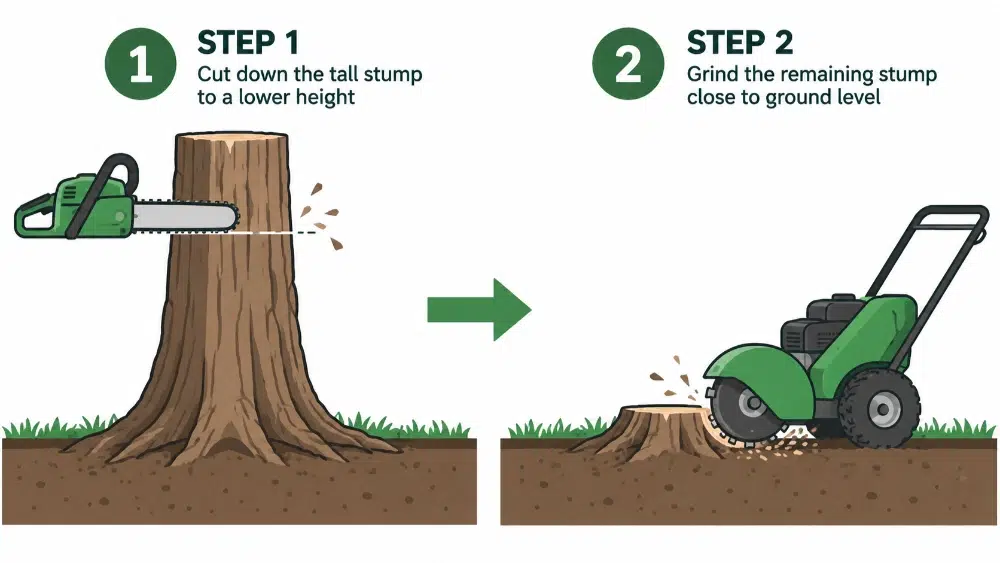
Elevated stump grinding addresses stumps that have been left standing well above ground level after a tree has been felled, typically because the felling cut was made too high. Before standard grinding techniques can be applied, the elevated sections must be brought down to a manageable height. This often requires smaller, more maneuverable equipment to access the upper portions safely.
How to do it:
- Assess the stump height and identify the safest approach for the equipment being used
- Use a chainsaw to reduce the elevated sections closer to ground level before engaging the grinder, if necessary
- Switch to a compact or walk-behind stump grinder for tight or elevated access situations
- Once the stump is at or near ground level, proceed with the appropriate grinding technique for the remaining base
When it’s relevant:
9. Sectional Grinding Technique
Sectional grinding divides a large stump into manageable zones and addresses each section individually rather than attempting to grind the entire surface at once. This organized, methodical approach is particularly effective for oversized stumps where direct full-surface grinding would be inefficient or put excessive strain on the equipment.
How to do it:
- Visually divide the stump into sections based on size, typically quadrants for large stumps
- Focus on one section at a time, grinding to the desired depth before moving to the next
- Clear wood chip buildup between sections to maintain cutting wheel efficiency and reduce the risk of the grinder binding
- Work systematically toward the center to ensure full coverage
When it’s relevant:
10. Perimeter Grinding Technique
Perimeter grinding starts at the outer edges of the stump and works inward — systematically addressing the surface roots and outer root flare before tackling the central trunk base. By establishing a clear perimeter first, this technique prevents damage to surrounding plants and landscaping while maintaining control over how far the cutting wheel reaches.
How to do it:
- Begin grinding around the outer circumference of the stump, targeting surface roots and the root flare
- Work methodically inward in concentric passes, deepening with each circuit
- Maintain a clear boundary between the grinding area and any adjacent plants, hardscaping, or structures
- Finish with sweep passes across the central trunk base once the perimeter is cleared
When it’s relevant:
11. Chemical-Enhanced Grinding
Chemical-enhanced grinding combines the application of a chemical accelerant — typically a potassium nitrate solution — with physical grinding to speed up the breakdown of particularly hard or stubborn stumps. The chemical is applied to drilled holes in the stump and allowed to penetrate the wood over several weeks, softening the fibers and making the subsequent grinding significantly easier and less demanding on the equipment.
How to do it:
- Drill a series of deep holes into the top and sides of the stump
- Apply a potassium nitrate solution into each hole and allow adequate time for the chemical to penetrate and soften the wood — typically 4–6 weeks
- Once the wood has softened, proceed with the appropriate grinding technique for the stump size and condition
- Dispose of wood chips from chemically treated stumps responsibly — do not use as garden mulch
When it’s relevant:
12. Excavator-Assisted Grinding
Excavator-assisted grinding combines heavy machinery with a stump grinder to handle the most challenging stump removal scenarios, oversized stumps, deeply rooted trees, or sites where the root system is too extensive for grinding alone to manage efficiently.
An excavator is used to break down and expose the stump structure before the grinder addresses the remaining material, significantly reducing the time and effort required. It’s one of the more specialized methods of stump removal, reserved for oversized or deeply rooted stumps that grinding alone can’t handle efficiently.
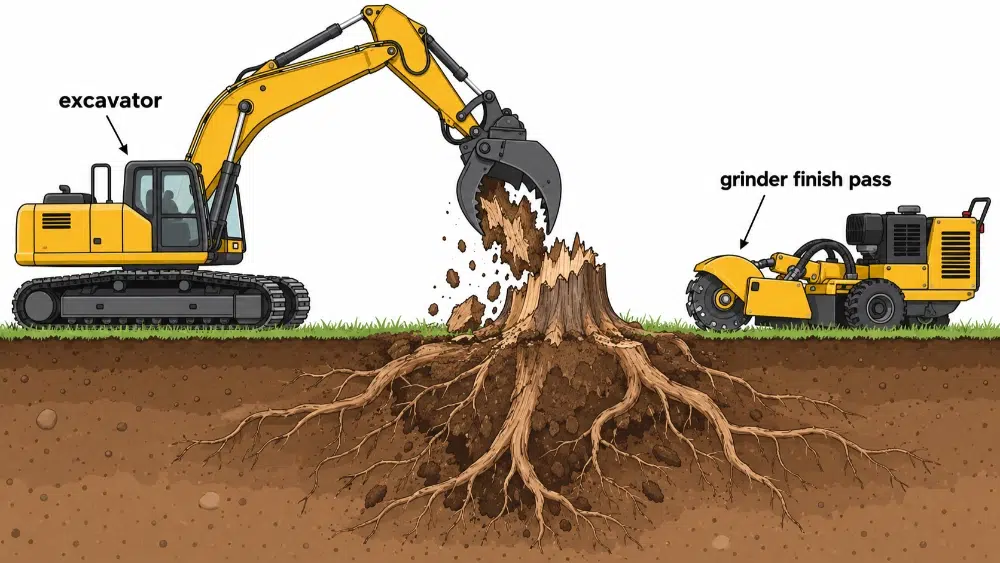
How to do it:
- Conduct a thorough site assessment to confirm excavator accessibility and identify any underground utilities — always call utility locates before bringing heavy equipment onto the site
- Use the excavator to break apart the upper stump structure and expose the root ball
- Follow up with the stump grinder to address remaining material and achieve the desired grinding depth
- Backfill the excavated area with topsoil and compact properly to restore the site
When it’s relevant:
Grinding Process and Techniques
When dealing with stump grinding, it’s crucial to understand various factors such as stump size, tree species, and safety precautions. These aspects significantly influence the choice of equipment and the best stump grinding techniques.
Every technique above follows the same basic stump grinding steps and process, assess the site, grind in controlled passes, then check depth and finish, just adapted to the stump in front of you.
Assessing Stump Size and Tree Species
Assessing stump size and tree species is crucial for efficient stump grinding, larger stumps need powerful grinders, while smaller ones can be managed with lighter equipment. Hardwood stumps, like oak or maple, are denser and may require specialized tools to grind effectively. Identifying the tree species helps adapt the stump grinding technique, ensuring a faster, safer, and more efficient process.
Determining Grinding Depth and Pattern
Determining the correct grinding depth, typically 4-6 inches below ground level, is essential to prevent regrowth and enable smooth landscaping. Using an overlapping grinding pattern helps ensure no remnants are left, resulting in a clean, level surface. Adjusting the depth and pattern based on the stump’s size and hardness maximizes both efficiency and effectiveness.
Operating the Grinder Safely
Operating stump grinders safely requires wearing protective gear like goggles and ear protection to guard against debris and noise, while keeping the area clear of people and pets. Ensure a firm grip on the machine, avoid loose clothing, and regularly inspect the equipment to address any mechanical issues before use. Following these precautions minimizes risk, allowing for safer and more efficient stump grinding.
In need of Professional Stump Grinding ?
Get efficient stump grinding to enhance your yard. Safe, affordable, and eco-friendly solutions for a cleaner, healthier landscape
Frequently Asked Questions
When considering stump grinding, various factors can impact pricing, techniques, and results. Understanding the dynamics of stump grinding can help you manage expectations and make informed decisions.
Conclusion
All the stump grinding techniques provide effective solutions for removing tree stumps, enhancing both the appearance and usability of your yard. Choosing the right approach depends on factors like equipment, whether using stump grinders for deep removal, chainsaws to reduce stump height, or even eco-friendly, manual methods to minimize environmental impact. By understanding these techniques, you can select the most suitable option for a smooth, safe, and attractive landscape.


