Tree cutting techniques determine how a tree is brought down and how much control is maintained throughout the process. The approach used depends on space, tree size, species, and what surrounds the work area. In some cases, a tree can be removed in one controlled cut. In others, it must be taken down in stages to reduce risk. This guide explains the most common tree cutting techniques and how they’re applied in real-world conditions.
What Are Tree Cutting Techniques?
Tree cutting techniques are the different ways a tree is cut and brought down based on its size, location, and surrounding risks. A technique defines how cuts are made, in what order, and how the tree or its sections are controlled as weight is removed.
These techniques are chosen to manage real constraints on site, such as limited space, nearby structures, uneven ground, or unstable wood. They are not about speed or preference. They are about control.
Each tree cutting technique uses a specific combination of planning, sequencing, and tree cutting tools to reduce risk and keep movement predictable. The technique selected determines whether a tree can be cut in one piece or must be removed in stages, and how much control is required at each step.

Why Tree Cutting Techniques Are So Important
The technique used during tree cutting affects safety, efficiency, and predictability. Cutting the wrong way in the wrong setting increases the chance of property damage, injury, or uncontrolled movement.
Different tree cutting techniques are used to manage:
- Where the tree or sections will move once cut
- How weight and tension are released
- How much space is required to work safely
Technique selection also affects planning time and labour. More controlled methods usually take longer but reduce risk. This balance between control and efficiency plays a direct role in overall timing and costs, especially in tight or high-risk environments.
How Tree Species Affect Cutting Techniques
Tree species have a direct impact on how cutting techniques are chosen and applied. The way a tree holds weight, reacts to cuts, and releases tension varies significantly between species. These differences influence section size, sequencing, and the level of control required during cutting.
Species affects tree cutting techniques in several key ways:
- Wood density, which determines how heavy each section will be
- Grain and fibre structure, which affects how the tree splits or twists
- Branch flexibility, which influences how weight shifts mid-cut
- Internal tension, especially in trees with uneven growth or storm damage
Because of this, the same technique can require very different execution depending on the type of tree being cut.
How Species Changes Technique Selection
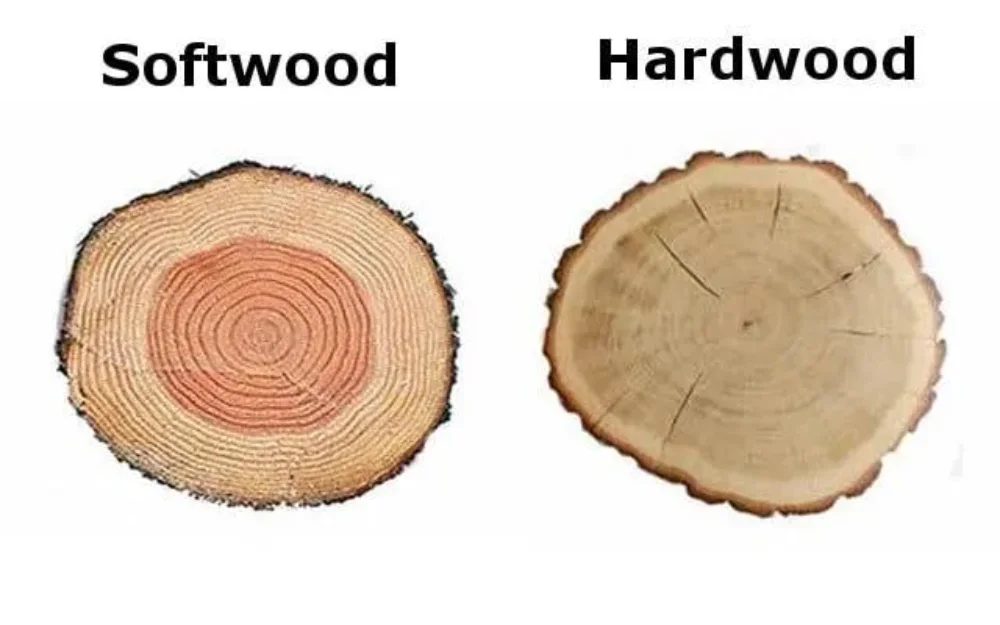
Hardwoods such as maple and oak are common in Canada and often require more controlled tree cutting techniques. Their weight means sections must be kept smaller, and free-dropping material can cause significant damage if not managed carefully.
Softer species like pine or spruce may allow for faster cutting, but their flexible branches can create unexpected movement as weight shifts. This often requires adjusting cut order and maintaining awareness of how limbs react once released.
Trees with decay, storm damage, or uneven growth present additional challenges regardless of species. These trees often require progressive dismantling or controlled lowering to manage instability and reduce the chance of sudden failure.
Common Tree Species and How They Affect Cutting Techniques
| Tree Type | Common Examples (Ottawa Area) | How the Tree Behaves When Cut | Technique Implications |
|---|---|---|---|
| Dense hardwoods | Maple, oak, ash | Heavy, stiff wood with high impact force | Smaller sections, slower cutting, frequent use of sectional cutting and controlled lowering |
| Medium hardwoods | Birch, poplar | Lighter but can split or shear unexpectedly | Careful sequencing, attention to grain direction |
| Softwoods (conifers) | Pine, spruce, cedar | Lighter wood, flexible branches, less dense | Larger sections possible, but flexible limbs can shift weight suddenly |
| Brittle or decayed species | Ash with decay, older poplar | Unpredictable breakage, hidden weakness | Progressive dismantling, reduced section size, higher control |
| Storm-damaged trees | Any species | Internal tension and uneven weight | Modified techniques, slower cutting, increased use of rigging |
Need A Tree Taken Down Safely?
The cutting technique determines where weight moves and how sections are controlled. Get professional guidance before work begins.
Tree Cutting Techniques Based on Space and Access
Available space is one of the first factors considered when choosing a tree cutting technique. Open areas allow for simpler methods, whereas tight or built-up areas require more controlled approaches.
1. Directional Felling
Directional felling is used when there is enough open space to drop a tree in one piece. The goal is to guide the tree so it falls in a planned direction, away from structures, roads, and obstacles.
This technique is most common in open yards, rural properties, or large lots with a clear landing zone.
How Directional Felling Is Performed
The fall direction is set before cutting begins based on lean, weight distribution, and wind. Cuts at the base are angled to guide the tree’s movement and control when it releases.
A directional notch is used to define the fall path, followed by a controlled back cut that allows the tree to hinge and fall predictably. Wedges are often inserted to prevent binding and help maintain direction as the cut progresses.
Once the tree is on the ground, limbing is done to remove branches and reduce tension. The trunk is then bucked into shorter sections so the wood can be safely moved, processed, or removed from the site
Tree Cutting Tools Typically Used
- Basic safety equipment
- Chainsaws sized to the tree diameter
- Wedges to guide fall direction and prevent saw binding

2. Sectional Tree Cutting
Sectional tree cutting is used when a tree cannot be dropped in one piece due to limited space. This is common in residential areas where trees are close to homes, fences, or other structures.
Instead of falling as a whole, the tree is taken down in manageable sections.
How Sectional Tree Cutting Is Performed
Cutting usually starts at the top, removing branches first to reduce weight and improve visibility. Trunk sections are then cut horizontally in measured lengths, working downward.
Section size is adjusted based on wood density and how much weight the remaining tree can safely support. Cuts are made to release sections cleanly without causing sudden shifts.
In cases where sections are too heavy to drop or lower safely, cranes may be used to support and lift sections away once cut, especially near homes or confined access points.
Tree Cutting Tools Typically Used
- Safety equipment
- Chainsaws
- Rigging systems to control falling sections
- Climbing gear or elevated access equipment
3. Straight Drop Cutting
Straight drop cutting is used when horizontal space is limited but there is clear vertical space below the tree. Sections are released and allowed to fall directly downward into a defined landing area.
This technique is often used in narrow yards or between structures where lateral movement must be avoided.
How Straight Drop Cutting Is Performed
Cuts are made perpendicular to the trunk so sections fall straight down into a defined landing zone. Section length is carefully limited to control impact force.
Drop zones are cleared before cutting begins, and the sequence is planned to avoid stacking or rebound. This method relies on consistent cut placement and accurate weight judgment.
If section weight exceeds what the drop zone can safely absorb, controlled lowering or crane support is used instead.
Tree Cutting Tools Typically Used
- Safety equipment
- Chainsaws
- Basic control tools to manage cut placement
Tree Cutting Techniques That Focus on Control
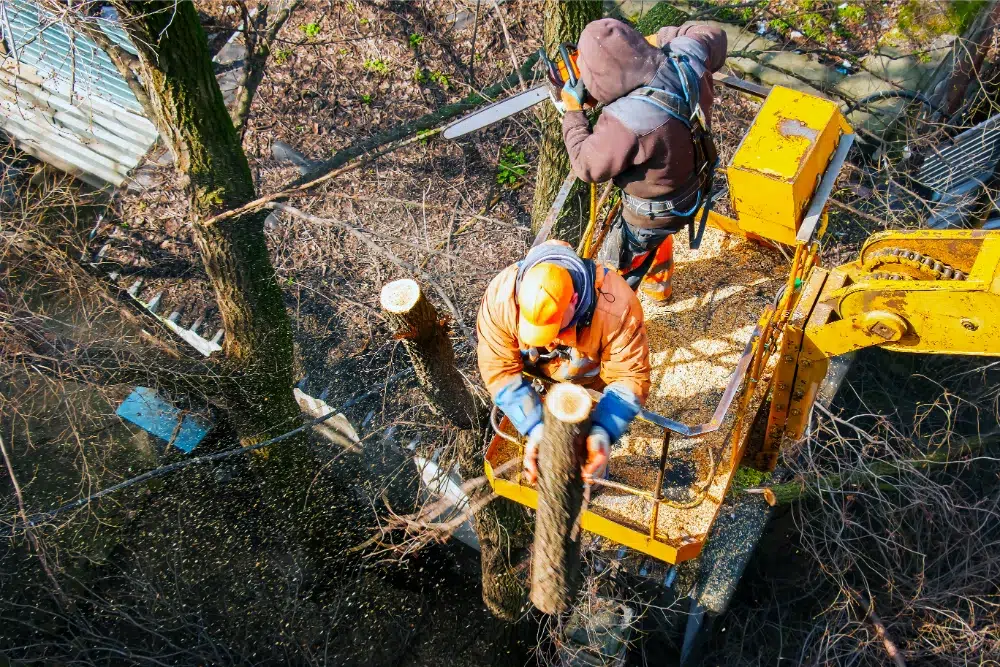
Some methods of tree cutting are chosen because controlling movement matters more than speed. These methods are used when trees are close to structures, utilities, or other sensitive areas where free-falling sections aren’t acceptable.
4. Progressive Dismantling
Progressive dismantling is used for large, unstable, or high-risk trees where balance must be carefully managed throughout the job.
This technique focuses on maintaining stability by removing the tree in a planned sequence rather than simply working top to bottom.
How Progressive Dismantling Is Performed
Progressive dismantling is used when stability is the primary concern, not speed. Cuts are sequenced to manage balance and internal stress rather than simply removing material from the top down. Weight is reduced evenly to prevent twisting or sudden failure.
Sections are kept smaller, and cut angles are adjusted as the tree’s structure changes. This technique often combines controlled lowering, sectional cutting, and sometimes crane assistance for high-risk trees.
Tree Cutting Tools Typically Used
- Chainsaws
- Rigging and lowering systems
- Climbing gear or lifts
- Safety equipment
5. Controlled Lowering
Controlled lowering is used when tree sections cannot be dropped safely due to nearby structures, landscaping, or utilities. Instead of falling freely, sections are guided down in a controlled manner.
This technique is common near roofs, decks, sheds, and power lines.
How Controlled Lowering Is Performed
After a section is cut, ropes and friction devices are used to slow and guide its descent. Cuts are timed so the section is supported immediately once released.
Lowering speed is adjusted based on section weight and landing conditions. Communication between the cutter and ground crew is constant to maintain control.
This technique is often used near roofs, decks, or utilities. For very large or awkward sections, cranes may be used to lift sections clear rather than lower them.
Tree Cutting Tools Typically Used
- Ropes, pulleys, and friction devices
- Chainsaws
- Anchoring equipment
- Safety equipment

How Tree Cutting Techniques Affect Cost and Planning
The technique of tree cutting used affects how long the job takes, how much control is required, and the overall level of risk. More controlled techniques involve additional setup, smaller cuts, and slower sequencing, which increases time on site.
In many cases, technique choice has a greater impact on planning and tree cutting costs than tree height alone.
Estimated Time and Cost Impact by Technique (Ottawa Based)
| Tree Cutting Technique | Typical Use Case | Approximate Time on Site* | Relative Cost Impact |
|---|---|---|---|
| Directional felling | Open yard with clear fall zone | 2–4 hours | Lower |
| Straight drop cutting | Limited horizontal space, clear drop zone | 3–5 hours | Moderate |
| Sectional tree cutting | Trees near structures or property lines | 4–8 hours | Higher |
| Controlled lowering | Trees over roofs, fences, or utilities | 6–10+ hours | High |
| Progressive dismantling | Large, unstable, or high-risk trees | 8–12+ hours | Highest |
*Time estimates reflect typical residential tree cutting jobs in the Ottawa area and vary based on tree size, species, access, and site conditions.
What to Take From This
A tree that can be handled with directional felling may take a few hours. The same tree in a tighter location may require a full day or more using controlled techniques. The difference isn’t the tree itself, but the method needed to manage it safely.
This is why professional assessments focus on technique selection early in the planning process.
Concerned About How a Tree Will Come Down?
The cutting technique determines where weight moves and how sections are controlled. Get professional guidance before work begins.
FAQ: tree cutting techniques
Below are common questions homeowners ask about how tree cutting is handled.
In Short,
Tree cutting methods determine how safely and effectively a tree is removed. The right method depends on space, species, and surrounding risk. Each technique relies on proper planning and the appropriate tree cutting tools to maintain control. Understanding these methods helps ensure tree cutting is done safely, efficiently, and with predictable results.