Tree issues rarely announce themselves all at once. A branch starts scraping the roof, a trunk leans a little more each year, or a planned project suddenly has a tree in the way. Tree cutting usually enters the conversation when something needs to change—safety, access, or how the land is used. This guide walks through when cutting down trees makes sense, what it’s commonly used for, and what you should understand before any cutting begins.
What Is Tree Cutting?
Tree cutting involves removing a tree entirely or taking it down in controlled sections. The method depends on the tree’s size, condition, and surroundings. Some trees can be cut at the base in one piece. Others must be dismantled carefully to avoid damage.
This is different from pruning or trimming, as it focuses on structural removal, not maintenance. Cutting down a tree usually happens when a tree is no longer safe, useful, or sustainable in its current location. This often happens during property changes or as part of larger projects like land clearing.

What Is Tree Cutting Used For?
Tree cutting is done for specific, practical reasons. It’s rarely cosmetic. Most decisions come down to safety, access, or long-term planning.
Safety and Risk Management
Safety is the most common driver behind cutting down trees. Trees don’t need to fall to be dangerous. Structural failure often starts long before collapse.
Removal is typically required when a tree shows signs like:
- Storm damage or weakened structure
- A noticeable lean toward buildings or roads
- Dead, diseased or failing limbs that could drop without warning
Important:
Cutting down trees in these situations is preventative. Waiting usually increases risk and raises eventual costs due to emergency work or added complexity.
Property Use and Planning
Cutting down trees is also used to make land usable. Trees that were once well-placed can become obstacles as properties evolve.
Common planning-related reasons include:
- Opening space for landscaping or hardscaping
- Preparing land for fences, driveways, or structures
- Improving access, sightlines, or sunlight
When Is Cutting down trees Necessary?
Certain conditions signal when removing branches or the entire tree is the right move. Acting early helps avoid emergency removals and unexpected damage.
Signs a Tree Needs Cutting
Some issues are obvious. Others develop gradually and are easy to ignore until they become problems.
Cutting a tree may be necessary if you notice:
- Significant leaning or exposed root systems
- Large dead sections or visible internal decay
- Cracks along the trunk or splitting limbs
- Trees interfering with buildings, wires, or access routes
- Advanced disease symptoms that has progressed beyond treatment
At this stage, basic tree care options are often no longer effective. Cutting down the tree becomes a safety and liability decision, not a visual one.
Best Time of Year for Tree Cutting
Tree cutting can be done year-round, but timing affects safety, site impact, and efficiency. Ground conditions, visibility, and cleanup all matter, and so does the type of tree being cut. Different species behave differently when cut, especially across seasons.
Some trees are more forgiving. Others create complications if timing is ignored.
Seasonal and species-related considerations include:
| Factor | Why It Matters for Cutting a Tree |
|---|---|
| Frozen or firm ground | Reduces lawn and soil damage, especially when cutting large hardwoods |
| Dormant seasons | Limits stress on surrounding vegetation and reduces sap flow in many species |
| Softwood vs hardwood species | Softwoods often cut cleaner year-round; hardwoods are heavier and more sensitive to timing |
| Sap-heavy species | Certain trees release significant sap in warmer months, affecting cleanup and handling |
| Emergency situations | Hazardous trees may require immediate removal regardless of species or season |
Tools & Equipment
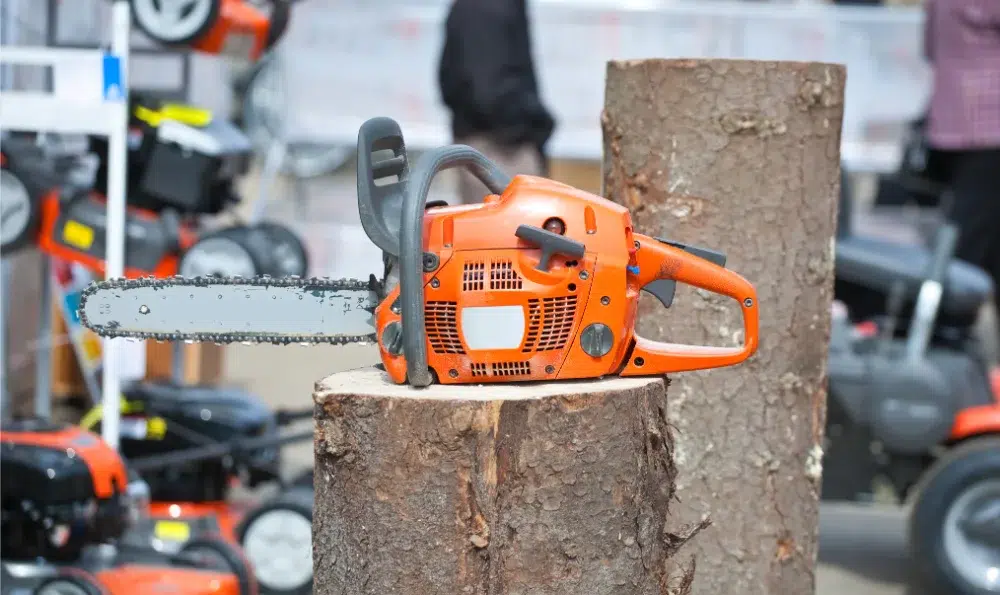
Cutting down trees requires the right equipment for the size and complexity of the job. Using the wrong tools increases risk and slows everything down.
Most professional tree removal jobs rely on a combination of cutting, support, and access equipment.
Commonly used categories include:
The exact setup depends on the tree and location. A full breakdown of equipment types is covered in the tree cutting tools guide.
Cutting Large Trees vs Small Trees
Tree size directly affects how a cutting job behaves once it starts. Small trees are lighter, more balanced, and usually fall in a predictable way, which makes mistakes easier to manage. Large trees carry far more weight and reach, meaning small miscalculations in cutting angle, timing, or surroundings can quickly turn into serious safety hazards or costly property damage.
| Factor to Be Aware Of | Small Trees | Large Trees |
|---|---|---|
| Weight and force | Limited weight with low momentum | Heavy mass with strong falling force |
| Cutting approach | Often one-piece felling | Requires controlled sectional cutting |
| Fall predictability | Direction easier to control | Fall path harder to predict |
| Fall zone size | Narrow and contained | Wide zone affecting nearby structures |
| Reaction time | More time to step away safely | Little to no time once movement starts |
| Impact of mistakes | Minor damage or injury | High risk of severe damage or injury |
In practical terms, this means that what looks like a simple cut on a tall tree demands far more planning, space, and control. As tree size increases, both the danger and the consequences increase, making awareness and proper decision-making essential before any cutting begins.
How Tree Cutting Is Done
Tree takedown is done differently depending on the space available, the size of the tree, the species, and what’s around it. A tree in an open yard can be handled very differently than one beside a house, fence, or power line. The approach is chosen to control where the tree or its sections go and to limit damage.
The methods below describe the most common ways tree or branch removal is carried out, without getting into all the details of specific cutting techniques.
1. Planning and Assessment
Before cutting starts, the tree and the site are evaluated. The height, diameter, and condition of the tree matter, but so does how the wood behaves and how stable the root system is. Species plays a role here, since some trees split cleanly while others twist or hold tension.
Surroundings are also part of the decision. Buildings, driveways, utilities, and ground slope all affect how tree takedown can be done. Access for equipment and space for debris are factored in early, since they influence both safety and timing.
2. Common Approaches
Several cutting approaches are used depending on the situation. The choice is based on control, not speed.
3. Control and Safety During Cutting
Control is maintained throughout the job. Each cut changes the balance of the tree, especially with larger trees or uneven weight distribution. Cuts are adjusted as the tree responds, and escape routes are kept clear at all times.
Species, wind, and internal decay can change how a tree reacts mid-cut. That’s why tree takedown relies on constant assessment rather than a fixed sequence of actions.
What Can Go Wrong During tree takedown?
Tree felling may look straightforward, but it’s one of the most unpredictable and hazardous outdoor tasks. Many serious accidents happen because people underestimate how trees behave once cutting begins. Here are the key things that commonly go wrong—and what people must pay close attention to.
Never Do This When Cutting Down a Tree
Tree Blocking Driveways, Sightlines, or Utilities?
When a tree interferes with access or visibility, cutting needs to be precise. We’ll find the safest approach to get the job done.
What Impacts the Cost of cutting a tree?
Tree cutting costs aren’t fixed. It’s shaped by physical conditions, access, and risk. Two trees of the same height can cost very different amounts to cut.
This section explains the main cost drivers without getting into pricing ranges.
Key Factors That Influence Cost
Jobs with higher risk or tighter spaces require more time and planning, which raises cost.
To set expectations, homeowners in Ottawa typically see:
These are general estimates, not quotes. Final pricing depends on the combination of factors above, not just tree height.

Important Things to Know Before Cutting a Tree
Before any cutting starts, there are legal limits, shared responsibilities, and safety risks that need to be considered. Skipping these steps is one of the most common reasons projects get delayed or become more expensive than expected.
Permits and Local Rules
In Ottawa and many Ontario municipalities, cutting a tree may be regulated depending on the tree’s size, location, or purpose of removal. Some trees can’t be cut without approval, even if they’re on private property.
Before moving ahead, confirm:
Protected trees or non-compliant cutting can result in fines, stop-work orders, or requirements to replace the tree. These issues are easier to deal with before cutting begins, not after.
DIY vs Professional Cutting of trees
Some small jobs can be handled by experienced property owners using proper tools and clear fall zones. Most cannot.
Professional tree feeling is strongly recommended when:
Mistakes of cutting a tree don’t usually fail slowly. They fail all at once. Damage to structures, vehicles, or people is often permanent, and repairs almost always cost more than the cutting itself.
Avoid Emergency Cutting down a Tree
SpinBlade can address problem trees early to reduce risk and keep costs predictable.
Frequently Asked Questions
Still scratching your head? Here are quick answers to some of the most common questions people have.
In Short,
Tree cutting is a practical solution when safety, access, or land use needs change. Knowing when cutting is necessary, how it’s approached, and what affects cost helps prevent rushed decisions and unnecessary risk. While this guide covers the fundamentals, tools, methods, and pricing deserve closer attention. Understanding those details ensures cutting is done safely, efficiently, and with long-term results in mind.