Many homeowners create mulch volcanoes believing they are protecting their trees, but this common landscaping practice can actually shorten a tree’s lifespan. Piling mulch high against the trunk traps moisture, encourages decay, attracts pests, and can eventually weaken or kill an otherwise healthy tree. The good news is that it’s easy to avoid once you know what proper mulching looks like. In this guide, we’ll explain why mulch volcanoes are harmful and show you the simple “donut, not volcano” method recommended by arborists.
What Are Mulch Volcanoes?
At first glance, a mulch volcano can make a landscape look tidy and professionally maintained. In reality, it’s one of the most common tree care mistakes seen in residential and commercial properties.
Why People Create Them
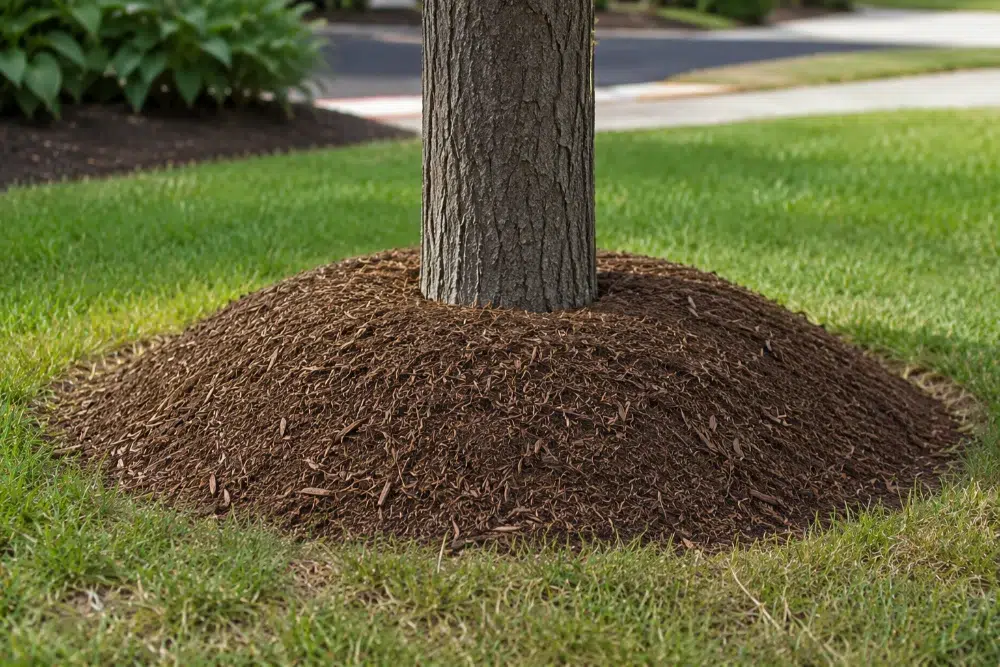
A mulch volcano forms when mulch is piled into a cone or mound directly against the base of a tree trunk instead of being spread evenly around it. This practice, sometimes called volcano mulching, often starts with good intentions but creates the wrong growing conditions for the tree.
Many homeowners and even some landscaping crews build mulch volcanoes because they:
While mulch itself is beneficial, more is not always better. Trees benefit from mulch covering the soil around their roots, not from mulch pressed tightly against the trunk.
Protect Your Trees With Proper Mulching
SpinBlade’s certified arborists provide professional tree mulching services that promote healthy root growth, improve moisture retention, and keep the trunk and root flare properly exposed. Contact us today to schedule expert tree care for your property.
How Mulch Volcanoes Damage Trees
The damage caused by mulch volcanoes isn’t immediate. Instead, trees gradually become stressed as the mulch creates an environment that the trunk and root flare aren’t designed to tolerate. By the time visible symptoms appear, the tree may already be dealing with decay, insect activity, or root problems that have been developing for years.
It Traps Moisture Against the Trunk
Tree bark is designed to remain exposed to the air. When thick mulch stays pressed against the trunk, it traps moisture around the bark, preventing it from drying properly after rain or irrigation.
Over time, this constant moisture can lead to:
Instead of helping the tree conserve moisture where it’s needed (in the soil around the roots) a mulch volcano keeps the trunk damp, creating ideal conditions for long-term damage.
It Attracts Pests Creates Root Problems
Keeping the trunk constantly covered creates the perfect environment for insects, rodents, and fungal organisms that naturally seek out damp, sheltered spaces. While mulch itself isn’t the problem, allowing it to remain against the bark for years increases the likelihood of pest activity and disease affecting the tree.
It Creates Root Problems
Another hidden issue develops below the surface. As mulch accumulates year after year, some roots begin growing upward into the mulch instead of outward through the soil. Over time, these roots can wrap around the trunk, restricting the movement of water and nutrients.
This can eventually lead to girdling roots, which slowly choke the tree as they expand. If left untreated, girdling roots can weaken the tree’s structure, reduce growth, and contribute to its decline.
The Right Way to Mulch a Tree
Fortunately, preventing mulch volcanoes is simple. Rather than piling mulch against the trunk, the goal is to create a wide, shallow ring that protects the roots while allowing the base of the tree to remain dry. This approach provides all the benefits of mulch without exposing the trunk to unnecessary moisture and decay.
Think Donut, Not Volcano
The easiest way to remember proper mulching is to think “donut, not volcano.” Instead of creating a cone around the trunk, spread mulch evenly over the root zone while leaving several inches of open space around the tree’s base.
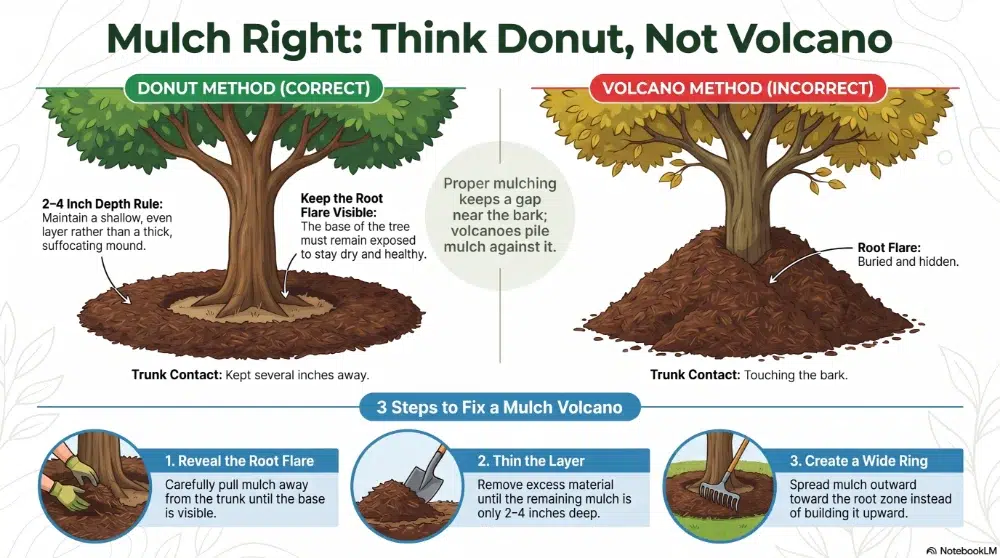
A properly applied mulch ring helps regulate soil temperature, reduce weed growth, and retain moisture without exposing the trunk to excess moisture or decay. That small gap around the base of the tree makes a significant difference to its long-term health.
How to Fix a Mulch Volcano
If your tree already has a mulch volcano, it’s usually best to correct it as soon as possible before permanent damage occurs.
Follow these simple steps:
- Carefully pull mulch away from the trunk until the root flare is visible.
- Remove any excess mulch so the remaining layer is only 2–4 inches deep.
- Leave a gap of several inches between the mulch and the bark.
- Spread the mulch outward in a wide ring rather than building it upward.
For additional guidance on proper mulching techniques, explore our Full Tree Mulching guide.
When Professional Help Is Worth It
Correcting a mulch volcano is often as simple as removing excess mulch, but if the problem has gone unnoticed for years, there may already be hidden damage beneath the surface. An arborist can not only correct improper mulching but also evaluate the tree for signs of stress, decay, pests, or developing root problems.
Professional tree care is recommended if:
At SpinBlade, we make sure mulch applied correctly. Our certified arborists provide professional tree care services that protect the root system, keep the trunk clear, and promote healthier, longer-lasting trees. Whether you’re correcting an existing mulch volcano or refreshing your landscape, proper mulching is an important part of comprehensive tree care.
Has Improper Mulching Damaged Your Trees?
SpinBlade can inspect your trees for signs of rot, pest activity, and girdling roots, then provide professional corrective mulching and tree care to restore healthier growing conditions.
Frequently Asked Questions
Still scratching your head? Here are quick answers to some of the most common questions people have.
In Short,
Mulch volcanoes may look neat, but they can quietly damage trees by trapping moisture, encouraging rot, attracting pests, and contributing to root problems over time. The good news is that this issue is easy to prevent by following one simple rule: think donut, not volcano. Keeping mulch away from the trunk while maintaining a shallow, even ring around the root zone gives your trees the protection they need without creating unnecessary risks. If you’re unsure whether a tree has already been affected, a professional arborist can assess the damage and recommend the best path forward.