Tree pruning can improve a tree’s structure, appearance, and overall health, but only when cuts are made correctly. Simple mistakes can damage branches, create unnecessary wounds, or remove more healthy growth than the tree can easily replace. Some errors are especially common among homeowners doing light pruning without knowing where or how to make each cut. This guide covers six tree pruning mistakes to avoid and what to do instead.
6 Common Tree Pruning Mistakes to Avoid
Even small tree pruning jobs can go wrong if cuts are made without considering the tree’s structure, health, or natural growth. The good news is that most tree pruning mistakes are avoidable when you understand what each cut is meant to accomplish.
1. Topping the Tree
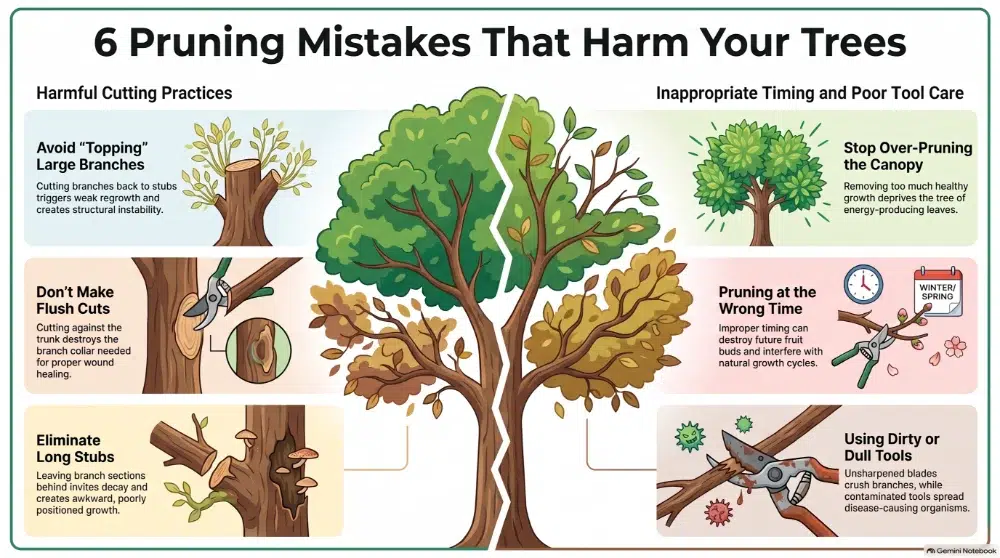
Topping is one of the most damaging forms of improper pruning. It involves cutting large branches back to stubs, often across the upper portion of the tree, to reduce its height or overall size.
The result may look like a smaller tree at first, but the damage doesn’t stop there. Removing a large portion of the canopy eliminates healthy foliage, creates large wounds, and can trigger rapid regrowth from the cut branches. These new shoots are often poorly attached and can create structural problems as they grow.
What to Do Instead:
Identify the specific problem you’re trying to solve and prune individual branches accordingly. If the tree genuinely needs to be reduced, an appropriate reduction technique may be safer than simply cutting off the top.
2. Making Flush Cuts
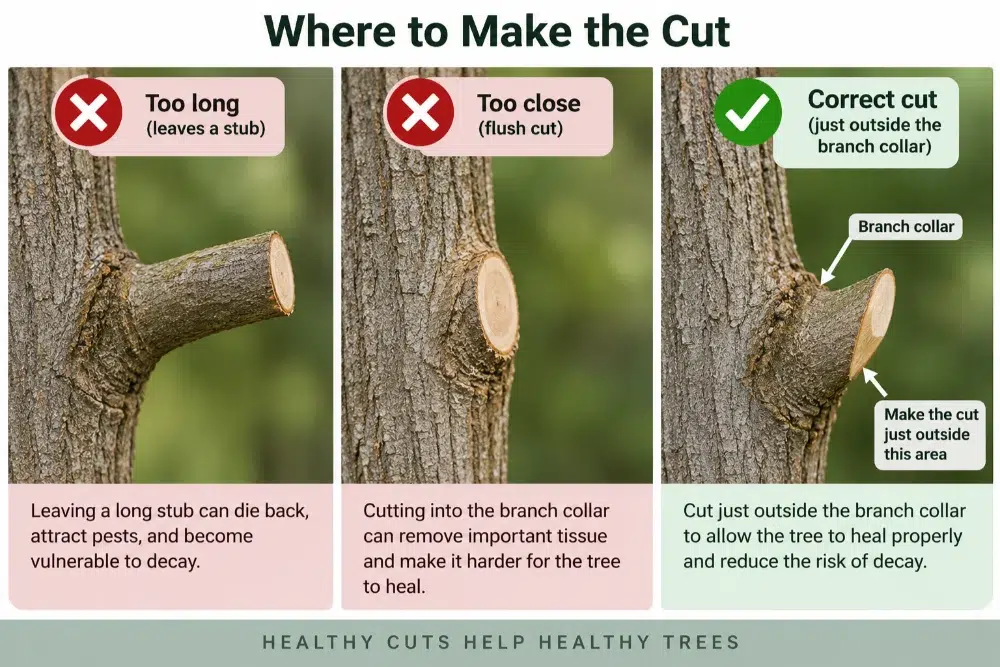
A flush cut is made directly against the trunk or parent branch, often because the cut looks cleaner or more finished. However, closer isn’t necessarily better when pruning a tree.
Cutting into the branch collar can remove tissue the tree needs to respond to the wound properly. It can also create a larger wound than necessary and make recovery more difficult.
What to Do Instead:
Find the natural branch collar where the branch meets the trunk or larger limb. Make the cut just outside the collar without cutting into it.
3. Leaving Long Stubs
Leaving a long section of branch behind is another common pruning error. This often happens when someone cuts a branch wherever it is easiest to reach rather than identifying the appropriate point for removal.
Over time, the remaining stub can die back and become vulnerable to decay. It can also leave the tree with awkward, poorly positioned growth.
What to Do Instead:
Make the cut at the appropriate location for the branch. Depending on the situation, this usually means cutting just outside the branch collar or back to a suitable lateral branch.
Worried You Might Be Pruning Your Tree Wrong?
A few small mistakes can create bigger problems for a tree over time. SpinBlade can assess your tree, identify what actually needs to be removed, and handle the pruning safely and correctly.
4. Over-Pruning the Canopy
Removing too much healthy growth at once is one of the most common ways a simple pruning job can become stressful for a tree. Leaves produce much of the energy the tree needs, so taking away a large portion of the live canopy can reduce its ability to support growth and recovery.
You may also see excessive new shoots develop after heavy pruning. These shoots can grow quickly as the tree tries to replace lost foliage, but rapid regrowth doesn’t necessarily mean the tree has recovered.
What to Do Instead:
Start with the specific problem you’re trying to solve and remove only the branches necessary to address it. If you’re unsure how much canopy to remove, step back and reassess before making additional cuts.
5. Pruning at the Wrong Time of Year
The best time to prune depends on the tree species, its condition, and the reason for pruning. Pruning at the wrong time can remove developing flower or fruit buds, interfere with the tree’s natural growth cycle, or create unnecessary stress.
This is particularly important when pruning flowering or fruit-producing trees, where timing can directly affect the following season’s blooms or crop.
What to Do Instead:
Identify the tree and the reason you’re pruning before deciding when to make your cuts.
6. Using Dirty or Dull Tools
The condition of your pruning tools can affect the quality of every cut you make. A dull blade may crush or tear the branch instead of making a clean cut, while dirty tools can potentially transfer disease-causing organisms between trees.
Using a tool that’s too small for the branch can also lead to poor cuts or encourage you to force the tool beyond its capacity.
What to Do Instead:
Keep your pruning tools sharp, clean, and appropriate for the branch you’re cutting. Clean away sap and debris after use, and sanitize tools between trees when disease transmission is a concern.
Consequences of Improper Tree Pruning
Incorrect pruning cuts can create problems that extend beyond appearance. Depending on the severity of the mistake, improper pruning may lead to:
How to Avoid Common Tree Pruning Errors
Avoiding tree pruning mistakes starts with slowing down before making the first cut. Instead of thinking about how much you can remove, consider why the branch needs to be removed, where the cut should be made, and how the tree is likely to respond.
Before pruning, ask yourself:
If you can’t confidently answer these questions, it’s better to pause before making the cut. A few careful cuts are usually better than trying to correct a bad tree pruning job after too much has already been removed.
When to Leave Pruning to a Professional
Light pruning of small, accessible branches is often manageable for homeowners. However, the risks increase significantly when you’re dealing with large branches, significant height, or an already damaged or declining tree.
Hire a certified arborist if:
The right pruning technique only helps if the job itself can be done safely. For larger or more complicated trees, professional tree pruning helps assess the tree’s structure and determine the safest way to complete the work.
Don’t Risk Damaging Your Tree
Not sure where to cut, how much to remove, or whether the job is safe to tackle yourself? SpinBlade can recommend the right pruning approach based on your tree’s condition and structure.
Frequently Asked Questions
Still scratching your head? Here are quick answers to some of the most common questions people have.
In Short,
Good pruning isn’t about trimming until your tree appears neat. It’s about making the right cuts for the right reasons while preserving the tree’s healthy structure and canopy. For small branches within easy reach, homeowners can often handle basic maintenance with the right tools and technique.
When the job involves large branches, significant height, hazards, or substantial canopy removal, bringing in a professional helps prevent a simple pruning project from becoming a long-term tree problem.