The right tree pruning tools, sometimes called tree trimming tools or pruning equipment, depending on who you ask, turn a frustrating afternoon of crushed branches and rusty blades into clean, effortless cuts that keep a tree healthy. Choosing the best tree pruning tools isn’t about owning everything on a shelf, it’s about matching the right tool to the right branch. This pruning tool guide breaks down six essential pruning tools, what each one is actually for, and how to use it properly.
What Is Tree Pruning?
Tree pruning is the selective removal of specific branches to improve a tree’s health, structure, and safety. Every tool in this guide exists to make one part of that process cleaner and safer, from precision cuts on young growth to heavy-duty limb removal. For the full breakdown of the practice itself, see our guide to tree pruning.
Tree Pruning Tools
Understanding pruning tools and their uses, and the different types of pruning tools available — is the first step toward pruning correctly, since each one directly affects the benefits of tree pruning you actually get from the work. Think of this section as a tree pruning equipment guide: what tools are needed for tree pruning changes depending on branch size, wood condition, and reach, which is exactly why professionals carry more than one option.
1. Hand Pruners & Secateurs
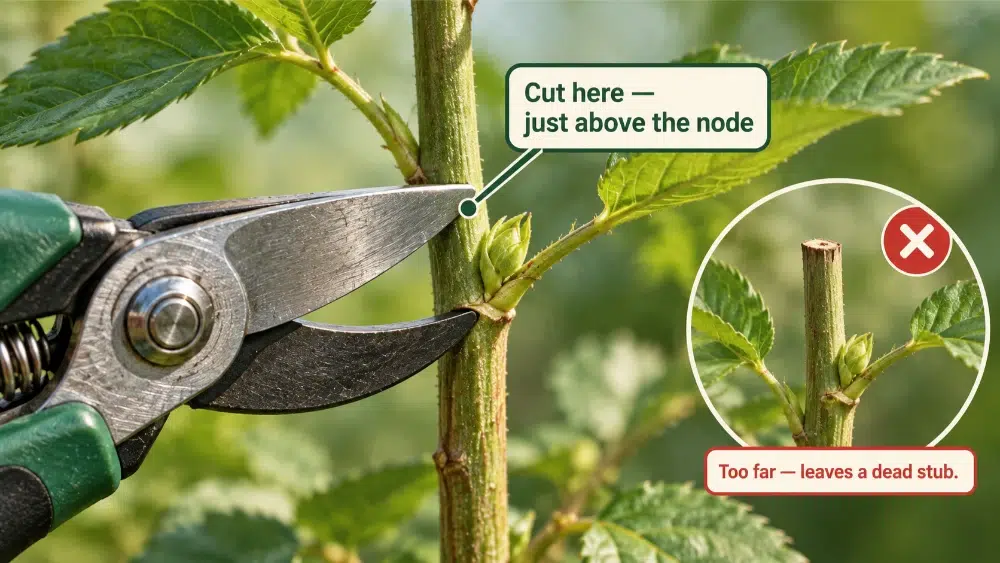
Hand pruners, also called secateurs, are the most-used tool on this list, and for good reason: most pruning jobs involve small branches, not large limbs. They’re built for precision, not power, which is what makes them the right first reach for the majority of routine work.
Best For:
- Branches up to ¾ inch thick
- Live green stems
- Deadheading flowers
- Precision shaping — the core of what tools are needed for tree pruning on a residential scale
How to Use Them Properly:
- Position the blade close to the node or branch collar
- Complete the cut in one clean, continuous motion
- Avoid sawing back and forth, which tears the stem rather than slicing it
2. Loppers
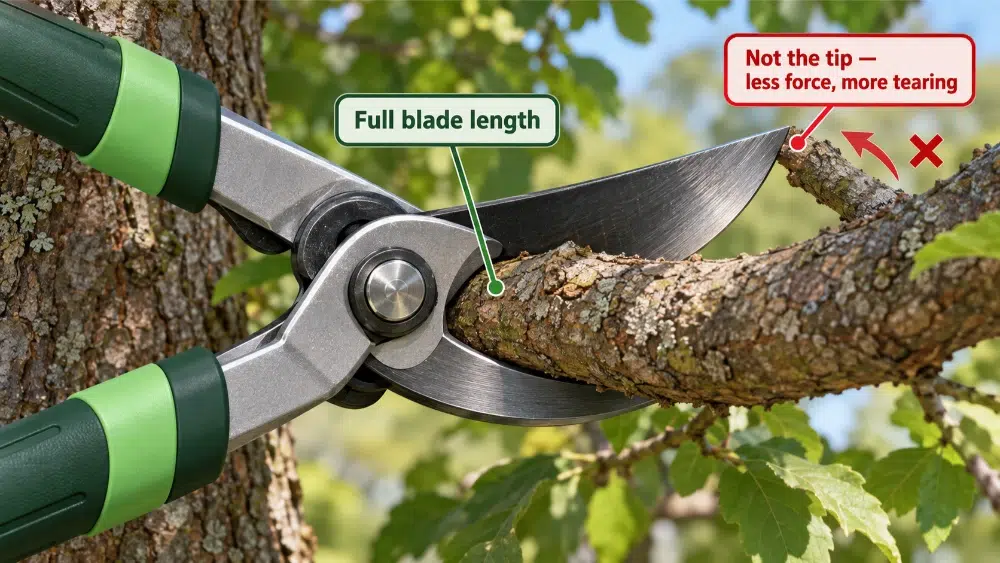
Loppers pick up exactly where hand pruners stop being useful, and the loppers vs pruners question really just comes down to branch thickness. Sometimes called a branch cutter or grouped under branch pruning tools generally, their long handles add real leverage, letting you cut through wood that would otherwise require far more hand strength, or a saw. As pruning tools for different types of trees go, loppers are especially versatile across fruit trees, ornamentals, and dense shrubs alike.
Best For:
- Branches ¾ to 2 inches in diameter
- Reaching slightly elevated growth without a ladder
- Fruit trees and dense shrubs, where pruning fruit-bearing plants means repeated cuts at awkward angles
How to Use Them Properly:
- Position the cut close to the branch collar
- Use the full length of the blade, not just the tip
- Let the leverage do the work instead of forcing the handles closed
3. Pruning Saws
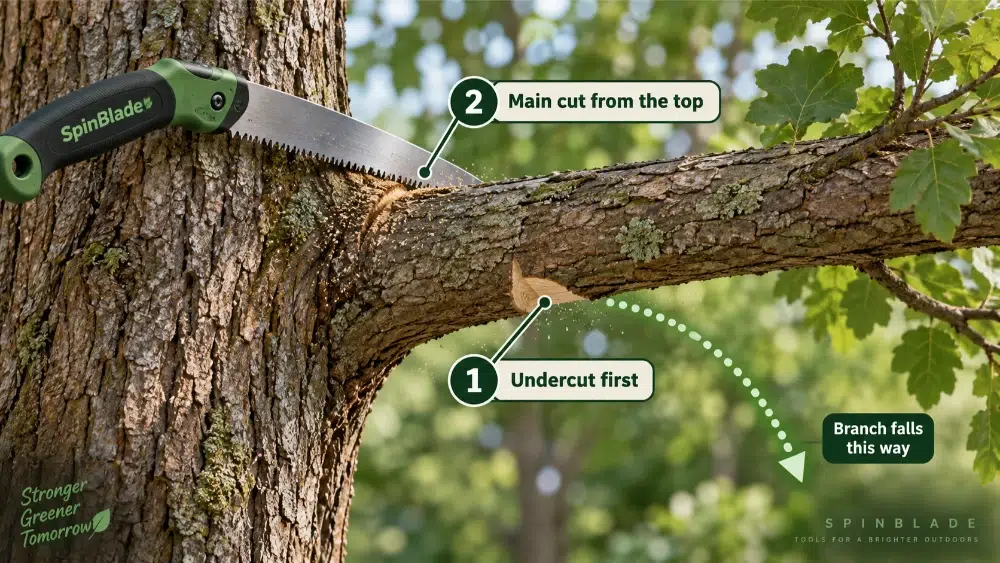
Once a branch is too thick for loppers, a pruning saw is the next tool up, one of the more essential tree cutting tools among all the tree pruning tools covered here. Pruning saw uses span routine maintenance to storm cleanup, and the use of pruning saw blades, among the more essential tree cutter tools on this list, comes down to sharp, serrated teeth that cut efficiently through denser wood than loppers can manage.
Best For:
- Branches too thick for loppers
- Dense or dead wood
- Branches out of comfortable reach — with a pole saw specifically
How to Use Them Properly:
- Start with a small upward stabilizing cut on the underside of the branch
- Follow with the main downward stroke
- Let the saw’s teeth do the cutting rather than pressing hard, which just wears the blade faster
4. Pole Pruners
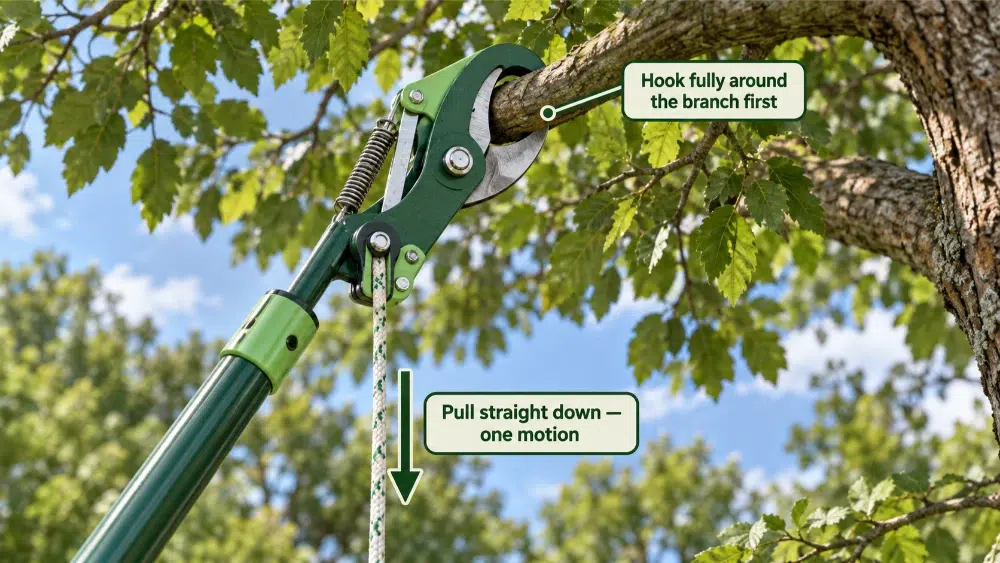
A pole pruner is often confused with a pole saw, but the two work differently: a pole pruner uses a rope-operated cutting head rather than teeth, making it the more precise of the two tree pruning tools designed for reaching height.
Best For:
- Branches up to about 1.5 inches thick at height
- Precise cuts a pole saw’s teeth would tear instead of clean
How to Use Them Properly:
- Position the hook around the branch first
- Pull the rope in one firm, continuous motion
- Avoid sawing at it repeatedly, which is the fastest way to dull the blade
5. Hedge Shears
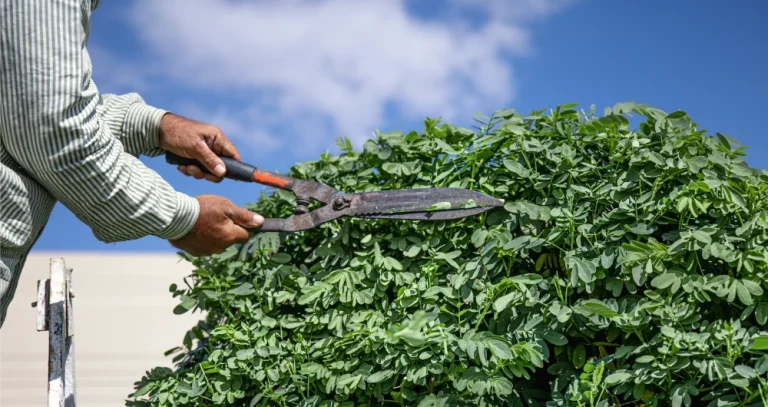
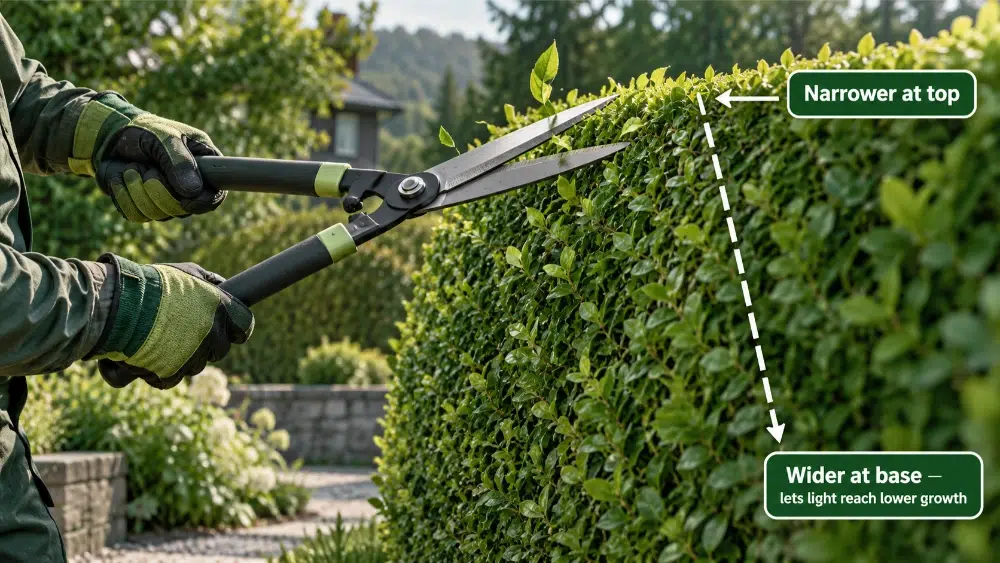
Hedge shears, one of the most common hedge pruning tools, are shape tools rather than size-reduction tools, a distinction that matters when choosing tools for trimming bushes and hedges rather than individual branches. Their long, straight blades are built for softer growth, not woody limbs.
Best For:
- Shaping hedges and shrubs
- Maintaining a clean, uniform line across a large area of growth
How to Use Them Properly:
- Cut at a slight angle
- Keep the top narrower than the base
- This lets light reach the lower growth instead of shading it out over time
6. Chainsaws
Chainsaws are the heaviest-duty tree trimming equipment on this list, reserved for jobs no hand tool can safely handle. Both power types are worth knowing, since which one fits depends more on the job than personal preference, and among professional pruning tools, this is the one homeowners most often underestimate.
Cordless vs. Gas Chainsaws: Cordless chainsaws offer flexibility without a cord and are well suited to mid-sized residential jobs. Gas chainsaws deliver more sustained power and remain the standard choice for heavier-duty tree pruning and large limb removal.
Best For:
- Large limb removal
- Felling small trees
- Any job hand tools simply can’t keep up with
How to Use Them Properly:
- Keep both hands on the saw at all times
- Never cut above shoulder height
- Let the chain’s own momentum do the cutting rather than forcing the bar through the wood
Not Sure Which Tool You Actually Need?
SpinBlade’s ISA-certified arborists, led by Cole Horton, use professional-grade tools matched to every job. Skip the guesswork, get a free assessment and let the pros make the right cut.
How to Choose the Right Tool for the Task
How to choose pruning tools, or tools for trees more generally comes down to two things: the branch’s diameter, and whether the wood is alive or dead. Whether you call them tools for pruning trees or tools for tree pruning, the same two questions apply every time.
For Shrubs and Small Branches
For shrubs and branches thinner than a thumb, hand pruners or shears are the right call, bypass blades for anything still living, anvil for dry material. As branches get slightly thicker, loppers pick up where hand pruners run out of leverage, cutting cleanly without the hand fatigue of forcing a smaller tool.
For Thick Branches and Trees
Thick branches need tools built to handle real weight and density without straining the wood or the person cutting it. A pruning saw handles anything too thick for loppers, a pole saw or pole pruner extends that reach upward, and a chainsaw takes over once the job moves past what any hand tool can manage safely.
Features of Quality Pruning Tools
Beyond choosing the right type of tool, the quality of tools used for pruning determines how well they perform and how long they last.
Material & Durability
Look for stainless steel or precision-ground steel blades, since both resist rust and hold an edge far longer than cheaper alternatives. A low-friction coating and built-in sap grooves reduce cutting resistance and stop sticky buildup from slowing the blade down mid-cut.
Ergonomic Design
Non-slip handles and shock-absorbing bumpers make a real difference over a long pruning session, reducing the wrist and hand fatigue that turns a simple job into a sore one. An angled cutting head also improves control, especially on awkward branch angles.
Safety & Maintenance
Regular sharpening and proper storage keep tools performing the way they’re supposed to, and a rusted blade is more than just an inconvenience, it’s the same kind of unchecked moisture damage that causes bigger problems indoors. If dampness or mould has become an issue in your home, mould removal services in Ottawa are worth a look for the same reason a rusted pruner is worth replacing: moisture left unchecked only gets worse.
Frequently Asked Questions
Conclusion
The best tree pruning tools aren’t the most expensive ones, they’re the ones matched correctly to the branch in front of you. From precision hand pruners for small live stems to a chainsaw for serious limb removal, having the right tree pruning tools on hand makes every cut cleaner and every tree healthier. If a job feels beyond what your tools can safely handle, SpinBlade’s ISA-certified arborists in Ottawa, led by Certified Utility Arborist Cole Horton, are ready to take it from there.
Not Sure Which Tool You Actually Need?
SpinBlade’s ISA-certified arborists, led by Cole Horton, use professional-grade tools matched to every job. Skip the guesswork, get a free assessment and let the pros make the right cut.