Trees need water to thrive, but more isn’t always better. An overwatered tree can develop many of the same symptoms as one suffering from drought, making it surprisingly easy to misdiagnose the problem. Learning how to recognize the warning signs early can help prevent lasting damage and give your tree the best chance of recovery.
Why Too Much Water Can Harm a Tree
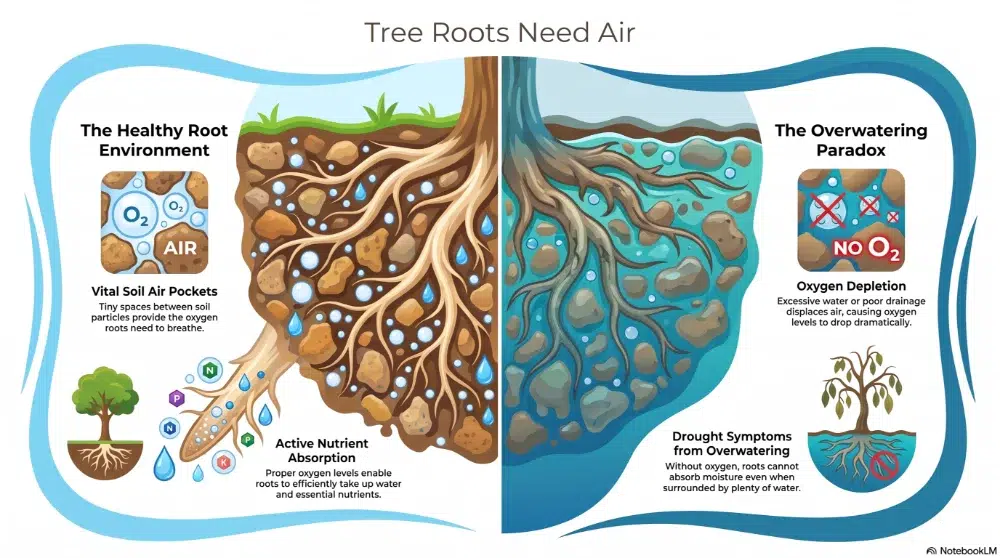
Healthy tree roots don’t just absorb water. They also need oxygen. Beneath the soil surface are tiny air pockets that allow roots to breathe while taking in water and nutrients. When excessive watering or poor drainage fills those spaces with water, oxygen levels drop dramatically, and the root system begins to struggle.
Rather than becoming healthier, trees under constant wet conditions often become stressed. Without enough oxygen, roots lose their ability to absorb the nutrients and moisture the tree needs, even though plenty of water is present. This is why overwatering trees can produce symptoms that closely resemble drought.
Over time, excess water can lead to several serious problems, including:
The longer soil remains saturated, the greater the damage becomes. Fine feeder roots, which are responsible for absorbing most of a tree’s water and nutrients, are especially vulnerable. As these roots die off, the entire tree becomes weaker, making it more susceptible to pests, disease, and environmental stress.
What Happens When Soil Stays Too Wet
The effects of excessive moisture don’t happen overnight. In many cases, damage develops gradually as roots spend days or weeks in oxygen-poor soil. During this time, trees expend more energy trying to survive than they do producing healthy new growth.
The lack of oxygen also creates ideal conditions for harmful fungi and other pathogens that thrive in wet environments. Once these organisms begin attacking the weakened root system, recovery becomes much more difficult.
| Healthy Soil | Waterlogged Soil |
|---|---|
| Contains air pockets around roots | Air pockets fill with water |
| Roots receive oxygen and moisture | Roots are deprived of oxygen |
| Strong nutrient absorption | Poor nutrient uptake |
| Healthy root development | Greater risk of fungal disease |
| Drains after rainfall | Remains saturated for long periods |
For this reason, watering frequency is just as important as the amount of water you apply. Even well-established trees can decline if the soil never has a chance to partially dry between waterings.
Not Sure What’s Causing Your Tree’s Decline?
Yellowing leaves, wilting, and slow growth aren’t always caused by overwatering. SpinBlade’s certified arborists can identify the underlying issue and recommend the right solution before the damage becomes more severe.
How to Tell if Your Tree Is Overwatered
Many of the most common overwatered tree signs can also point to other problems, including drought, nutrient deficiencies, or pests. Instead of relying on a single symptom, look at the tree as a whole and inspect the surrounding soil. By combining what you see with a few simple checks, you can more confidently determine whether excess water is the cause.
Overwatering vs. Underwatering a Tree
Because the symptoms can look similar, homeowners often mistake overwatering for drought stress. The key difference is the condition of the soil. Trees suffering from drought typically have dry soil and crispy, brown leaves, while an overwatered tree often has wet soil and yellowing or wilting foliage.
| Overwatering | Underwatering |
|---|---|
| Soil stays wet for days | Soil is dry several inches below the surface |
| Yellow or pale leaves | Brown, dry, or crispy leaves |
| Wilting despite wet ground | Wilting with dry soil |
| Mushrooms or fungal growth | Cracked, dry soil |
| Slow growth from root stress | Slow growth from lack of moisture |
Taking a few minutes to inspect both the tree and the surrounding soil is usually the most reliable way to tell if a tree is overwatered. Identifying the cause early allows you to adjust your watering practices before the damage becomes severe.
1. Look for Changes in the Leaves
The leaves are often the first place an unhealthy tree shows signs of stress. One of the most common overwatered tree symptoms is foliage that gradually turns yellow or pale instead of maintaining a healthy green colour. You may also notice leaves beginning to wilt, curl slightly, or drop earlier than usual, even though the soil feels consistently damp.
These changes happen because waterlogged roots struggle to absorb oxygen and nutrients. As the root system weakens, the tree can no longer move water efficiently to its canopy, causing symptoms that closely resemble drought.
Quick Check
If you notice yellowing or wilting leaves, dig down about 2 to 4 inches near the drip line of the tree. If the soil still feels wet several days after watering or rainfall, excess moisture could be contributing to the problem.
Inspect the Soil Around the Tree
Sometimes the clearest signs of overwatering a tree are found beneath your feet rather than in the canopy. Healthy soil should feel moist after watering but gradually dry out before the next irrigation cycle. If the ground remains soggy for days, pools of water collect around the trunk, or the soil feels muddy long after rainfall, drainage may be inadequate.
Heavy clay soils, compacted ground, low-lying areas, and automatic irrigation systems that run too frequently can all contribute to waterlogged conditions.
Quick Check
Insert a screwdriver, garden trowel, or soil probe into the ground. If it slides in with almost no resistance and the soil sticks heavily to the tool, it’s a sign the area may be staying too wet.
Watch for Fungal Growth and Root Problems
Persistent moisture creates the ideal environment for fungi to thrive. Mushrooms growing near the base of the tree, fungal growth on exposed roots, or a sour, musty smell coming from the soil can all indicate that the root zone has remained saturated for too long.
Over time, these conditions may lead to tree root rot, a serious disease that damages the root system and reduces the tree’s ability to absorb water and nutrients. If left untreated, root rot from overwatering can eventually compromise the tree’s stability and overall health.
Quick Check
Look around the base of the trunk after periods of wet weather. Repeated mushroom growth or soft, decaying roots are warning signs that excess moisture may be causing underground damage.
Look for Signs of Declining Growth
Not all symptoms appear immediately. Some trees slowly decline over months or even years before homeowners realize something is wrong. Sparse foliage, smaller-than-normal leaves, dead branch tips, and reduced seasonal growth often indicate a stressed root system.
If your tree seems less vigorous than it was in previous years despite receiving regular water, excessive moisture may be limiting healthy root development.
Quick Check
Compare your tree with others of the same species nearby or think back to previous growing seasons. A noticeable decline in canopy density or annual growth can help confirm that the problem extends beyond temporary stress.
SUMMARY:
| What You Notice | What to Check Next | What It Could Mean |
|---|---|---|
| Yellow or pale leaves | Soil moisture | Oxygen-starved roots |
| Wilting despite wet soil | Drainage around the roots | Root stress from excess water |
| Mushrooms near the trunk | Root zone | Fungal activity |
| Standing water after rain | Soil drainage | Poor drainage or overwatering |
| Sparse canopy or dieback | Overall tree health | Long-term root damage |
How to Help an Overwatered Tree Recover
If you’ve confirmed your tree is receiving too much water, acting quickly can prevent further damage and improve its chances of recovery. While severely damaged root systems may take time to recover, many trees respond well once soil conditions improve and healthy root growth can begin again.
Reduce Watering Frequency
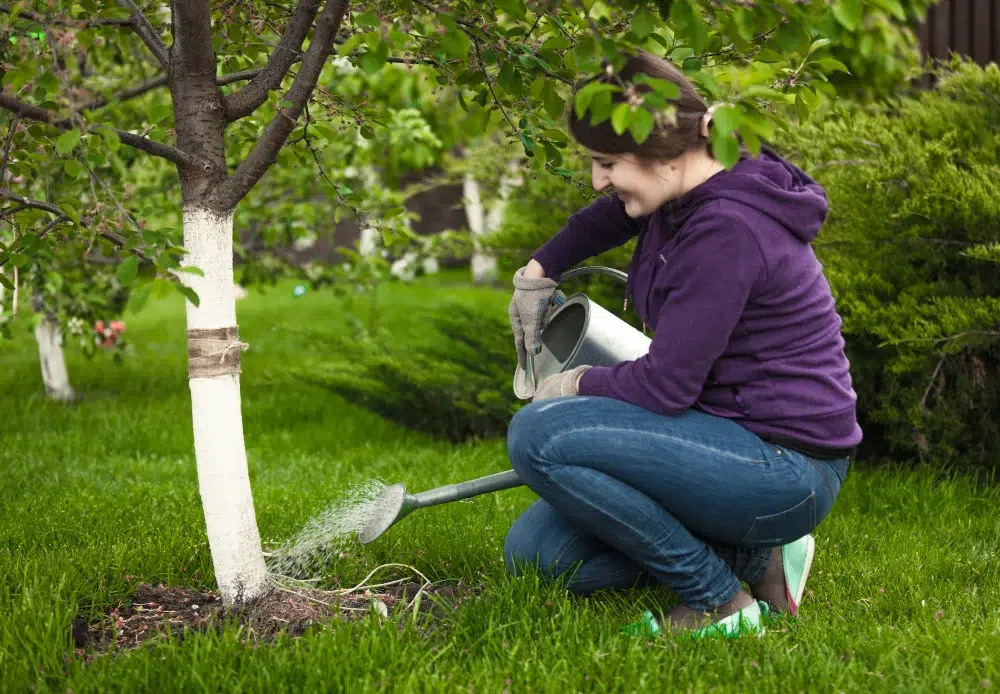
The first step is to stop watering until the soil has had a chance to dry to an appropriate moisture level. Exactly how long this takes depends on the tree species, soil type, weather conditions, and the time of year.
Once the soil has partially dried, return to a schedule that focuses on deep, infrequent watering instead of frequent shallow watering. This encourages roots to grow deeper into the soil, where moisture levels are more consistent. Following proper tree watering practices helps maintain the balance between moisture and oxygen that healthy roots need.
If you use an automatic irrigation system, check the schedule and make seasonal adjustments. Many systems continue running after periods of heavy rain unless they’re equipped with a rain sensor or soil moisture sensor.
Improve Drainage Around the Roots
Sometimes the issue isn’t how much you’re watering but how well the soil drains. Even moderate watering can become a problem if excess water has nowhere to go.
To improve drainage around your tree:
- Redirect downspouts so they don’t empty near the root zone.
- Break up compacted soil carefully to improve water infiltration.
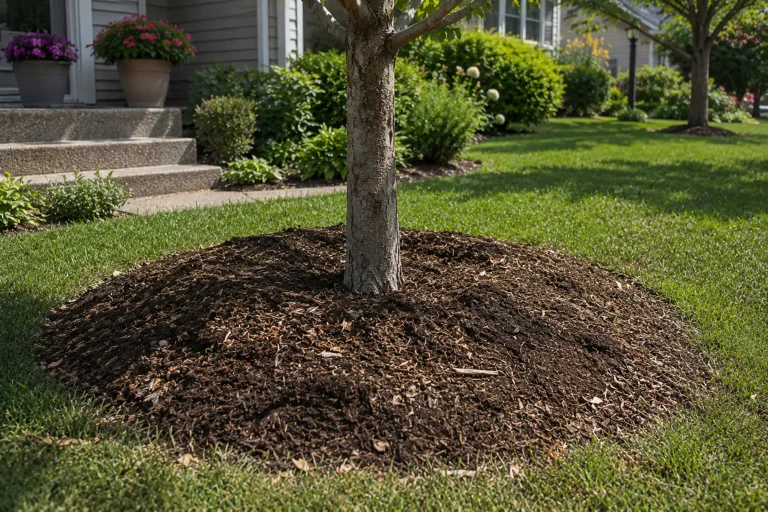
- Avoid piling soil or mulch against the trunk.
- Correct low spots where water naturally collects.
- Reduce irrigation frequency during cool or rainy weather.
If poor drainage affects a large area, professional solutions such as soil aeration, grading improvements, or drainage systems may be necessary.
If you want to try this yourself, this step-by-step garden-fork aeration guide shows how to loosen the root zone by hand without damaging roots.
Avoid Common Tree Watering Mistakes
Many cases of overwatering happen with the best intentions. Homeowners often water on a fixed schedule without considering recent rainfall or how quickly their soil dries.
Some of the most common tree watering mistakes include:
The best approach is to monitor soil moisture rather than watering by the calendar. This is one of the simplest ways to ensure you’re watering trees correctly throughout the growing season.
When It’s Time to Call a Professional
Some trees recover quickly once watering habits are corrected, while others continue declining because root damage has already occurred. If yellowing leaves worsen, large branches begin dying back, the trunk becomes unstable, or fungal growth continues appearing around the base, it’s time for a professional assessment.
An experienced arborist can determine whether the root system is still healthy, identify drainage problems that may not be obvious from the surface, and recommend the most effective course of action. Early intervention often makes the difference between saving a valuable tree and having to remove it.
Knowing when to seek professional help can also prevent unnecessary treatments. Because many tree health problems share similar symptoms, it’s easy to mistake overwatering for drought stress, nutrient deficiencies, insect damage, or disease. A thorough assessment helps identify the true cause before corrective action is taken.
A professional inspection is recommended if:
SpinBlade’s certified arborists evaluate the overall health of your trees, identify issues affecting the root system, and recommend practical solutions based on your property’s unique conditions. We can also diagnose and treat problems such as fungal diseases, root rot, and other conditions that may develop as a result of prolonged overwatering.
Book a Tree Health Assessment
Concerned your tree is overwatered? SpinBlade’s certified arborists can assess its condition, identify the cause, and recommend the right treatment. Contact us today to book a Tree Health Assessment.
Frequently Asked Questions
Still scratching your head? Here are quick answers to some of the most common questions people have.
In Short,
An overwatered tree can be just as vulnerable as one that’s suffering from drought, but recognizing the warning signs early gives you the best chance of reversing the damage. By checking soil moisture, improving drainage, and adjusting your watering routine, you can create healthier conditions for your tree’s roots to recover. If symptoms continue to worsen or you suspect extensive root damage, a professional tree assessment can help identify the problem before it becomes irreversible.