


Root rot is one of the most damaging and commonly overlooked tree health issues in residential landscapes. Because it develops below ground, the earliest stages rarely produce obvious warning signs, allowing damage to progress quietly over time.
In Canadian regions, heavy soils, seasonal moisture, and urban compaction make conditions especially favorable for this type of decline. This article will explore what causes these below-ground infections, how to recognize the warning signs above ground, and what homeowners can do to protect their trees.
What Is Root Rot?
Root rot is not a single disease with a single cause. It is a broad term used to describe several soil-borne fungal and water-mold infections that attack tree roots, gradually interfering with their ability to absorb water, transport nutrients, and anchor the tree. This distinction matters because there is no universal treatment, and because surface symptoms rarely tell the full story.
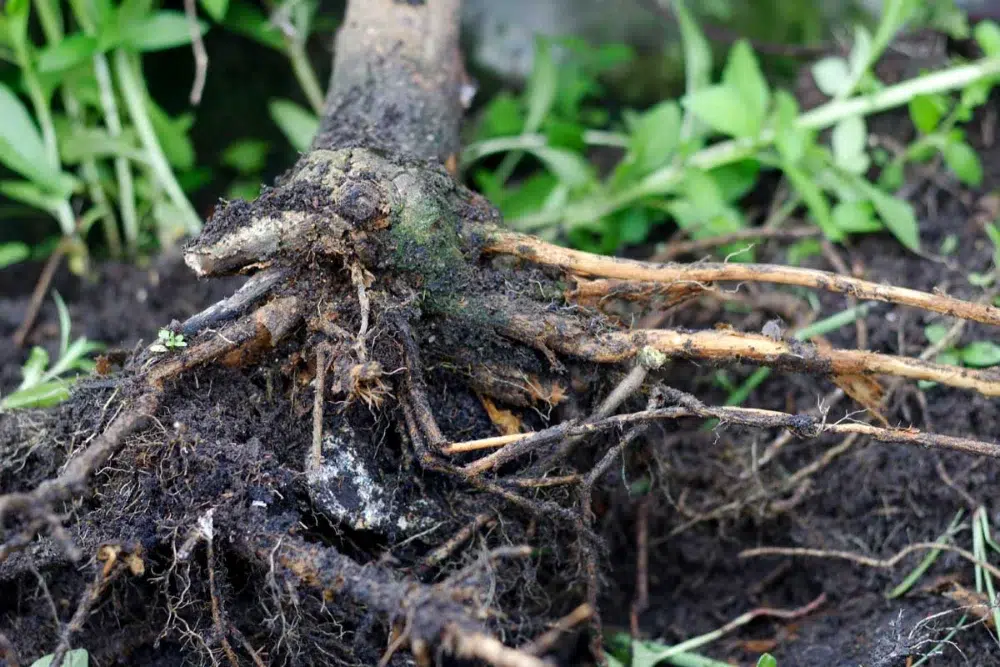
Root rot typically develops when one or more of the following conditions persist over time:
These factors create the conditions that allow decay organisms to establish and spread below ground.
How Root Rot Differs From Leaf-Level Diseases
Unlike tree diseases that announce themselves clearly on leaves and shoots, root rot operates out of sight. By the time above-ground symptoms appear, the infection has often been active for months or even years. This delayed visibility is what makes root rot particularly dangerous, it gives the impression of sudden decline when the damage has actually been building quietly over time.
Lifecycle Overview: Root rot pathogens typically start in soil or water around stressed roots. They colonize fine feeder roots first, gradually spreading to structural roots and the root collar. The fungus or water mold feeds on root tissue, weakening the tree’s ability to take up water and nutrients. Over time, this leads to progressive canopy thinning, branch dieback, and in severe cases, structural instability or sudden tree failure. Understanding this timeline underscores why early detection and preventative site management are so important.
Diseases Commonly Grouped Under “Root Rot”
The term “root rot” is often used as shorthand for several different below-ground diseases that share similar outcomes but behave differently over time. The examples below illustrate how decline tends to begin, progress, and eventually affect the visible parts of the tree. They are not meant to replace professional diagnosis, which usually requires evaluating soil conditions, root health, and site history together.
| Disease | Typical Conditions | How Decline Progresses | Common in Canada | Can Be Mistaken For |
|---|---|---|---|---|
| Phytophthora Root Disease | Poor drainage, compacted or saturated soils | Gradual decline over multiple seasons; reduced growth, smaller leaves, and canopy thinning | Very common in clay soils and irrigated landscapes | Drought stress, nutrient deficiency |
| Armillaria Root Disease | Shared root zones, old stumps, stressed or injured trees | Structural root decay that may progress slowly or lead to sudden failure during storms | Common in forests and residential areas | Natural aging, environmental stress |
| Opportunistic Root Decay Fungi | Chronic stress, soil compaction, root injury | Long-term decline with scattered dieback that worsens over time | Common in urban and suburban sites | General tree stress, leaf-level diseases |
How Root Rot Harms Your Trees
Roots are the engine that keeps a tree alive. When root systems are damaged by disease, the impact is systemic, affecting water uptake, nutrient absorption, energy storage, and structural stability all at once.
What makes this type of damage especially serious is how quietly it progresses. A tree may compensate for declining roots for years, masking the problem above ground. Once that internal buffer is exhausted, decline can accelerate rapidly, often triggered by heat, drought, or strong winds. At that point, treatment options narrow, and concerns shift from recovery to safety and long-term viability.
Consequences of untreated root rot include:
Get a Clear Assessment before treating.
Misdiagnosis often leads to unnecessary costs and potentially damage. An experienced arborist can assess species, timing, and stress factors to ensure the right treatment.
Trees More Commonly Affected by Root Rot in Canadian Landscapes
Root rot is best understood as a site-driven problem. Poor drainage, grade changes, soil compaction, and chronic moisture stress create the conditions that allow decay organisms to establish. Even species considered relatively tolerant can decline when these factors persist over time.
That said, some trees appear more frequently in root rot cases because their root structure or typical planting locations make them less forgiving under poor conditions.
| Tree Type | Why They’re More Often Affected | Common Site-Related Factors |
|---|---|---|
| Maple | Sensitive to low oxygen levels in soil | Compacted urban soils, restricted root zones |
| Birch | Shallow roots and low tolerance for prolonged moisture | Poor drainage, fluctuating soil conditions |
| Spruce | Sensitive to root collar burial and wet soils | Heavy clay, planting too deep |
| Pine | Limited tolerance for chronically saturated soils | Poor drainage, clay-heavy sites |
| Willow & Poplar | Often planted where moisture-loving pathogens thrive | Low-lying areas, consistently wet soil |
Species trends help explain where root rot shows up most often, but they don’t determine outcomes on their own. Soil conditions, planting depth, and site history remain the strongest predictors of long-term root health.
Above-Ground Signs That Often Point to Root Rot
Root problems rarely show themselves directly. What homeowners usually notice are changes in leaves, growth, or overall structure. The key is not any single symptom, but how several of them appear together and evolve over time.
Below, the signs are grouped by stage of decline so readers can orient themselves more easily.
Early Warning Signs (Often Overlooked)
These symptoms tend to appear gradually and are easy to dismiss as temporary stress or seasonal variation.

At this stage, the tree is compensating. Decline is present, but not yet obvious.
Why Some “Common Signs” Are Left Out In This List
This section focuses on symptom patterns that develop over time rather than isolated features that are easily misinterpreted. The following are often mentioned online but intentionally excluded from our list as diagnostic indicators:
Progressing Symptoms (Structural Stress Becomes Visible)
As root damage advances, the canopy begins to show clearer, more persistent changes.
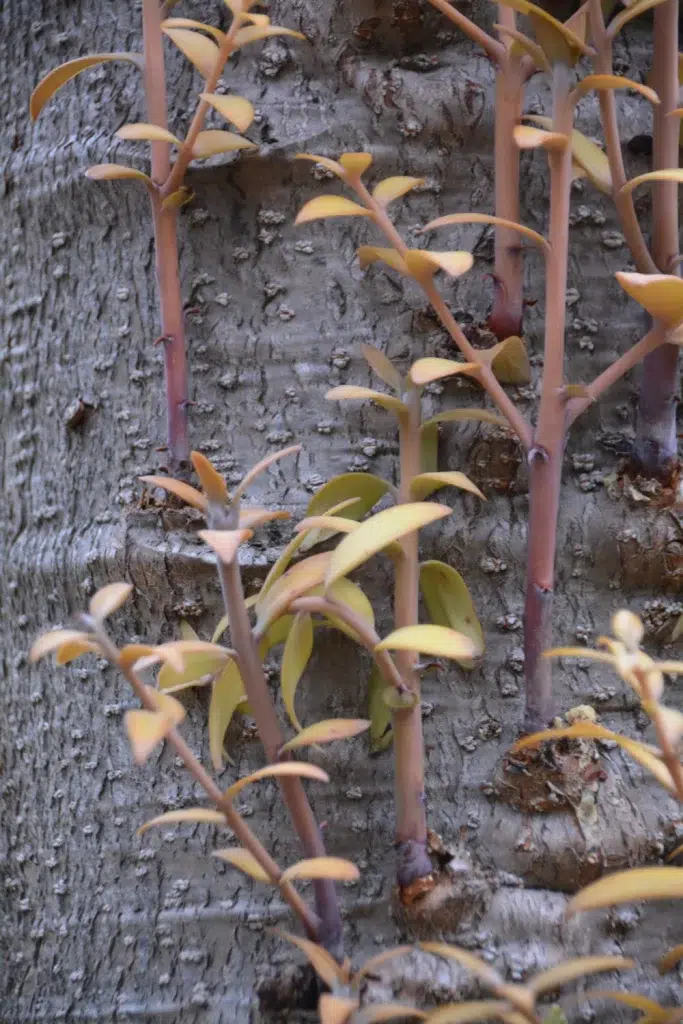
These signs usually indicate that the problem has been developing below ground for multiple seasons.
Severe Indicators (High Risk Stage)
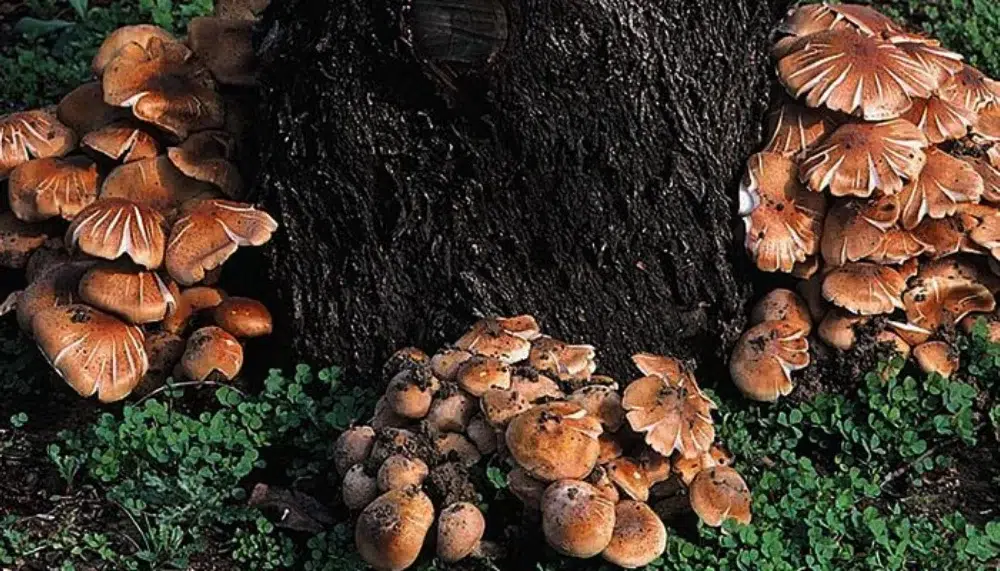
At this point, the tree’s stability and long-term survival are often compromised.
These symptoms suggest that intervention options may be limited and outcomes less predictable, making professional assessment important to determine whether the tree can be stabilized or poses a potential safety risk that may require removal.
Why These Signs Are So Often Misinterpreted
Because root rot interferes with a tree’s ability to absorb water and nutrients, affected trees may show decline patterns similar to those associated with vascular diseases such as Dutch elm disease. Ongoing stress can also make trees more vulnerable to secondary problems, including parasitic plants like mistletoe.
Two patterns help distinguish deeper root issues:
When surface-level solutions fail to produce improvement, it’s a strong indication that the issue originates below ground rather than in the leaves or branches.
Can Homeowners Treat Root Rot Themselves?
In early or stress-related cases, homeowners may be able to slow progression by correcting the conditions that weaken roots. These actions support root function but do not eliminate decay organisms.
Early-stage steps that may help include:
These measures are most effective when symptoms are mild, recent, and primarily driven by environmental stress rather than established decay.
When Root Rot Can No Longer Be Treated at Home
Once decay fungi become active within the root system, treatment options narrow significantly. At this stage, the tree is no longer responding to environmental correction alone.
Fungicides have limited effectiveness in soil environments and are not a reliable solution for mature trees. In some cases, inappropriate treatments can worsen decline by adding stress or disrupting beneficial soil organisms that help support remaining root function.
If symptoms extend beyond what’s described earlier, or if decline continues despite corrective efforts, the tree should be professionally assessed before attempting further intervention. Multiple issues, such as soil stress combined with vascular disease, can occur at the same time, and misidentifying the cause increases the risk of irreversible damage or structural failure.
When Professional Assessment Is Recommended
Professional evaluation becomes especially important when surface-level explanations no longer fit what you’re seeing. Some decline patterns signal deeper, compounding problems that routine care adjustments can’t correct on their own, particularly when root health or site conditions are involved.
Professional assessment is strongly advised when:
In these scenarios, accurate diagnosis is more than just a matter of health, it’s about risk management. Identifying the true cause early helps prevent unnecessary treatments, avoid sudden failures, and protect both the tree and the space around it.
Get a Clear Assessment before treating.
Misdiagnosis often leads to unnecessary costs and potentially damage. An experienced arborist can assess species, timing, and stress factors to ensure the right treatment.
FAQ: Root Rot
Here are common questions homeowners have when trying to root rot in trees:
In Short,
Root rot is one of the most challenging tree problems homeowners face because its causes and effects are largely hidden from view. What looks like a simple canopy issue is often the result of long-term stress below ground, shaped by soil conditions, drainage, and past disturbances rather than a single event.
Understanding how root damage develops helps set realistic expectations and prevents wasted effort on treatments that don’t address the real issue. When decline patterns don’t improve or risks increase, early professional assessment can make the difference between preserving a tree and facing unexpected loss.


