


Timing changes everything when it comes to tree care. The best time to trim trees depends on the tree’s species, the season, and why you’re trimming in the first place, not just when you happen to have free time. This guide answers when is the best time to trim trees, based on real growth patterns rather than guesswork.
Important
In most of Ontario, the best time to trim trees is late winter to early spring, while they’re dormant. Exceptions apply for flowering trees, fruit trees, and safety hazards, both covered below.
What Is Tree Trimming?
Tree trimming is the process of selectively removing branches to improve a tree’s health, shape, and safety. It also allows more sunlight to reach surrounding plants, creating a more balanced landscape overall. For the full process and tools involved, see our guide to tree trimming.
What Determines the Best Time to Trim Trees?
The best time to trim trees isn’t fixed, it shifts based on four factors working together: species, growth cycle, purpose, and climate. Knowing when should you trim trees starts with understanding these four, since getting them right is what separates a trim that helps the tree from one that stresses it.
Tree Species
Different species have different growth patterns, which is exactly why when to trim trees changes so much from one tree to the next. Deciduous trees like oak and birch drop their leaves and go fully dormant, making late winter the safest window since their structure is easy to see and sap isn’t actively flowing.
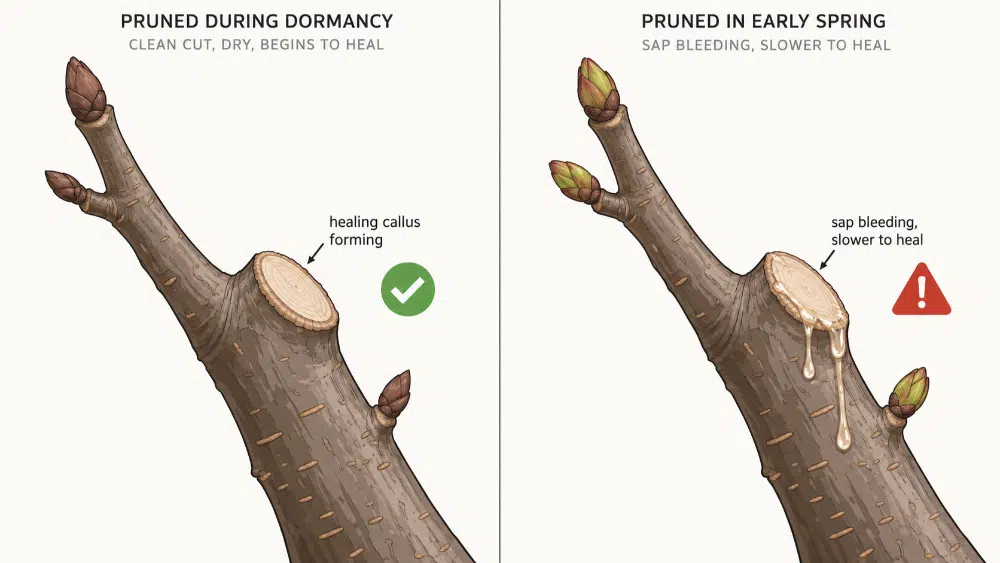
Coniferous trees like pine and spruce don’t go dormant the same way, so they respond better to trimming once new growth appears in early summer. Sap-heavy species like maple behave differently again, cutting them in early spring, right as sap starts moving, causes heavy bleeding that a dormant-season cut avoids entirely.
Growth Cycle & Dormancy
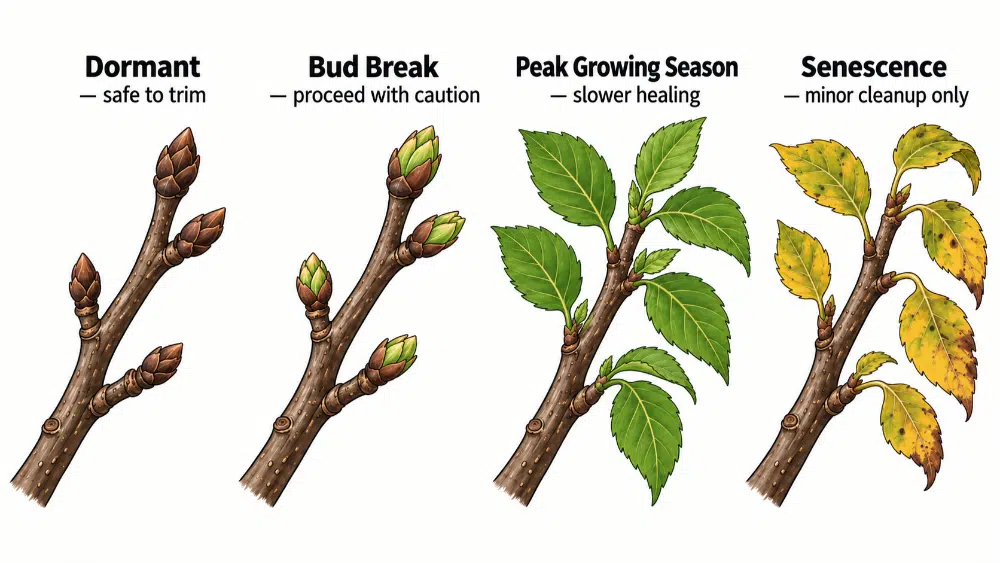
A tree moves through four real stages each year: dormancy, when all energy is stored in the roots and nothing above ground is actively growing; bud break, when buds swell and new growth begins; peak growing season, when the tree is fully leafed out and spending the most energy; and senescence, when growth slows as the tree prepares for dormancy again. Trimming during dormancy is safest across nearly every stage, since the tree isn’t diverting energy toward healing a fresh cut.
Trimming right at bud break can redirect stored energy toward the buds that remain, which is why formative cuts on young trees often happen at this exact point. Waiting until peak growing season means slower healing since the tree’s energy is already spent elsewhere, and trimming during senescence risks the cut not sealing before winter sets in.
Purpose (Health, Growth, Aesthetic, or Safety)
Why you’re trimming changes when you should do it, a health-focused cut and a purely aesthetic one don’t follow the same calendar.
Local Climate
What time of year to trim trees works best also depends on your local climate, not just the calendar. Humid or wet regions carry a higher risk of fungal disease after a cut, so trimming during a drier stretch lowers that risk regardless of which season it technically is. Areas with unpredictable freeze-thaw cycles, like much of Ontario, benefit from timing cuts after the last hard frost rather than by a fixed date, since a late freeze can damage a fresh cut before it heals.
Best Time to Trim Trees by Season
Think of this section as a seasonal guide to tree trimming you can return to every year, each season offers a different trade-off, which is why the best time to trim trees is really a seasonal decision as much as a species one.
Winter (Late Winter Dormancy)
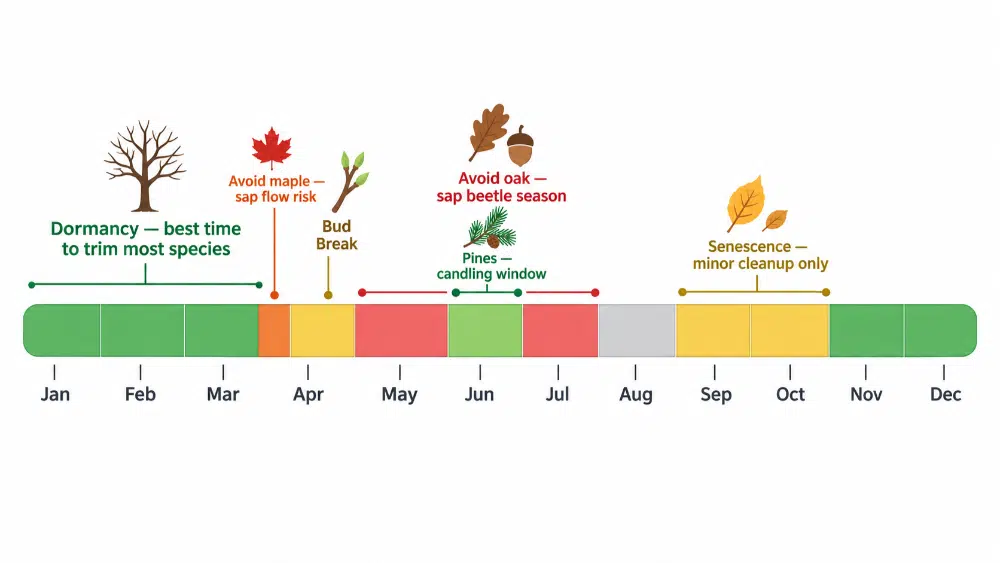
Late winter is when trees are dormant, making their structure easy to see and cuts easy to place precisely. It’s also when disease and pests are least active, which is why this is genuinely a good time to trim trees for most species, arguably the best time of year to trim trees overall.
That said, winter isn’t universal, maple is the clear exception, since even a late-winter cut can catch an early sap rise in a mild year. Spruce and pine tolerate winter trimming well, since they aren’t sap-sensitive the same way.
Spring (Post-Bloom)
Right after blooming, a tree is actively growing, so cuts heal quickly. This window maintains shape without disrupting next season’s blooms.
Spring-flowering species like lilac, forsythia, and dogwood are the real exception worth knowing, they set next year’s flower buds shortly after this year’s blooms fade, so this is the one window to shape them without cutting off next season’s flowers. Maple and birch fall the opposite way: both are heavy “bleeders,” and a spring cut while sap is actively rising can weep for days, so they’re better left for a dormant-season trim instead.
Summer (Early Summer)
Early summer trimming manages growth and improves air circulation and light reaching inner branches. It’s a good window for controlling size while the tree is still actively growing.
Pines are the standout case here, “candling,” where new growth is pinched back by hand while it’s still soft, only works during this narrow early-summer window and can’t be done later once the growth hardens. Oak is the opposite case entirely: avoid cutting oak between April and July, since that’s when the sap beetles that spread oak wilt are most active, and even a small wound is enough to let the fungus in.
Fall
Fall trims heal more slowly and carry a higher decay risk, so it’s generally not treated as the ideal time to trim trees for anything beyond minor cleanup. Removing dead or damaged branches is still fine, full structural trims should wait.
Stone fruit trees like cherry and plum carry a specific fall risk worth flagging: wounds made in cool, wet fall conditions are more prone to silver leaf disease, a fungus that enters through fresh cuts. Evergreens are more forgiving in fall since they’re not actively pushing new growth, but anything beyond removing an obviously dead branch is still better saved for late winter.
Not Sure If It’s the Right Time to Trim Your Tree?
SpinBlade’s Cole Horton, a Certified Utility Arborist, will read your tree’s actual condition, not just the calendar, and tell you exactly when to trim it. Get a free assessment and skip the guesswork.
When Not to Trim Trees
A few conditions are worth avoiding entirely, regardless of what the calendar says.
- High sap flow periods, like maple in early spring, which can cause excessive bleeding
- Extreme heat or drought stress, when the tree has little energy to recover
- Right before a hard freeze, since fresh cuts won’t have time to callous over
These guidelines don’t apply to hazardous or storm-damaged branches, those should be removed immediately regardless of season. For full safety practices around removing hazardous branches, see our guide to tree trimming safety.
Best Time to Trim Trees by Species
Species matters as much as season. The table below breaks down the best time to trim trees by type, including two species often left out of guides like this: maple and cedar.
| Tree Type | Examples | When to Trim | Why |
|---|---|---|---|
| Deciduous | Oak, Birch | Late winter–early spring | Dormant, reduces stress and disease |
| Maple | Sugar maple, Red maple | Mid-to-late summer or winter | Avoids high spring sap flow |
| Cedar | Eastern white cedar | Late winter or early spring | Shapes growth before the active season |
| Coniferous | Pine, Spruce, Fir | Early summer | New growth visible, easy to shape |
| Fruit Trees | Apple, Cherry, Pear | Late winter | Encourages better fruit production |
| Flowering Trees | Dogwood, Magnolia | After blooming, or late winter | Protects next season’s blooms |
| Young Trees | Newly planted | Late winter–early spring | Shapes structure early |
A few species are worth calling out directly, since they don’t follow the general table above:
Best Time to Trim Trees in Ontario
The best time to trim trees in Ontario follows the same species and season rules covered above, just shifted slightly later than milder regions. Winters run cold enough that dormancy lasts longer here, stretching the ideal window into early spring rather than closing it off in February. When to trim trees in Ontario specifically comes down to watching for the first sustained thaw rather than a fixed date.
For Ottawa properties, a professional tree trimming schedule accounts for both the tree’s dormancy and the region’s unpredictable early-spring freeze-thaw cycles. That’s often the right time to trim trees to catch, right as the thaw stabilizes, before new growth starts.
How an Arborist Helps You Time It Right
Reading a calendar only gets you so far, an arborist reads the tree itself. A trained eye can spot bud swell, early sap movement, or the first signs of stress that tell a very different story than “it’s currently March,” and adjust the timing accordingly instead of following a generic rule.
This matters most exactly where this guide points out exceptions: knowing to hold off on oak during sap-beetle season, catching a maple that’s already started running sap earlier than expected, or recognizing when a “dead” branch is actually still alive and doesn’t need removing yet. SpinBlade’s work is led by Cole Horton, a Certified Utility Arborist (CUA), and ISA-certified who trained through a 4-year apprenticeship with the Ontario College of Trades, exactly the kind of judgment call a homeowner following a blog post alone can’t make.
Beyond timing, a professional assessment also catches issues a homeowner might miss entirely. a structural weakness, an early disease sign, or a hazard that changes the whole plan regardless of season.
Frequently Asked Questions
Conclusion
Choosing the best time to trim trees comes down to matching species, season, and purpose rather than picking a date at random. Late winter to early spring works for most trees, but exceptions like maple’s sap flow or a hazardous branch always take priority. If you’re not sure where your tree fits, a professional assessment takes the guesswork out of it.
Not Sure If It’s the Right Time to Trim Your Tree?
SpinBlade’s Cole Horton, a Certified Utility Arborist, will read your tree’s actual condition, not just the calendar, and tell you exactly when to trim it. Get a free assessment and skip the guesswork.


