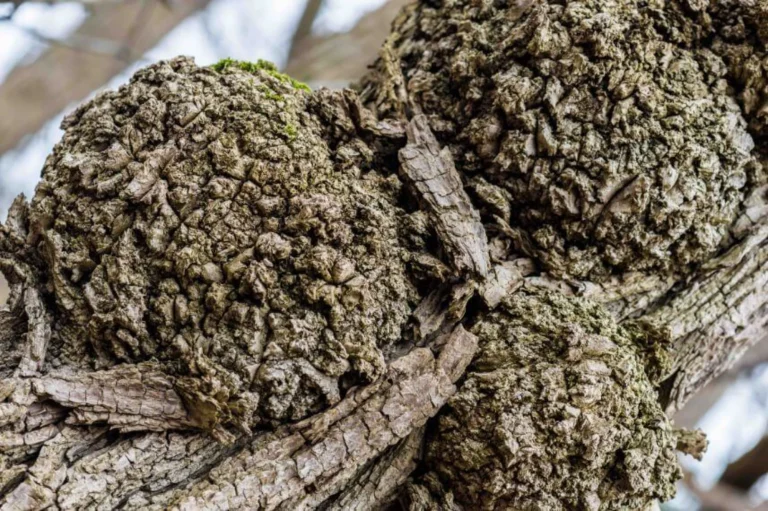
Trees across Canada often show signs of stress as the growing season progresses, especially during hot, dry stretches where leaves begin to brown and drop earlier than expected. While many assume it’s simply a lack of water or changing weather patterns, some cases point to a more persistent underlying issue.
One of the more overlooked causes is Bacterial Leaf Scorch, a disease that can quietly impact tree health over several years. Understanding what’s happening beneath the surface is the first step toward making informed decisions about care.
What is Bacterial Leaf Scorch disease?
Bacterial Leaf Scorch (BLS) is a chronic tree disease caused by a bacterium called Xylella fastidiosa, that lives within the tree’s water-conducting tissues, gradually restricting its ability to transport moisture. Unlike more aggressive infections that show rapid decline, this disease typically progresses slowly, making it harder to detect early and easier to misinterpret as environmental stress. Within the broader category of types of tree diseases, it stands out for how it disrupts internal function rather than causing visible external damage right away.
What often adds to the confusion is how closely bacterial leaf scorch can resemble environmental leaf scorch, a much more common issue caused by heat, drought, or poor soil conditions.
While both can produce similar browning along leaf edges, the underlying cause, and long-term outcome, are very different. Environmental leaf scorch affects the tree externally and may improve when conditions stabilize, whereas Bacterial Leaf Scorch develops internally and tends to worsen over time as water movement becomes increasingly restricted.

Common trees affected by Bacterial Leaf Scorch in Canada
While the disease can affect a range of species, its presence in Canada tends to be more noticeable in certain hardwood trees, particularly those already dealing with environmental stress. Urban settings, compacted soils, and inconsistent watering conditions can make some trees more vulnerable than others.
The most commonly affected trees include:
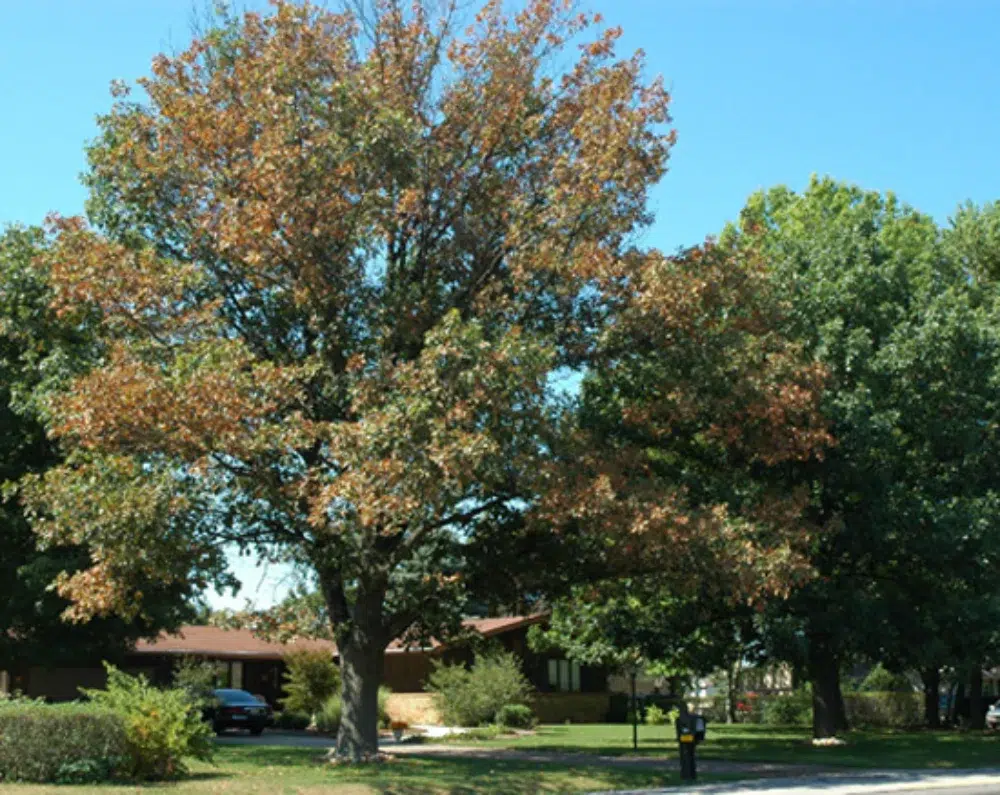
These species are more susceptible due to how their vascular systems respond to stress and how attractive they are to insect carriers that spread the bacteria.
In cities and suburban areas especially, where trees often face limited root space and fluctuating moisture levels, the likelihood of infection and progression tends to increase.
How it develops and spreads
To understand why this disease is so persistent, it helps to look at how it establishes itself and moves between trees. Bacterial Leaf Scorch doesn’t spread randomly, it relies on specific conditions and vectors that make certain environments more at risk.
Avoid Costly Misdiagnosis
Treating the wrong problem can accelerate damage. Spinblade helps ensure your trees receive the right diagnosis and care from the start.
How to identify Bacterial Leaf Scorch disease in your trees
Recognizing this disease early can make a significant difference in how you manage it. Because bacterial leaf scorch closely resembles environmental leaf scorch caused by heat or drought, the key is to assess how symptoms appear, where they show up, and whether they return year after year. While environmental stress can often be corrected, this disease behaves very differently beneath the surface.
Step 1: Look for the signature leaf pattern
The earliest and most telling signs appear on the leaves, usually during mid to late summer when trees are under the most stress.
| Stage | Leaf Symptoms | Tree-Level Signs |
|---|---|---|
| Early | Browning at leaf edges with a faint yellow outline | Often limited to a few branches |
| Mid-stage | Scorching spreads inward between veins | Noticeable canopy thinning |
| Advanced | Widespread browning and early leaf drop | Branch dieback, visible decline |
What makes Bacterial Leaf Scorch distinct is the defined “scorched edge”, often separated from healthy green tissue by a thin yellow band. However, this alone isn’t enough to confirm the disease, since environmental leaf scorch can produce a similar appearance under severe conditions.

Step 2: Check how the symptoms are distributed
Once you’ve noticed leaf damage, the next step is to look at how it’s spread across the tree. This helps rule out more common issues quickly.
With Bacterial Leaf Scorch, symptoms tend to follow the internal movement of the bacteria through the tree’s vascular system. That usually creates a more localized and irregular pattern, especially in early stages.
You’ll often see:
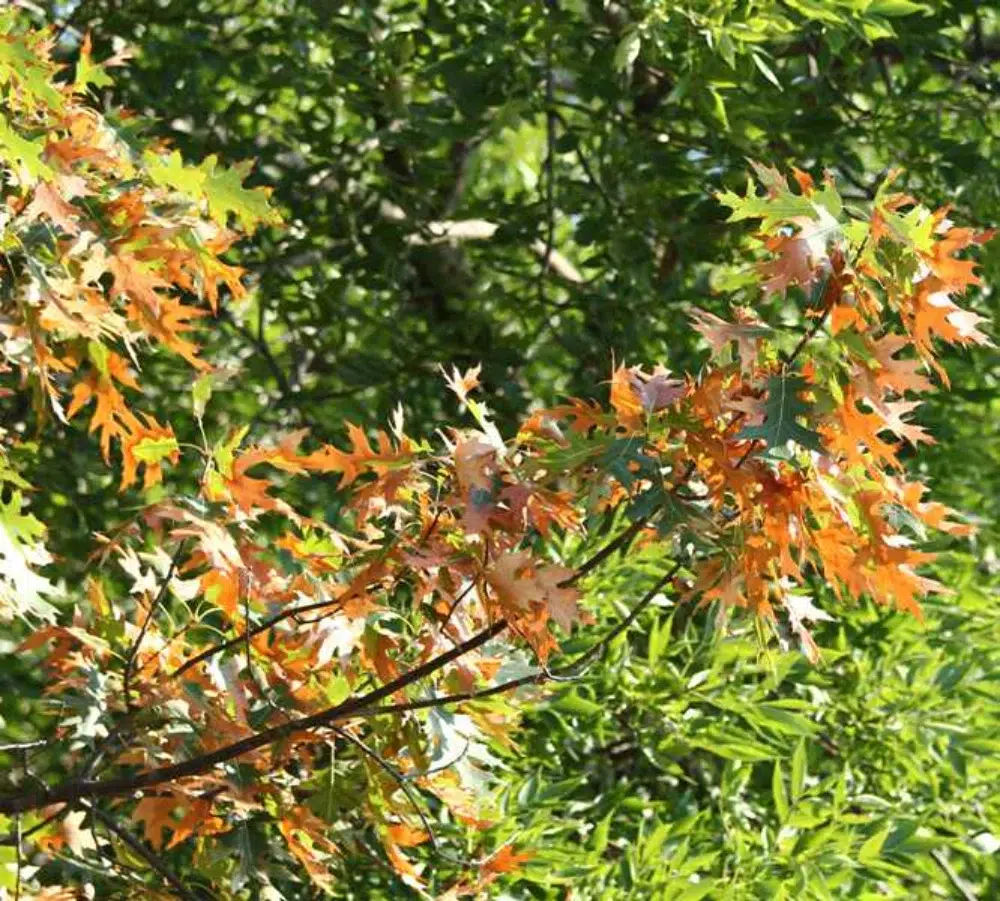
Environmental stress, on the other hand, tends to impact the tree more evenly across outer leaves, and in areas exposed to more sunlight, especially when related to watering or soil conditions.
Step 3: Pay attention to timing and repetition
This is one of the most reliable ways to distinguish between the two. A single season of leaf scorch doesn’t confirm much, whereas repeated patterns are a strong indicator of the disease.
Typical progression:
If the issue comes back in the same areas each year and slowly worsens, that’s a strong indicator of bacterial leaf scorch rather than temporary stress.
Step 4: Rule out more common causes first
Before assuming a bacterial disease, it’s worth eliminating simpler explanations. This step alone can save unnecessary treatments or concern.
Quick checks:
If none of these explain what you’re seeing, and especially if symptoms persist annually, it becomes more likely you’re dealing with something internal.
Step 5: Compare with similar tree diseases
Even after narrowing it down, it’s important to distinguish Bacterial Leaf Scorch from other conditions that look similar at first glance.
Quick Comparison: What Are You Actually Seeing?
| If it looks like this… | It’s more likely… |
|---|---|
| Damage is only on certain branches | Bacterial Leaf Scorch |
| Damage is across most of the tree | Environmental leaf scorch |
| Leaves have a clean brown edge + yellow border | Bacterial Leaf Scorch |
| Leaves look dry, crispy, no clear pattern | Drought / stress |
| Leaves are suddenly yellowing (not burnt) | Nutrient deficiency |
| Leaves or shoots look blackened and wilted | Fire Blight |
| Leaves drop very quickly, often mid-season | Oak wilt |
| Leaves yellowing from the top down + streaking visible in the wood | Dutch Elm Disease |
| Some leaves are healthy right beside damaged ones | Bacterial Leaf Scorch |
| Entire canopy looks evenly stressed | Environmental issue |
| Same exact areas affected year after year | Bacterial Leaf Scorch |
A quick note on diagnosis
Even with clear visual patterns, tree disease identification isn’t always straightforward. Many issues can overlap, and it’s not uncommon for a tree to be dealing with more than one stress factor at the same time. If you’re unsure, or if the tree is mature, valuable, or showing worsening decline, it’s worth having a certified arborist take a closer look. A proper diagnosis can prevent missteps and help you choose the right course of action early on.
Get Clarity on What’s Affecting Your Trees
Not all leaf scorch is caused by drought or weather. Spinblade can assess your trees and determine whether Bacterial Leaf Scorch or another issue is affecting their health.
How to treat Bacterial Leaf Scorch disease in trees
Managing this disease requires a realistic approach. While it can’t be fully cured, there are ways to slow its progression and extend the life of an affected tree, especially when action is taken early.
At-home care and management practices
For homeowners, the focus should be on reducing overall stress and supporting the tree’s health as much as possible.
Effective practices include:

These steps won’t eliminate the disease, but they can help the tree function more efficiently despite reduced water transport.
Professional treatment options
In some cases, professional intervention can help manage symptoms more aggressively. Arborists may use treatments designed to suppress bacterial activity and improve tree vitality.
Options can include:
These treatments are typically repeated over time and are most often used for high-value or mature trees where preservation is a priority.
When removal may be necessary
As the disease progresses, some trees reach a point where decline becomes irreversible. In these cases, removal may be the safest and most practical option.
Signs that removal should be considered:
Deciding whether to treat or remove a tree often comes down to its location, condition, and overall value within the landscape.
Frequently Asked Questions
Here are common questions homeowners have when trying to identify tree problems:
In Short,
Bacterial Leaf Scorch is often mistaken for simple environmental stress, but its long-term impact on tree health makes it important to recognize early. While it can’t be cured, understanding how it develops, how to identify it, and how to manage it can make a meaningful difference in how long affected trees remain healthy.