A healthy tree starts below the ground. Soil provides roots with the water, oxygen, nutrients, and support they need to grow, but not all soil creates the same conditions. Understanding why is healthy soil important can help you make better decisions about watering, mulching, fertilizing, and protecting the root zone.
Why Is Healthy Soil Important for Trees?
Soil is more than something that holds a tree upright. It creates the environment where roots grow, absorb resources, and support everything happening above ground.
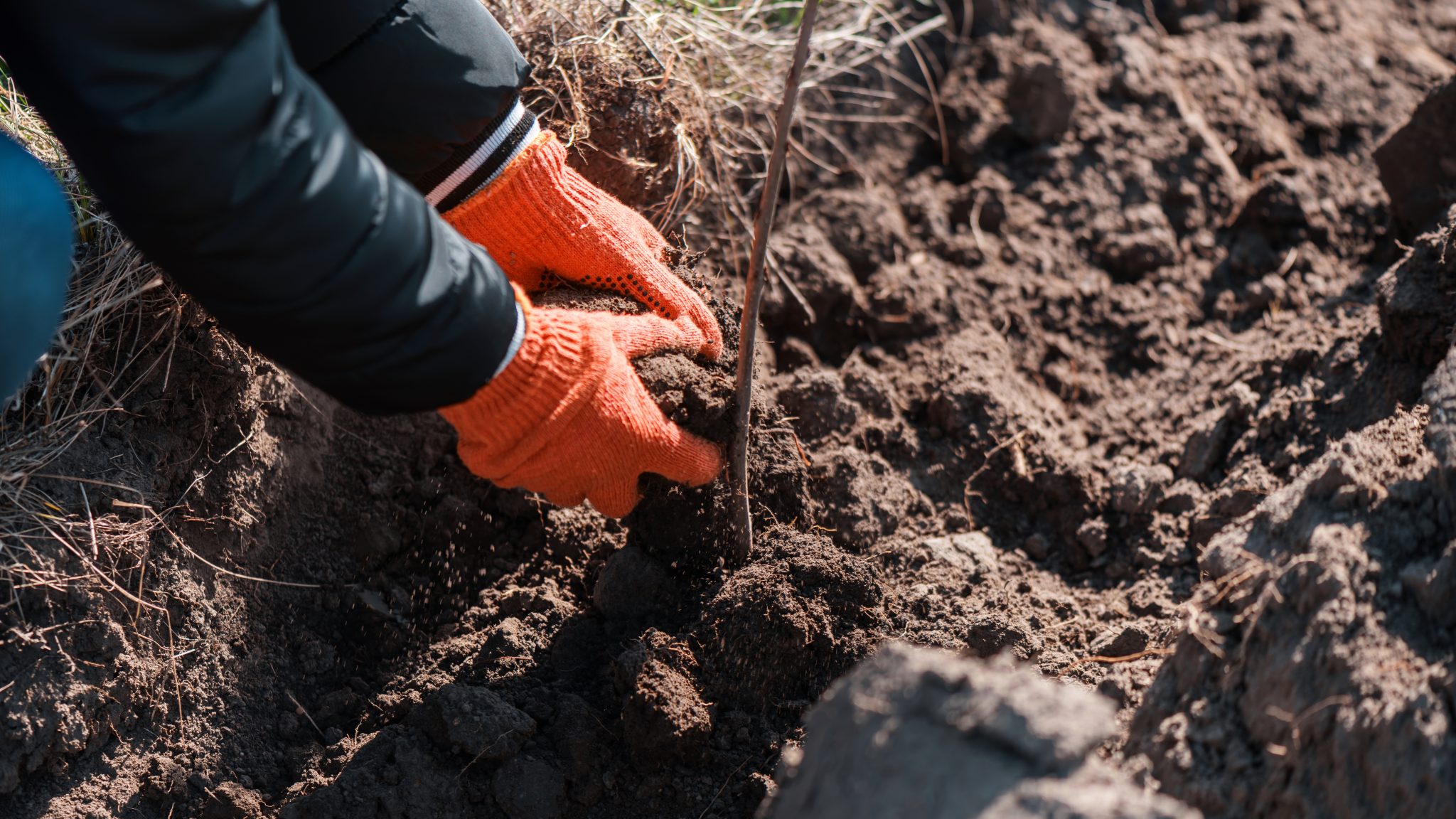
Healthy soil provides:
When these conditions are disrupted, the effects can eventually appear in the canopy.
Healthy Soil Is a Living System
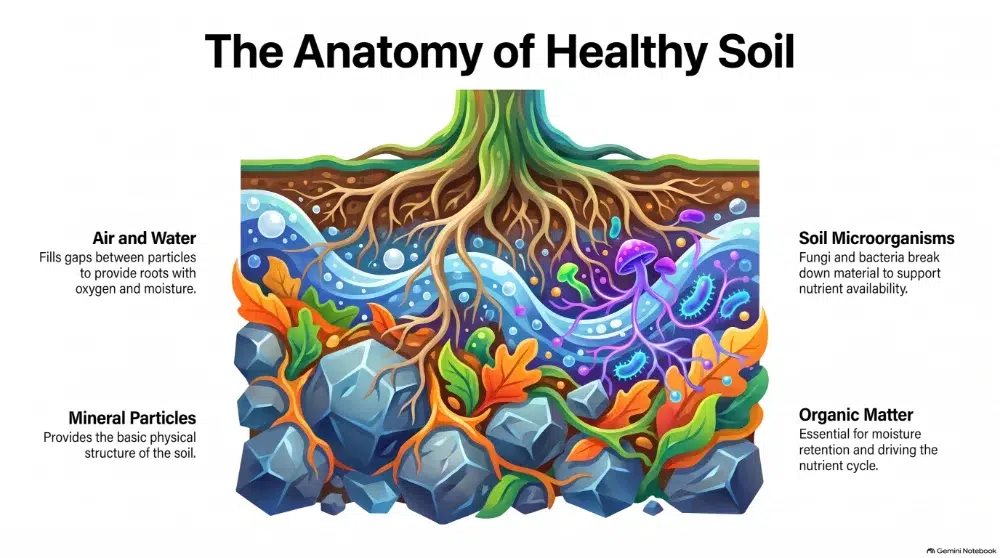
Soil contains mineral particles, organic matter, water, air, and microorganisms. Together, these components create the conditions roots need to function.
Organic matter helps support soil structure and moisture retention, while microorganisms break down natural material and contribute to nutrient cycling.
This is why simply having plenty of soil around a tree doesn’t necessarily mean the roots have a healthy environment.
What Does Healthy Soil Look Like?
Healthy soil can look different from one property to another, but there are a few basic characteristics that generally benefit tree roots.
Good Soil Structure
Healthy soil has spaces between its particles that allow air and water to move through it. These spaces also give roots room to grow. Soil that is extremely hard or difficult to penetrate may be compacted or poorly structured.
Good Drainage and Moisture
Roots need water, but they also need oxygen. Soil that stays saturated can deprive roots of oxygen, while excessively dry soil can limit water uptake.
Appropriate Soil pH
Soil pH affects how easily roots can access certain nutrients. A nutrient can be present in the soil but still be difficult for a tree to use when the pH is unsuitable. Different species have different preferences, so there isn’t one universal soil pH for trees.
In the Montreal and broader Quebec region, soils can often be on the acidic side, although pH varies considerably by location and soil type.
Organic Matter
Organic matter comes from decomposing leaves, roots, and other plant material. As it breaks down, it helps improve soil structure, retain moisture, and support the microorganisms that live around tree roots.
How Tree Care Can Support Soil Health
The way a tree is maintained can either protect or disrupt the soil around its roots. Small care decisions, such as where mulch is placed, how the tree is watered, and where equipment is used, can affect root health over time.
Mulch the Root Zone Correctly
Organic mulch can benefit both the tree and the soil by helping to:
The key is applying it correctly. Spread mulch in a broad, shallow layer over the root zone rather than piling it against the trunk.
Be Careful With Fertilizer
Fertilizer isn’t always the answer when a tree is growing poorly. Nutrients may already be present but unavailable because of unsuitable pH, soil compaction, poor drainage, or problems with the roots themselves. Applying fertilizer unnecessarily can also create nutrient imbalances or cause excessive growth.
Before fertilizing, consider:
- Is there actually a nutrient deficiency?
- Could poor soil conditions be preventing the tree from accessing existing nutrients?
- Would a soil test help identify the underlying issue?
Protect the Root Zone
Roots extend well beyond the area immediately surrounding the trunk, so protecting the soil around a tree means protecting a much larger area than many homeowners realize.
Repeated foot traffic, parked vehicles, construction equipment, and landscaping work can all compact soil or damage shallow roots.
Try to avoid:
Avoid Unnecessary Soil Disturbance
Healthy soil develops over time, and repeatedly digging or turning it can disrupt both its structure and the organisms living within it. This is particularly important around mature trees, whose roots may occupy much of the surrounding soil even when they aren’t visible.
Instead, focus on maintaining stable conditions:
When the root environment remains stable and functional, trees have a stronger foundation for healthy growth and resilience.
Improving Unhealthy Soil Around Trees
When soil isn’t providing a good environment for roots, the right solution depends on what is causing the problem. Adding compost, fertilizer, or more water isn’t automatically the answer, and some treatments can damage roots if they’re applied incorrectly.
Start With the Cause
Before changing the soil, consider what is actually wrong with it.
For established trees, avoid aggressive digging or tilling around the root zone. Significant soil problems are often best assessed by a tree care professional who can account for both the soil and the roots growing within it.
Don’t Forget the Roots
Soil problems and root problems can also overlap. A tree may decline because its roots are struggling to access water and oxygen, but the cause isn’t always immediately obvious from above ground.
For example, girdling roots can restrict the movement of water and nutrients through the tree even when the surrounding soil appears reasonably healthy. This is one reason a proper tree assessment should consider both the soil and the root system.
When Should You Have Your Soil Assessed?
Not every tree needs a professional soil assessment, but it can be worthwhile when problems persist without an obvious explanation.
Consider getting help if:
A professional assessment can help distinguish between soil conditions, root problems, and other causes of tree decline. For more information on diagnosing and improving the conditions around tree roots, explore SpinBlade’s Tree Care Services.
Healthy Trees Start Below the Surface
A healthy canopy depends on healthy roots. If you notice unusual growth, thinning leaves, or other signs of decline, SpinBlade can identify hidden root issues and help you take action before they threaten your tree’s long-term health.
Frequently Asked Questions
Still scratching your head? Here are quick answers to some of the most common questions people have.
In Short,
Healthy soil provides the foundation a tree needs to develop strong roots and withstand everyday environmental stress. Structure, drainage, organic matter, pH, and compaction all influence how effectively roots can access the resources they need.
When a tree begins to decline, it’s worth looking beyond the trunk and canopy. The condition of the ground around it can provide important clues, and addressing soil or root problems early can help protect the tree’s health for years to come.