


Not all tree problems show up in the leaves. Sometimes, the first sign is a strange, rough growth near the base of the trunk that doesn’t quite look natural. It’s easy to dismiss it as damage or part of the tree’s normal structure, especially if everything else seems healthy. But in many cases, tree growths point to crown gall, a disease that can quietly affect a tree’s long-term health if left unaddressed.
What is crown gall disease?
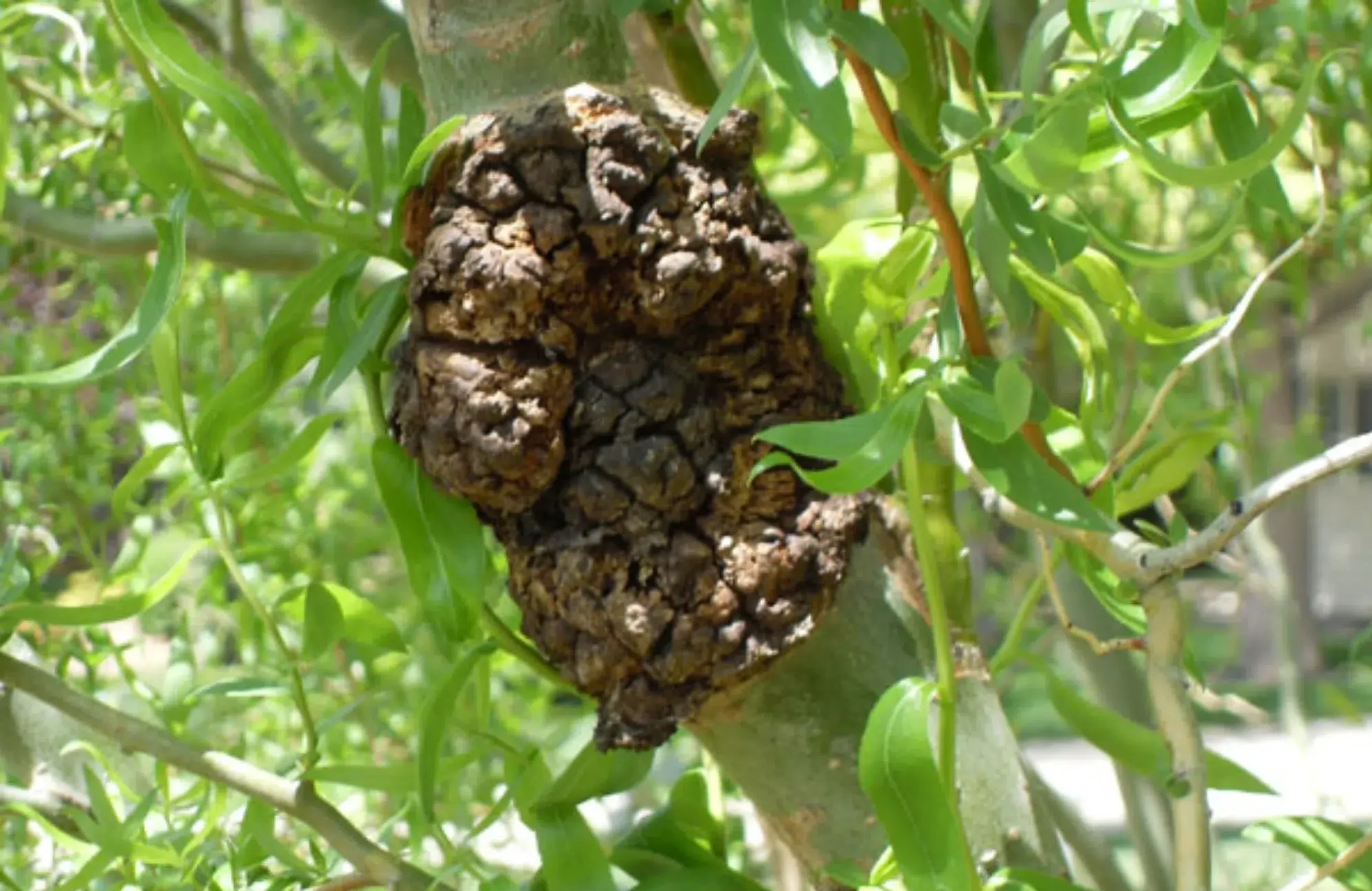
Crown gall is a bacterial disease caused by Agrobacterium tumefaciens, which infects trees through wounds and triggers abnormal cell growth. Instead of forming healthy tissue, the tree develops rough, tumor-like swellings known as galls. Within the broader category of types of tree diseases, crown gall is distinct because it alters the tree’s physical structure rather than showing up first through leaf symptoms.
Unlike conditions that affect the canopy, this disease begins at the point of infection, most often near the soil line or root system, and can interfere with the movement of water and nutrients as it develops. While some trees tolerate small galls for years, others may experience reduced growth, increased stress, or gradual decline depending on severity.
Common trees affected by crown gall in Canada
Crown gall can affect a wide range of tree species, but it tends to be more common in certain environments and plant types, especially where trees are frequently planted, moved, or exposed to soil disturbance.
Commonly affected trees include:
This disease is often more prevalent in nursery stock or newly planted trees, where roots and lower trunks are more likely to be injured during handling. Since the bacteria lives in soil, areas with repeated planting or poor drainage can increase the risk of infection over time.
Crown Gall Causes & Impact on Health
Understanding how crown gall forms helps explain why it can be difficult to prevent once it’s established in the soil. Unlike diseases that rely on insects or airborne spread, this one is closely tied to physical damage and environmental conditions.
Unsure about a Tree Growth?
Graft unions and burls can look similar to crown gall at a glance. Spinblade provides expert assessments so you don’t have to guess.
How to identify crown gall disease in your trees
Identifying this disease is more straightforward than many others, but it requires knowing what to look for in the tree’s structure rather than its leaves. Crown gall is diagnosed primarily by the presence, location, and appearance of abnormal growths.
The most obvious sign: abnormal growths (galls)
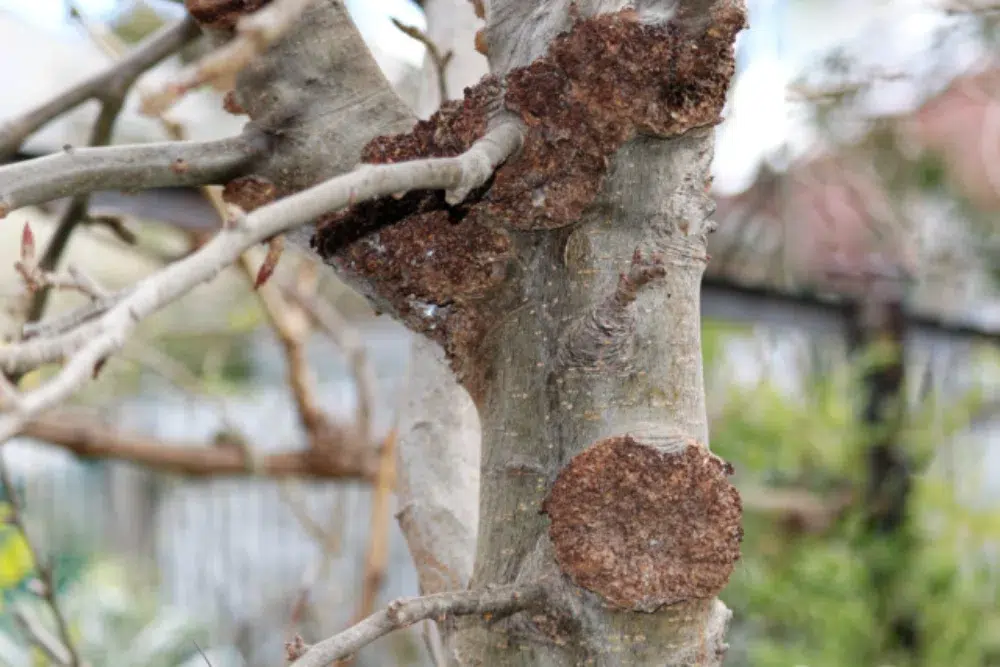
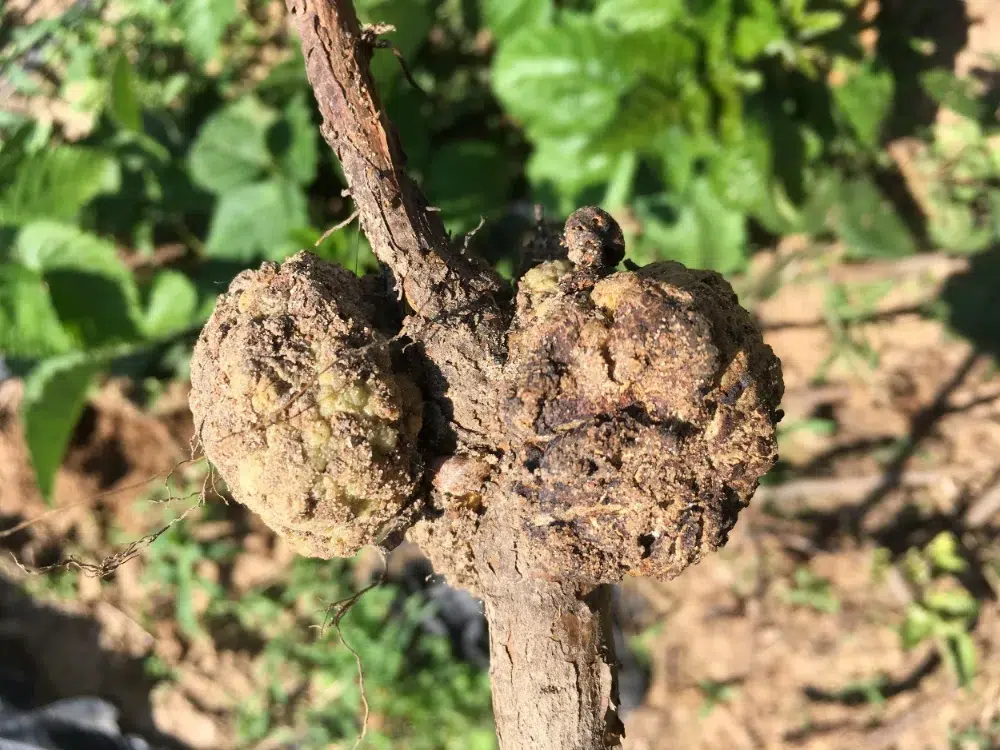
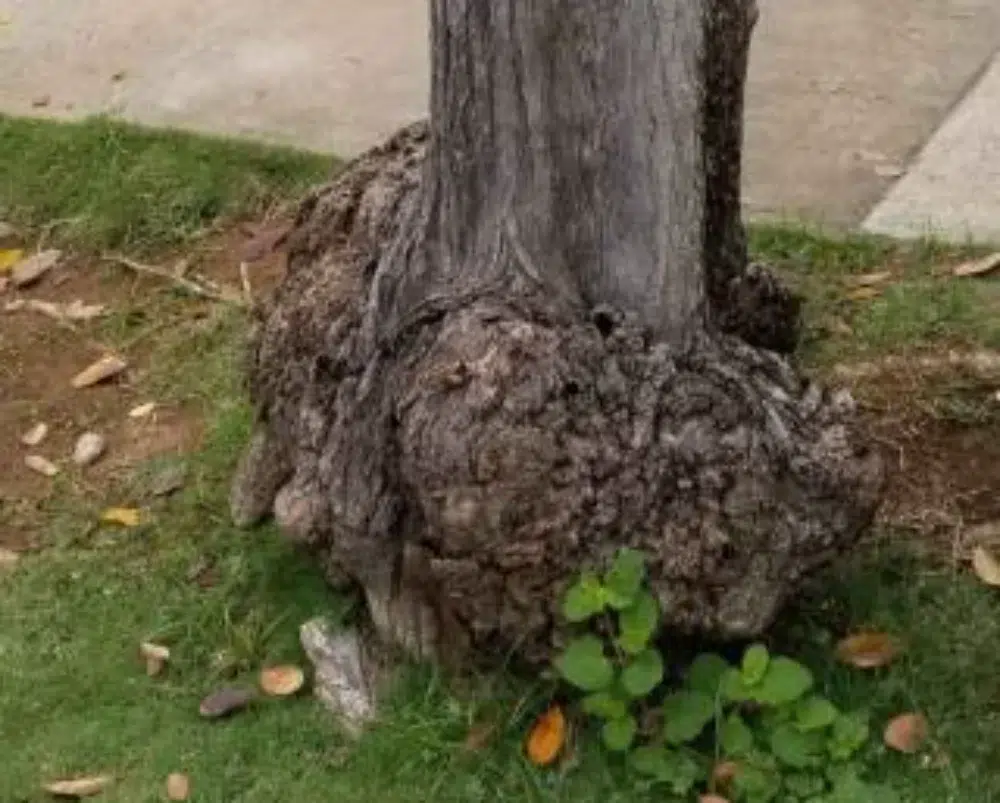
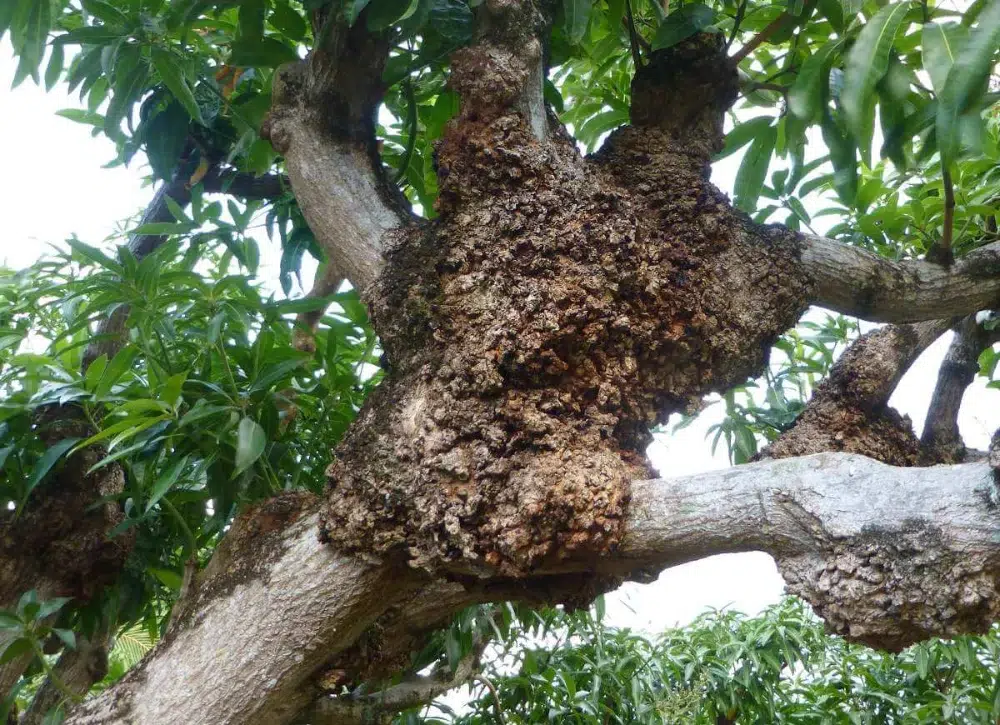
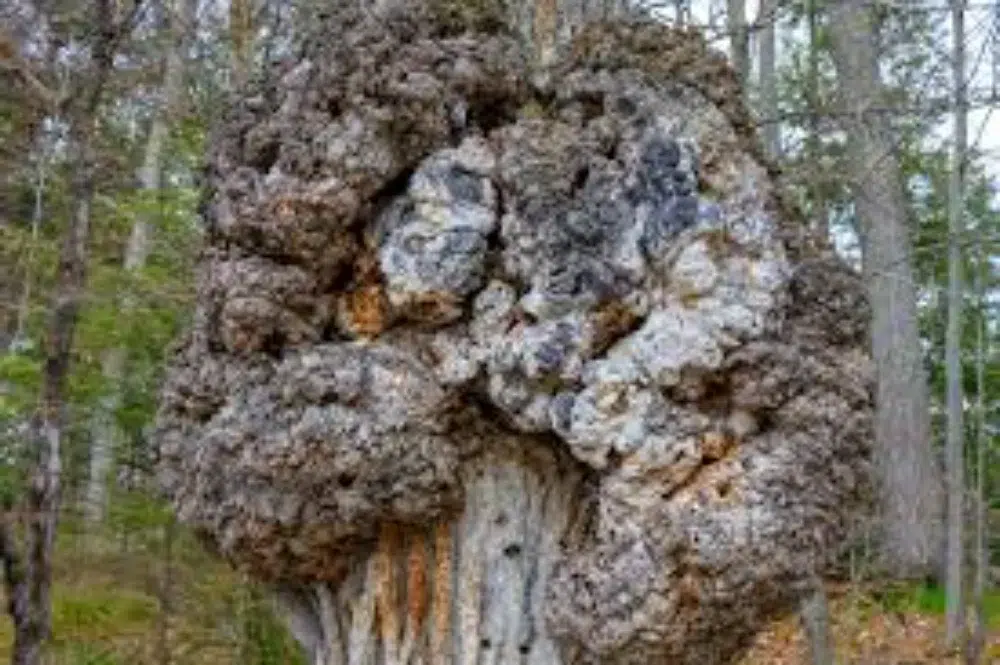
The defining feature of crown gall is the presence of irregular, swollen growths that form on the tree. These are not part of the tree’s normal structure and tend to stand out once you know what you’re looking for.
Typical characteristics include:
These growths can range from very small (pea-sized) to several inches wide, depending on how long the infection has been present.
Where crown gall typically appears
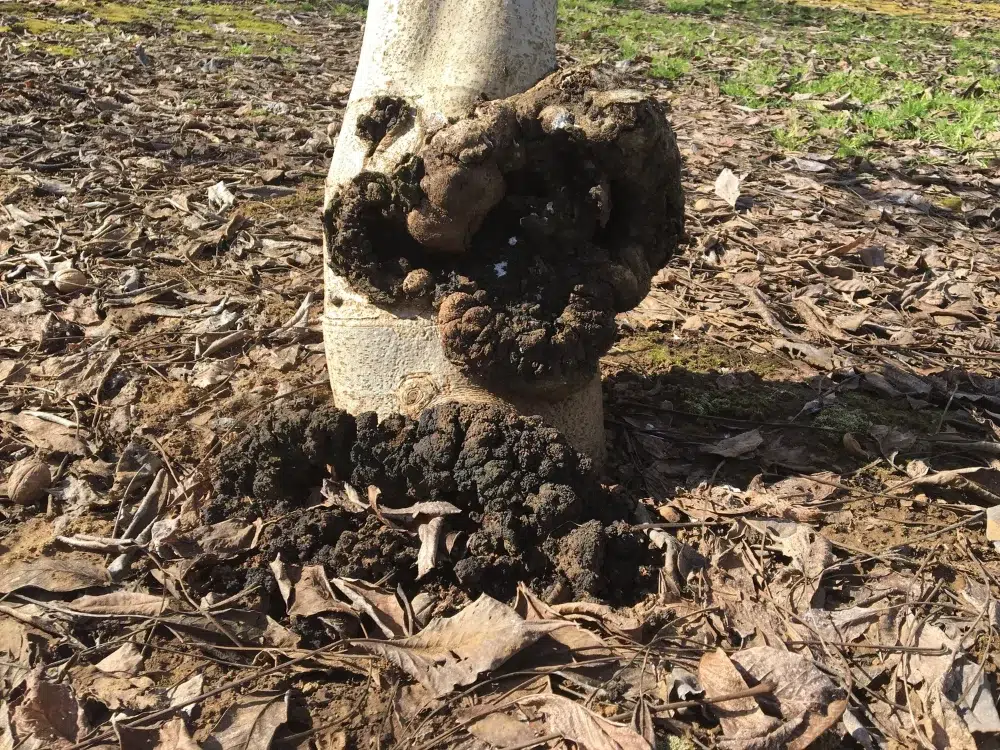
Location is one of the most important clues when identifying crown gall, as it tends to form in very specific areas of the tree.
Most commonly found:
Because many galls form at or below ground level, they can go unnoticed until they become large enough to affect visible parts of the tree.
Early vs advanced symptoms
| Stage | Appearance | Impact on Tree |
|---|---|---|
| Early | Small, soft, light-colored swelling | Minimal visible impact |
| Mid-stage | Enlarged, rough-textured gall | Reduced vigor |
| Advanced | Large, woody, dark growths | Decline, structural weakness |
In early stages, the disease may not seem serious, but as the gall expands, it can begin to interfere with normal growth and stability.
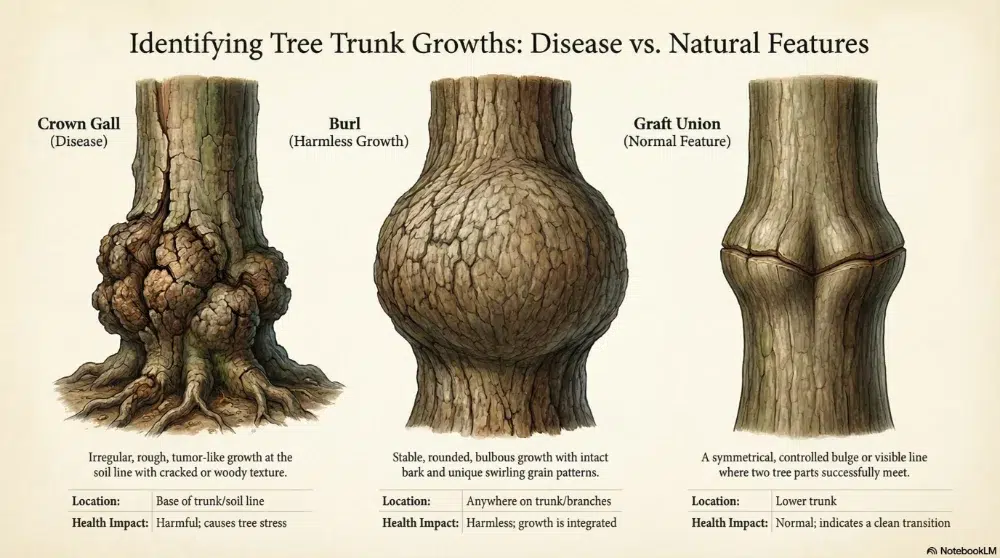
What crown gall is often confused with
Because crown gall appears as a physical growth, it’s often mistaken for other non-disease-related features or different conditions entirely. Knowing the differences can prevent unnecessary concern, or missed diagnosis.
Common points of confusion include:
In some cases, growths near the base may also be mistaken for underlying issues like root rot, particularly when the tree begins to show signs of decline without clear leaf symptoms.
A key distinction is that crown gall forms persistent, abnormal growths, whereas most other issues either heal over time or affect the tree in different ways entirely.
How to treat crown gall disease in trees
Once crown gall is identified, the next step is understanding what can realistically be done. Unlike some tree diseases that can be treated directly, crown gall does not have a true cure. Management focuses on limiting stress, preventing spread, and deciding when intervention, or removal, is the best option.
What you can do to manage it
For established trees, especially mature ones, the goal is to support overall health and reduce additional stress that could accelerate decline.
Helpful practices include:
While these steps won’t remove existing galls, they can help the tree function more effectively despite the infection.
How to treat crown gall disease in trees
Once crown gall is identified, the next step is understanding what can realistically be done. Unlike some tree diseases that can be treated directly, crown gall does not have a true cure. Management focuses on limiting stress, preventing spread, and deciding when intervention, or removal, is the better option.
What you can do to manage it
For established trees, especially mature ones, the goal is to support overall health and reduce additional stress that could accelerate decline.
Helpful practices include:
While these steps won’t remove existing galls, they can help the tree function more effectively despite the infection.
Important: Don’t Try to Cut Off the Growth!
It might seem logical to remove the gall itself, but cutting it off doesn’t solve the problem, and can actually make things worse. Crown gall is caused by bacteria inside the tree, not just on the surface, so removing the visible growth won’t eliminate the infection.
In fact, cutting into the area creates fresh wounds, which can allow the bacteria to spread further or introduce additional infections. Instead of improving the tree’s health, this often accelerates decline.
If you’re unsure how severe the issue is, it’s better to assess the overall condition of the tree rather than trying to remove the growth directly.
Professional assessment and prevention
If you’re unsure how severe the issue is, or whether the tree is worth saving, a professional assessment can provide clarity.
Arborists can help with:
Preventative guidance is just as important, especially in areas where the bacteria may already be present in the soil.
Dealing with Crown Gall? We Handle Tree Removal Safely
If the infection has progressed too far, removal may be the best option. Spinblade ensures the job is done safely and professionally.
Frequently Asked Questions
Here are common questions homeowners have when trying to identify tree problems:
In Short,
Crown gall is easy to overlook at first, but its impact on a tree’s structure and long-term health makes early identification important. While it can’t be cured, understanding how it forms, how to recognize it, and when to act can help you make better decisions about care, management, and replacement when needed.


