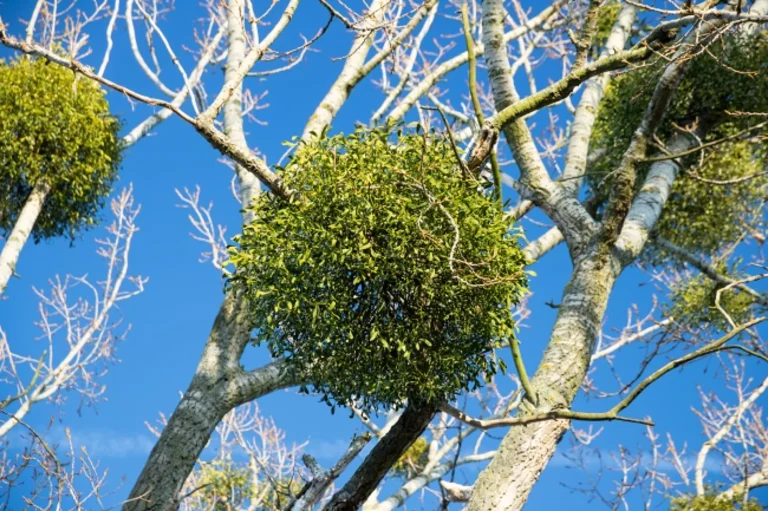
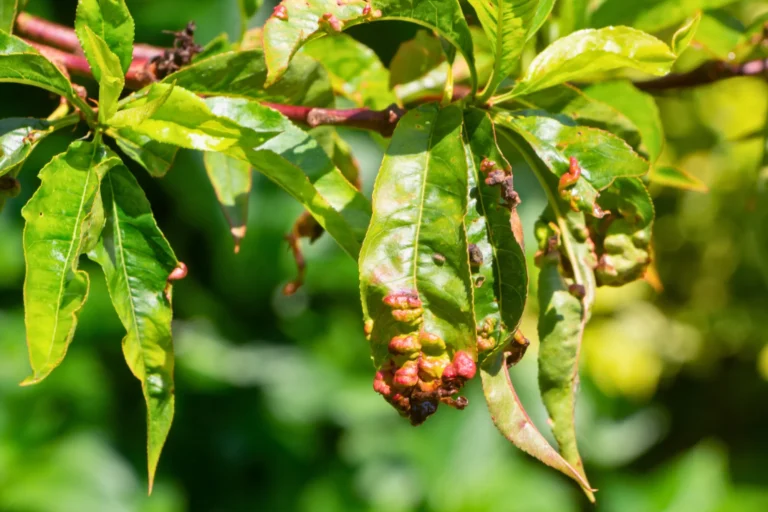
Trees in Canada face a range of stressors from harsh winters, droughts, pests, and fungal infections. Knowing how to identify these problems early is crucial for preserving their health. This tree disease identification guide will help you spot the warning signs, interpret symptoms based on species and environment, and decide when professional help is needed. Whether you’re dealing with maples, oaks, or conifers, these steps give you the confidence to act before damage becomes severe.
Tools That Will Support Accurate Identification
You don’t need specialized equipment to follow a solid tree disease identification guide, but a few simple tools can improve accuracy:
The right tools don’t replace expertise, but they sharpen observation and reduce guesswork.
Step-by-Step Tree Disease Identification Guide
A reliable tree disease identification guide improves accuracy and reduces guesswork when diagnosing your trees. It also helps distinguish between treatable problems and more serious signs of a dying tree, where decline may already be advanced.
Step 1 – Observe the Tree Carefully
At this stage, the goal is identifying which symptoms are meaningful and which may be incidental.
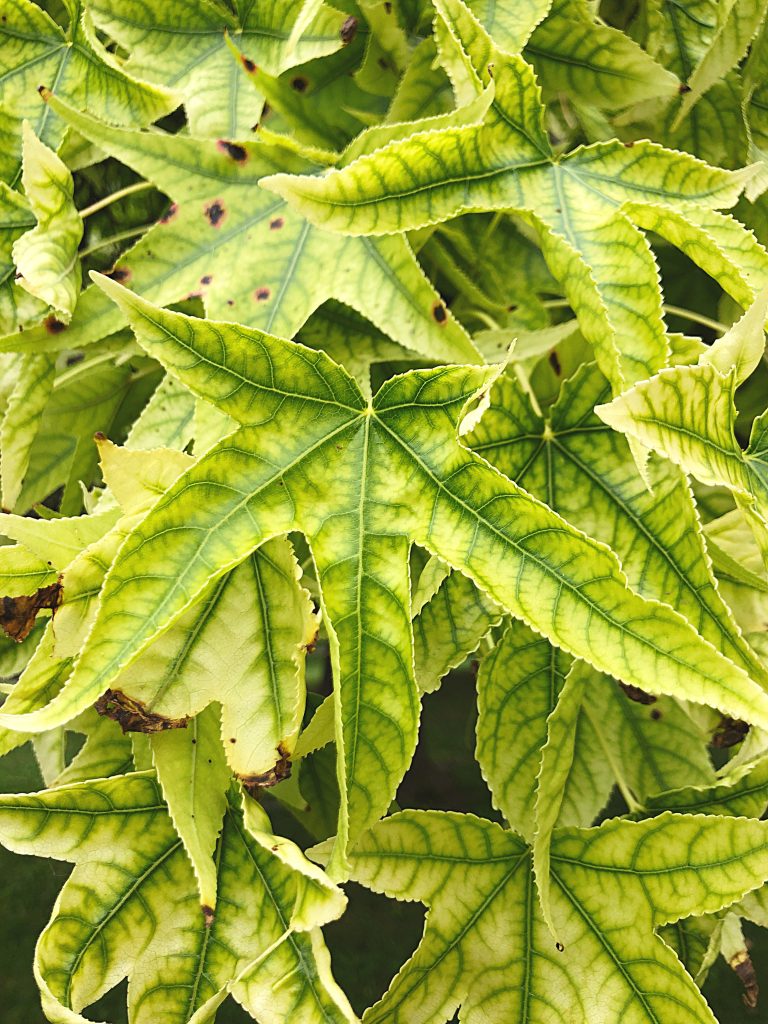
Accurate diagnosis depends on understanding the difference between symptoms and signs, a distinction that’s often overlooked. Symptoms are the tree’s response to stress or infection (such as yellowing, wilting, or dieback), while signs are physical evidence of a pathogen or damage itself (like fungal growth, cankers, or oozing sap). Symptoms tell you something is wrong; signs help reveal the source. Things to look for on initial inspection:
Seeing symptoms that don’t quite add up?
When multiple signs overlap, professional diagnosis is often the fastest way to protect your tree and prevent spread to nearby plants. Schedule a professional assessment today.
Step 2 – Document Symptoms Over Time
Time is one of the most powerful diagnostic tools available.
Photograph symptoms from multiple angles and note when they first appeared. Then consider timing:
Also note whether symptoms appear year after year or are new. Repeating patterns suggest chronic disease or structural issues, while one-time events are more likely stress-related.
Step 3 – Match Symptoms to Tree Species
Tree species narrow the field dramatically because most diseases are not universal.
Start by identifying your tree species, then check for symptoms that fit its typical weak points. This narrows your likely tree disease categories and avoids chasing unlikely problems.
Tree Disease Identification Guide with Common Canadian Species
Rather than trying to name every disease, focus on the tree you have, the symptoms you see, and the likely type of problem.
| Tree Species | Typical Weak Points / Common Issues | Common Diseases | Symptom Clues |
|---|---|---|---|
| Maple (Sugar, Red, Silver) | Vascular problems, leaf spot fungi, root stress | Verticillium wilt, Tar spot, Anthracnose | Leaf spots, yellowing, one-sided canopy decline, early fall colour |
| Oak (Red, White) | Vascular diseases, slow decline | Oak wilt, Bacterial leaf scorch, Powdery mildew | Mid-season leaf browning, branch dieback starting at the crown, sparse foliage |
| Spruce / Pine | Needle diseases, fungal pathogens | Rhizosphaera needle cast, Lirula needle blight, Sphaeropsis tip blight | Browning needles, thinning canopy from older needles, resin flow on trunk |
| Birch | Stress-related decline, fungal issues | Bronze birch borer, Leaf spot fungi, Birch dieback | Dead upper branches, small leaves, thinning canopy |
| Ash | Vascular decline, pest-related stress | Emerald ash borer (indirect stress), Verticillium wilt, Ash anthracnose | Branch tip dieback, sparse leaves, bark splitting |
| Cedar / Arborvitae | Root stress, fungal pathogens | Phytophthora root rot, Cercospora needle blight | Browning inside out, branch tip dieback, slow growth |

Step 4 – Analyze Symptom Patterns and Progression
How symptoms spread often matters more than how they look.
Ask these questions:
Use progression speed as a filter:
Patterns help distinguish true tree disease from temporary environmental stress.
Step 5 – Factor in Environmental Conditions
Before assuming infection, review conditions that commonly mimic disease:
If symptoms improve after correcting care issues, disease is less likely to be the primary cause.
Step 6 – Rule Out Secondary and Opportunistic Issues
Diseases rarely act alone.
Look for:
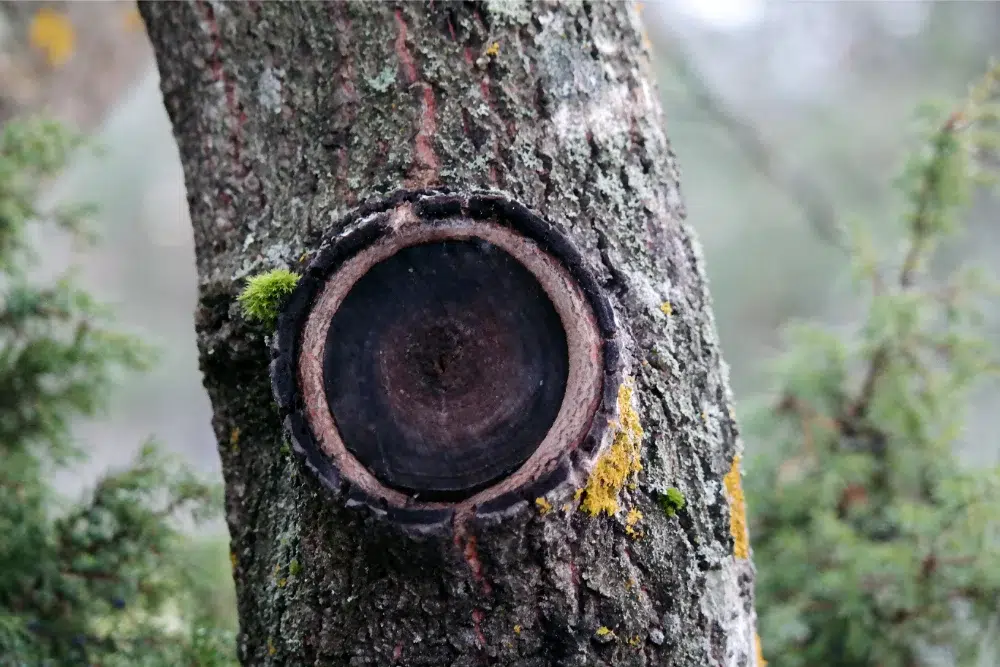
When disease follows stress or injury, it’s often opportunistic rather than primary. This distinction matters because treating symptoms without addressing the underlying stress will rarely succeed.
Step 7 – Know When Observation Isn’t Enough
Recognizing limits is part of accurate diagnosis.
A homeowner-guided tree disease identification guide is effective for early detection and decision-making. It reaches its limit when:
At that point, a certified arborist can confirm diagnosis through testing, assess internal decay or failure risk, and recommend treatments tailored to the tree’s biology and surroundings.
Severity and Urgency: When to Watch and When to Act
Not every tree problem needs immediate action, but ignoring serious issues can be costly and even dangerous. Using a tree disease identification guide based on severity and urgency helps you make practical decisions, so you can determine whether it’s appropriate to monitor the tree, take corrective steps, or call a professional without defaulting to panic or inaction.
Low Severity: Cosmetic or Seasonal
Some changes affect appearance more than the tree’s actual health and usually resolve on their own over time. This includes:
- Minor leaf spots late in the season
- Temporary yellowing from drought or heat
- Light needle drop on conifers
In these cases, you may see symptoms, but clear signs of disease are absent, and simple adjustments like consistent watering, proper mulching, or basic pruning are often enough to maintain tree health.
Moderate Severity: Progressive Decline
When symptoms worsen over time, they indicate that the tree’s health may be declining and that early intervention can make a meaningful difference. This includes:
- Symptoms repeating each year
- Expanding dieback or thinning canopy
- Localized cankers or fungal growth on branches
- Decline continuing despite improved care
At this stage, both symptoms and signs may be present, and the tree may still be salvageable if addressed promptly.
High Severity: Structural or Lethal Risk
Certain problems carry risks to both the tree and its surroundings and require immediate professional involvement. This includes:
- Rapid dieback or canopy collapse
- Large cracks, decay, or fungal growth on trunk/base
- Leaning trees or major limb failure
- Fast-spreading symptoms to nearby trees
In these cases, waiting or trying to manage the tree yourself can be dangerous, so contacting a certified arborist quickly is the safest course of action, ensuring both accurate diagnosis and effective risk management.
Action: Call a certified arborist now for assessment and intervention.
When to Call a Professional Arborist
A homeowner-focused tree disease identification guide can help you narrow possibilities, but it has limits. Calling a certified arborist is the right move when visual symptoms suggest deeper, hidden, or high-risk issues.
| Situation | What It Often Indicates | Why a Professional Is Needed |
|---|---|---|
| Rapid or widespread decline | Vascular disease, root failure, severe stress | Arborists can confirm cause and assess how quickly the issue is progressing |
| Cracks, decay, or fungal growth on trunk or base | Internal rot or structural weakness | Internal damage isn’t always visible and may pose safety risks |
| Leaning tree or large dead branches | Compromised stability | Professional risk assessment helps prevent property damage or injury |
| Symptoms don’t match the species’ typical patterns | Multiple or uncommon issues | Expert diagnosis helps untangle overlapping causes |
| No improvement after correcting care issues | Primary disease rather than stress | Targeted treatment may be required |
| Similar symptoms appearing on nearby trees | Potentially contagious disease | Early intervention can help contain spread |
Protect your trees before symptoms worsen.
Diseased trees can become hazardous. An arborist inspection helps determine whether intervention is needed. Schedule a professional assessment today.
FAQ: Tree Disease Identification Guide
These questions address concerns that often come up once symptoms are spotted.
In Short,
Accurately diagnosing tree problems requires more than spotting a single symptom, it takes context, pattern recognition, and patience. This tree disease identification guide is designed to help you interpret what you’re seeing, narrow likely causes, and decide on the right next step. While many issues can be managed through informed care, others demand professional expertise to prevent lasting damage. Knowing when observation ends and expert intervention begins is often what makes the difference between recovery and decline.