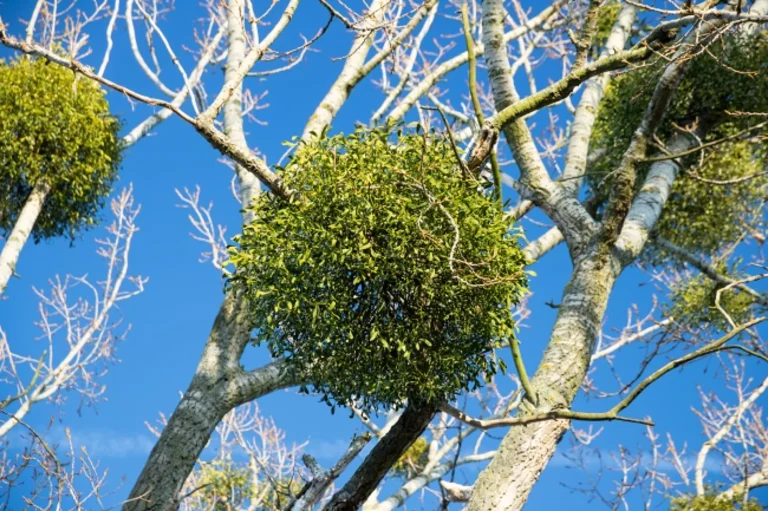
Anthracnose is one of the most common, and most misunderstood, tree diseases affecting Canadian landscapes. Its symptoms can look dramatic, often appearing suddenly in spring, yet the long-term impact varies widely depending on tree species, weather conditions, and overall tree health.
Many homeowners assume the worst when leaves blacken or drop early, while others dismiss the signs entirely. Understanding this tree disease properly helps you respond proportionately rather than reacting out of fear or ignoring real warning signs.
What Is Anthracnose?
Anthracnose is a general term used to describe a group of fungal diseases that affect trees, primarily targeting leaves, young shoots, and sometimes small twigs. Rather than being caused by a single organism, anthracnose refers to several closely related fungi that behave in similar ways and produce similar symptoms.

These fungi infect plant tissue by entering through natural openings or microscopic wounds, then disrupting normal cell function as they grow. This interference limits photosynthesis and weakens new growth, which is why symptoms are most noticeable during active growth periods.
In most cases, it does not infect the entire tree at once. Instead, it shows up in specific tissues and progresses based on environmental conditions and the tree’s ability to recover.
Why It’s Often Misunderstood
Anthracnose causes confusion because it rarely behaves the same way two years in a row. Some springs produce widespread leaf damage, while other years show barely any symptoms at all. This inconsistency leads homeowners to misjudge both the cause and the severity of the issue.
Another reason this disease is misunderstood is that it often looks worse than it actually is. Leaf discoloration, curling, or early drop can make a healthy tree appear to be in rapid decline, even when the underlying structure remains sound. In other cases, repeated infections over several seasons are dismissed as cosmetic, allowing gradual stress to accumulate unnoticed.
What Anthracnose Looks Like on Trees
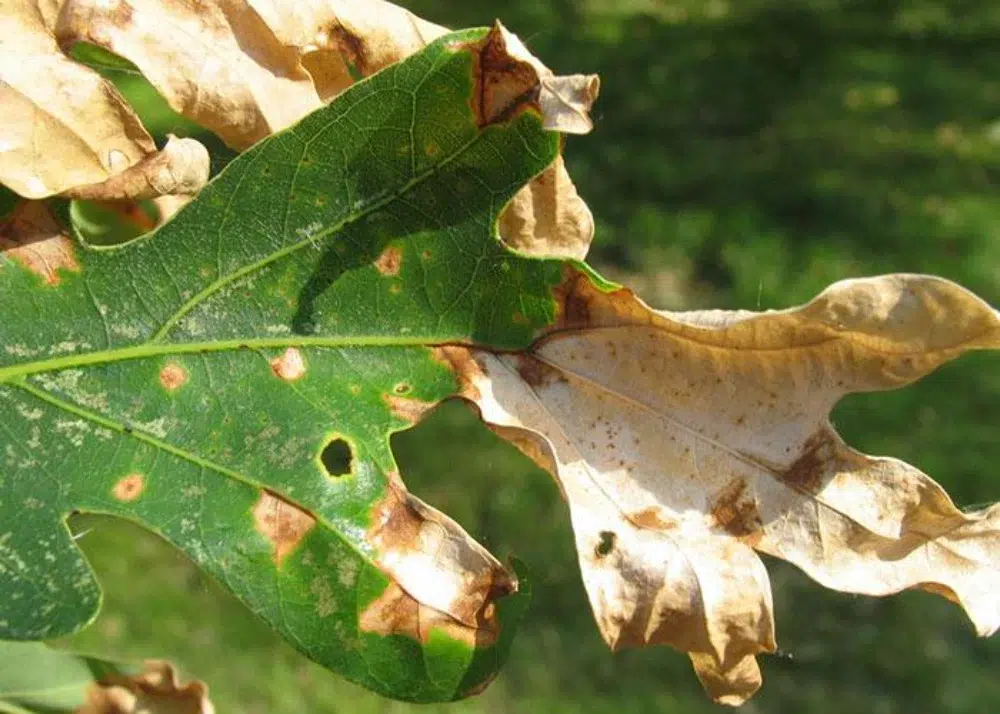
Anthracnose does not have a single, uniform appearance. Its visual symptoms vary depending on the tree species affected, the timing of infection, and how advanced the disease is when it’s noticed. This variability is why image-based diagnosis alone is unreliable. Anthracnose is best assessed by looking for consistent symptom patterns across leaves and shoots. Common indicators include:
Leaf Symptoms
Fungal diseases on leaves often overlap in appearance, which is why individual spots or discoloration are not enough to confirm anthracnose. Instead, what matters is how symptoms are distributed across the leaf and canopy.
Leaf damage often shows patterns such as:
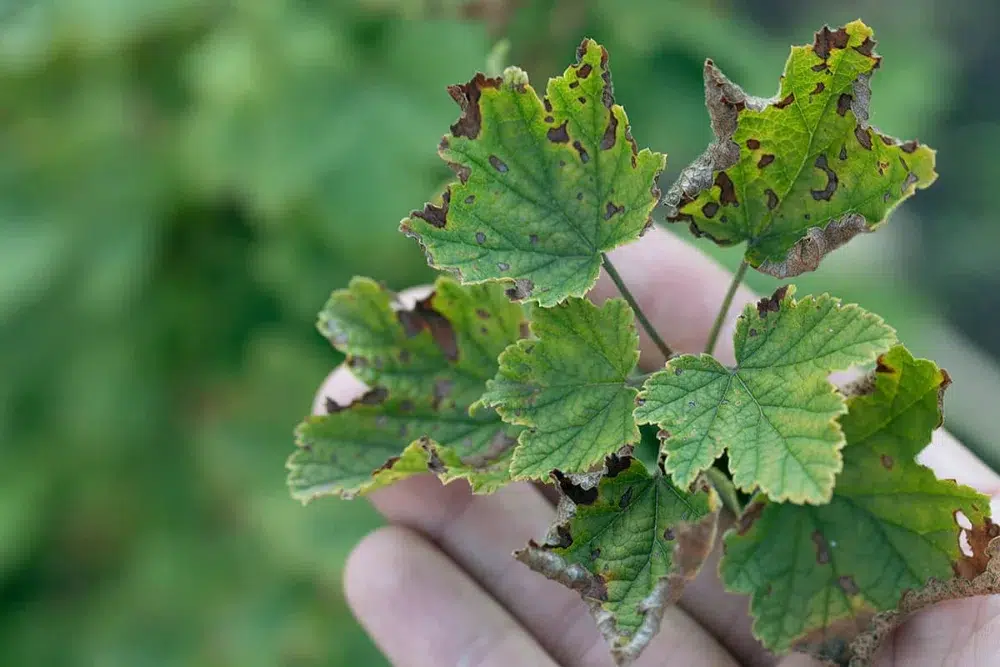
Damage often appears uneven across the canopy. Some branches may be heavily affected while others look nearly normal, which helps distinguish it from environmental damage that usually affects the tree more uniformly.
Twig and Shoot Damage
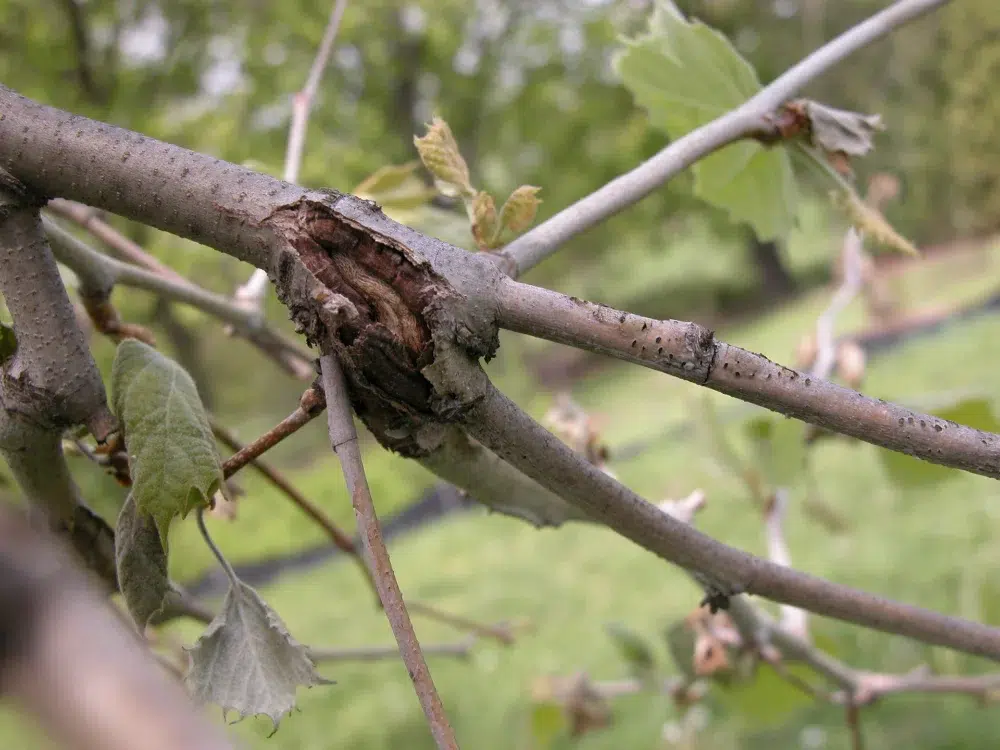
Anthracnose is one of several diseases that affect leaves and young shoots, along with powdery mildew and cedar apple rust. While symptoms differ, these conditions often create similar concerns regarding canopy health and seasonal appearance. This progression is a sign that conditions have been especially favorable for fungal spread or that the tree is already under stress.
Signs to look for include:
Twig involvement doesn’t always mean the disease is severe, but it does suggest that monitoring and management are more important going forward.
How Symptom Appearance Changes Over Time
Anthracnose rarely looks the same throughout the growing season, which is a major reason it’s misinterpreted.
This start-and-stop pattern can give the impression that the problem has “resolved itself,” when in reality the tree is simply producing new growth under improved conditions.
| What You See on the Tree | What It Often Indicates |
|---|---|
| Blotches following leaf veins | Fungal infection rather than insect feeding |
| Uneven damage across canopy | Disease progression vs environmental stress |
| Early leaf drop after wet spring | Active infection |
| Healthy late-season regrowth | Seasonal suppression, not eradication |
Concerned about recurring Symptoms on your Tree?
Spinblade provides professional tree health assessments and targeted treatment plans designed around species, site conditions, and seasonal timing, so you can address the cause, not just the symptoms.
Does Anthracnose Look the Same on Every Tree?
Short answer: no. Long answer: Anthracnose isn’t a single visual pattern you memorize. It’s a disease process that expresses itself through the biology of the host tree. Leaf shape, growth timing, and species-level resistance all influence what you actually see.
That’s why two trees in the same yard can be infected at the same time and look nothing alike.
How Symptoms of Anthracnose Vary by Tree Species (in Ontario/Canada)
Fungal Disease doesn’t just vary by species, it varies by how that species grows in spring, how quickly it replaces damaged tissue, and how tolerant it is of early-season stress. This is why why the same disease can look alarming on one tree and barely noticeable on another.
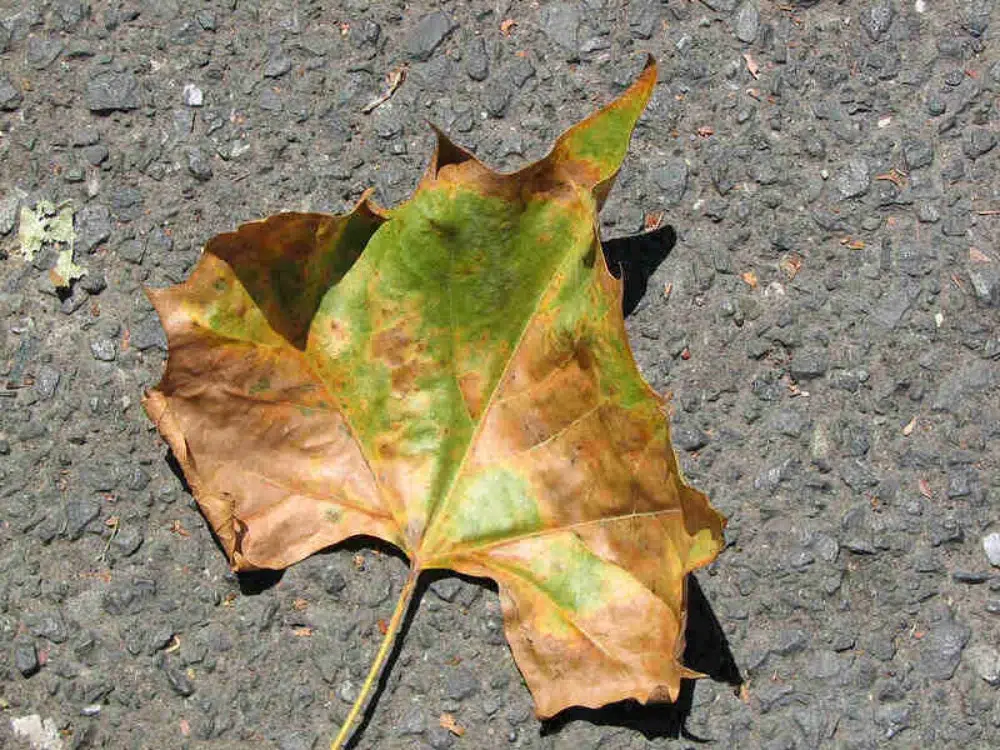
What matters most is not how bad the leaves look, but how the tree responds over time. Species that can rapidly replace damaged foliage tend to tolerate anthracnose well. Species that leaf out slowly or are already stressed may show prolonged thinning, even when infection levels are similar.
Why “Severity” Is Easy to Misjudge
Visual intensity does not reliably indicate long-term risk for trees. Species tolerance, timing, and recovery capacity matter far more than how alarming the tree looks in May.
Interestingly, anthracnose often looks worst when it’s doing the least lasting harm. Trees that are otherwise healthy can tolerate repeated infections with minimal long-term impact.
Risk increases when disease stacks on top of other stressors like:
In those cases, anthracnose becomes part of a broader decline rather than a standalone problem. This is why it’s best understood within the wider understanding of tree diseases, rather than treated as an isolated event.
What Anthracnose Is Commonly Mistaken For
Anthracnose is rarely misidentified because it’s obscure. It’s misidentified because several unrelated problems damage leaves at roughly the same time of year. The key differences show up when you compare texture, pattern, timing, and persistence rather than just color.
Before assuming disease, it helps to rule out the most common look-alikes that lead homeowners to look into the wrong types of tree diseases.
Common Confusions at a Glance
| Issue Often Confused With | How It Typically Looks | Key Difference From Anthracnose |
|---|---|---|
| Powdery Mildew | White or gray powdery coating on leaf surfaces | Mildew sits on the leaf and prefers warm, dry conditions; anthracnose damages tissue and thrives in cool, wet springs |
| Frost Damage | Darkened, wilted, or curled leaves appearing suddenly | Frost damage is uniform and tied to a single cold event; anthracnose appears patchy and progresses with rainfall |
| Drought Stress | Browning edges, leaf drop, overall canopy thinning | Drought affects the tree evenly and worsens in heat; anthracnose appears early and often improves as weather warms |
| Chemical Injury | Distorted or scorched leaves across much of the tree | Chemical damage usually affects large areas at once; anthracnose follows veins and varies branch to branch |
| Insect Feeding | Holes, chewed edges, skeletonized leaves | Anthracnose causes dead tissue, not missing tissue |
How to Use This Comparison Correctly
The goal isn’t to land on a diagnosis immediately — it’s to rule things out efficiently.
One of the most reliable clues is seasonal behavior. Anthracnose often looks worst early, then fades visually as the season improves. Problems that worsen steadily through summer usually point elsewhere.
This comparison mindset prevents overreaction and helps you avoid treating the wrong problem which, in real landscapes, is far more common than undertreating.
How Disease Starts (So You Can Prevent It)
Anthracnose fungi are native or long-established in most regions of Canada. In many areas, they’re already present at low levels in forests, parks, and urban green space. The symptoms show up when a tree that hasn’t encountered it before finally does, or when stress or favorable weather enters the picture and allows it to gain a foothold. Common introduction pathways include:
- Nursery stock and planting material
- Wind and rain from nearby trees
- Contaminated tools and equipment
The initial appearance of symptoms often coincides with a single spring that checks all the wrong boxes:
- Prolonged cool temperatures
- Frequent rainfall or mist
- Slow leaf expansion
Because infection happens early, damage appears all at once when leaves unfurl, giving the impression that the disease “came out of nowhere.” In reality, the fungus only became visible when conditions allowed it to act.
Once leaves mature and weather warms, their natural defenses improve. If spring shifts quickly to dry, warm conditions, fungal disease often stalls on its own, leaving behind damage that looks worse than it actually is.
This explains why symptoms can be severe one year and barely noticeable the next, even when nothing about tree care has changed.
What Homeowners Can Safely Do
Because this tree disease depends so heavily on timing and moisture, prevention is less about eliminating the fungus (which is rarely realistic) and more about limiting the conditions it needs to succeed.
Understanding how it starts points directly to what helps:
The goal isn’t to create a sterile environment, but rather toshorten the window where young leaves stay wet and vulnerable.
When that window closes rapidly, active symptoms often fade into the background, even though the fungus itself never truly disappears.
Limits of DIY Treatment
Fungicidal treatments are where DIY efforts often go wrong. Most fungicides are only effective before infection occurs, meaning timing is critical and usually tied to bud break and early leaf expansion.
Once symptoms are visible:
- Sprays are largely ineffective
- Repeated applications may stress the tree
- Misuse can harm beneficial organisms
Professional Treatment Options
Professional care isn’t always necessary, but it becomes valuable when the disease is persistent, severe, or affecting high-value trees.
Professional involvement is most appropriate when:
Arborists can assess timing, species susceptibility, and whether treatment is even warranted—something a symptom-based approach can’t do reliably.
most common methods used to treat Anthracnose
Anthracnose is a fungal disease that spreads quickly under warm, moist conditions, making timely and well-targeted treatment essential. The most effective control strategies focus on disrupting the fungus’s life cycle while strengthening plant resistance and limiting conditions that favor infection.
Get a Clear Assessment before treating.
Misdiagnosis often leads to unnecessary costs and potentially damage. An experienced arborist can assess species, timing, and stress factors to ensure the right treatment.
Frequently Asked Questions
Here are common questions homeowners have when trying to identify tree problems:
In Short,
Anthracnose is best understood as a weather-driven disease that exploits opportunity, not a relentless killer. Knowing how it starts, what it looks like at different stages, and when it actually matters helps homeowners respond appropriately instead of reacting out of fear.
With informed observation, basic preventative care, and professional support when warranted, disease can usually be managed without lasting damage, leaving trees healthier, more resilient, and far less mysterious.