Not every unusual growth in a tree is cause for concern, but some are worth a closer look. Mistletoe is one of those cases, appearing as dense clumps in the canopy that can easily be mistaken for part of the tree itself. Over time, though, it begins to draw resources from its host, gradually affecting its health and stability. In this article, we’ll look at how to recognize it, how it develops, and when action may be necessary.
What is mistletoe in trees?
Mistletoe is a parasitic plant that grows on the branches of trees, attaching itself to the host and drawing water and nutrients directly from it. Unlike fungal or bacterial conditions, it is a living plant that establishes itself externally while connecting internally to the tree’s vascular system.
Mistletoe isn’t technically a tree disease, but it’s often grouped with other tree problems because it can still weaken trees over time. By competing for water and nutrients, it reduces vigor, slows growth, and increases stress, especially when multiple clusters are present.
While the parasite can weaken individual trees, it also plays a role in local ecosystems by providing food and habitat for birds and other wildlife.
Common trees affected by mistletoe in Canada
This parasitic plant can be found on a variety of tree species, though its presence depends on regional conditions and how easily seeds are spread by birds. In Canada, it tends to appear more frequently in certain deciduous trees and ornamental species.
Commonly affected trees include:
Because birds play a major role in spreading mistletoe seeds, areas with higher bird activity or dense tree populations may see more frequent occurrences. It’s also more visible in winter when surrounding foliage has dropped, making clusters easier to spot.
Mistletoe Causes & Impact on Health
Understanding how the plant establishes itself helps explain why it can persist and spread within a landscape. Unlike soil-based or seasonal diseases, it relies on a biological cycle involving seeds and host trees.
A Second Opinion Can Save You Time—and Your Tree.
If you’re unsure what you’re seeing, Spinblade provides professional assessments across Ottawa and surrounding areas to identify the issue and recommend the right course of action.
How to identify mistletoe in your trees
Mistletoe is one of the easier issues to identify once you know what to look for, as it creates very distinct visual patterns in the tree’s structure rather than affecting leaves or bark directly.
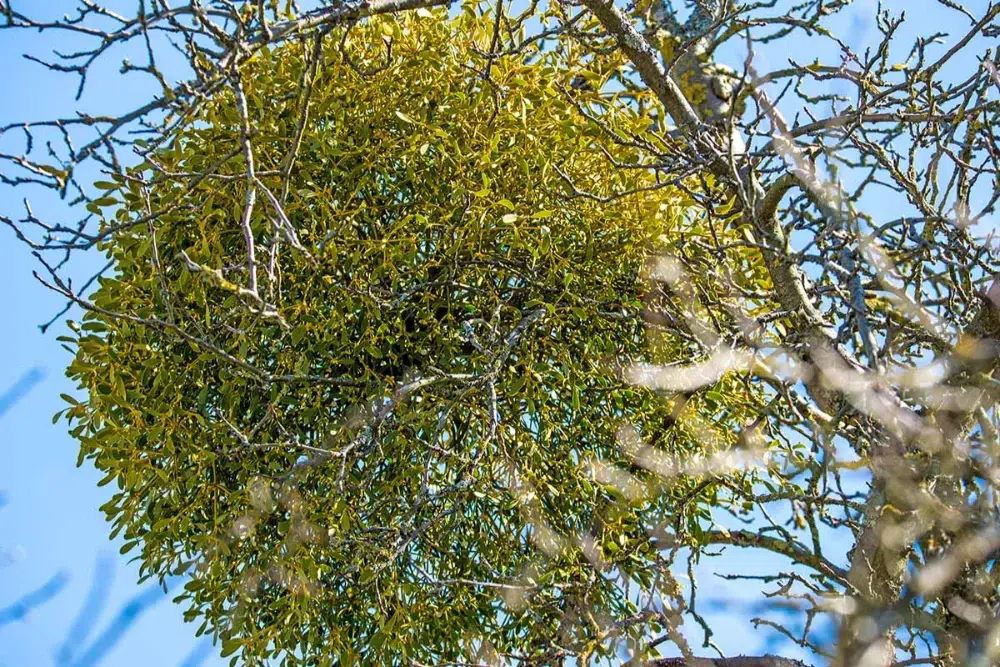
The most recognizable sign: clumps in branches
The defining feature of mistletoe is the presence of dense, rounded clusters growing directly from tree branches.
Typical characteristics include:
Unlike many tree conditions that affect the shape and texture of leaves, mistletoe forms distinct clusters that grow separately from the tree’s natural foliage.

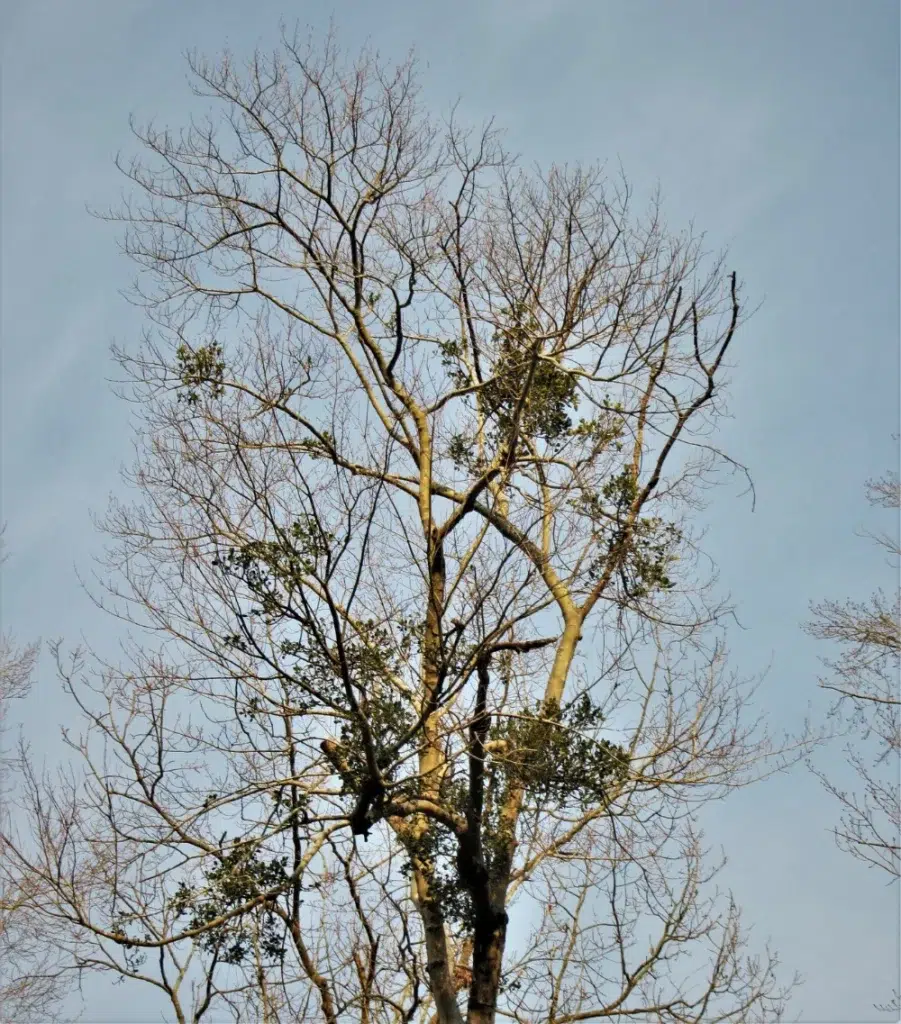
Where mistletoe typically appears
Location is one of the clearest indicators when identifying this growth.
You’ll most often find it:
Because it grows above ground and away from the trunk base, it’s visually distinct from many other tree issues.
Early vs Advanced Growth
The parasite doesn’t affect every tree the same way, and its impact depends largely on how established it is and how many clusters are present. In small amounts, it may have little noticeable effect. But as it spreads, it can begin to place increasing stress on the tree.
| Level of Presence | What It Looks Like | What It Means for the Tree |
|---|---|---|
| Light | One or two small clusters | Minimal impact |
| Moderate | Several visible clusters | Increased resource competition |
| Heavy | Multiple clusters across canopy | Reduced vigor, ongoing stress |
The more widespread the growth, the more it draws from the tree’s water and nutrient supply, especially during dry or stressful conditions.
How to treat mistletoe in trees
Once mistletoe is identified, the next step is deciding how to manage it. Unlike many tree issues, treatment isn’t always urgent. What matters most is how established it is and how the tree is responding.
Should you remove mistletoe or leave it?
In many cases, healthy trees can tolerate small amounts of these clusters without significant harm. Problems tend to arise when infestations become widespread or when the tree is already under stress.
You may choose to leave it if:
Removal is usually recommended if:
In many cases, mistletoe is manageable, but ignoring it entirely can allow it to become more established and harder to control later.
How mistletoe is removed
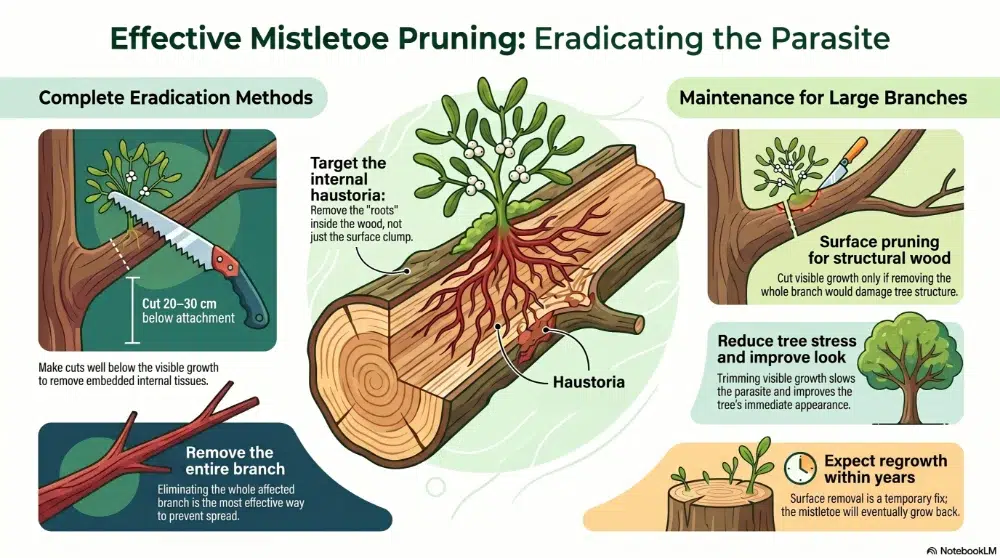
When removal is needed, it typically involves pruning the affected branches below the point of infection. This helps remove both the visible growth and the internal structures that allow it to draw nutrients from the tree.
Key considerations:
Ongoing management
Even after removal, clustered growth can return if seeds are reintroduced to the area. Ongoing monitoring is important, especially in environments with high bird activity.
Helpful practices include:
When to call a professional
For larger trees or more advanced infestations, professional help is often the safest and most effective option.
You may want expert support if:
Keep Your Trees Healthy Before Problems Build Up
Ongoing growth in the canopy can lead to long-term stress. Spinblade offers professional pruning and management services throughout Ottawa and nearby areas.
Frequently Asked Questions
Here are common questions homeowners have when trying to identify tree problems:
In Short,
Mistletoe is easy to recognize once you know what to look for, but understanding its impact is what really matters. While it doesn’t always require immediate removal, it can weaken trees over time if left unmanaged. Knowing when to monitor, when to prune, and when to take action can help you maintain healthier trees and prevent more serious issues down the line.