Powdery mildew is one of the most visible fungal diseases affecting trees and shrubs across Canada. While often more cosmetic than lethal, it can stress young or repeatedly infected trees, causing curled leaves, stunted growth, and a white or gray powdery coating on leaves and buds. Understanding this tree disease early allows homeowners to recognize symptoms, prevent recurring outbreaks, and avoid confusing it with other issues to prevent incorrect treatments.
In this guide, we’ll break down what powdery mildew is, how to identify it across different species, and practical ways to manage it in your landscape.
What Is Powdery Mildew?
Powdery mildew is caused by a group of fungi that attack the surface of leaves, buds, and young shoots. Unlike root or vascular diseases, which can weaken trees from below ground, it remains mostly above ground and rarely threatens long-term tree survival.
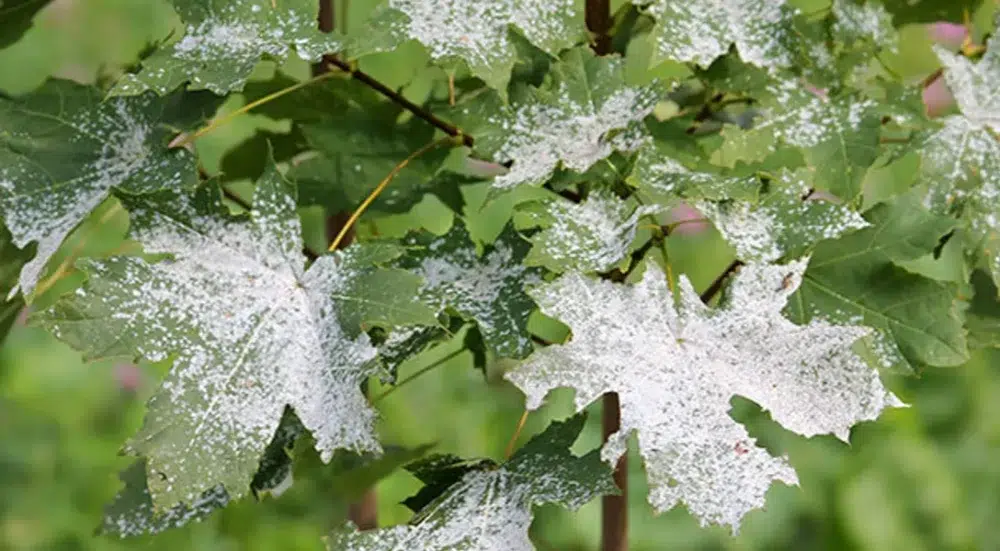
The white or gray coating that gives the disease its name is actually a mass of fungal spores growing on leaf surfaces. These spores spread easily in the air and thrive under specific environmental conditions: moderate warmth, low sunlight, high humidity, and poor airflow. Because it is highly visible, it’s one of the most recognizable types of tree diseases, even though it rarely threatens mature, healthy trees.

Common Trees Affected by Powdery Mildew in Canada
In Canadian landscapes, powdery mildew tends to appear most often on certain species, particularly where airflow is limited or growing conditions favour high humidity.
Trees commonly affected include:
Infections are most noticeable on ornamental and urban trees where spacing is tight, pruning is infrequent, or shade limits air circulation. While powdery mildew rarely causes serious long-term damage, repeated infections can weaken growth and affect appearance over time.
How It Develops and Spreads
Understanding how this fungus spreads helps homeowners prevent it from returning year after year, rather than reacting only once symptoms appear. Powdery mildew is persistent not because it’s aggressive, but because it’s well adapted to surviving quietly between growing seasons.
How to Identify Powdery Mildew
Spotting disease early is the key to keeping trees healthy and reducing stress. Homeowners can look for a few characteristic signs that make this fungal infection stand out.
Main Visual Symptoms
The first thing you’ll notice is usually a white or gray powder coating leaves, buds, or young shoots., but other common signs include:
What Powdery Mildew Can Be Confused With
Even though it’s distinctive, early symptoms can sometimes be mistaken for other common issues that affect leaf surfaces. The key to distinguishing them is looking at how the symptoms behave over time rather than just their initial appearance.
| What It Might Be | How It Can Look Similar | How to Tell the Difference |
|---|---|---|
| Dust or pollen | Light white coating on leaf surfaces | Powdery mildew adheres to tissue and often affects young, actively growing leaves rather than sitting loosely on the surface |
| Frost damage | Wilted, darkened, or collapsed leaves | Frost damage appears suddenly after a cold event, while powdery mildew develops gradually over time |
| Chemical residue | Streaks or pale surface discoloration | Residues remain static and do not spread, while mildew forms patchy, expanding growth on susceptible tissue |
| Anthracnose (early stages) | General leaf decline or spotting | Anthracnose typically produces dark lesions and follows vein patterns under cool, wet conditions, whereas powdery mildew forms a surface coating in warmer, drier humidity |
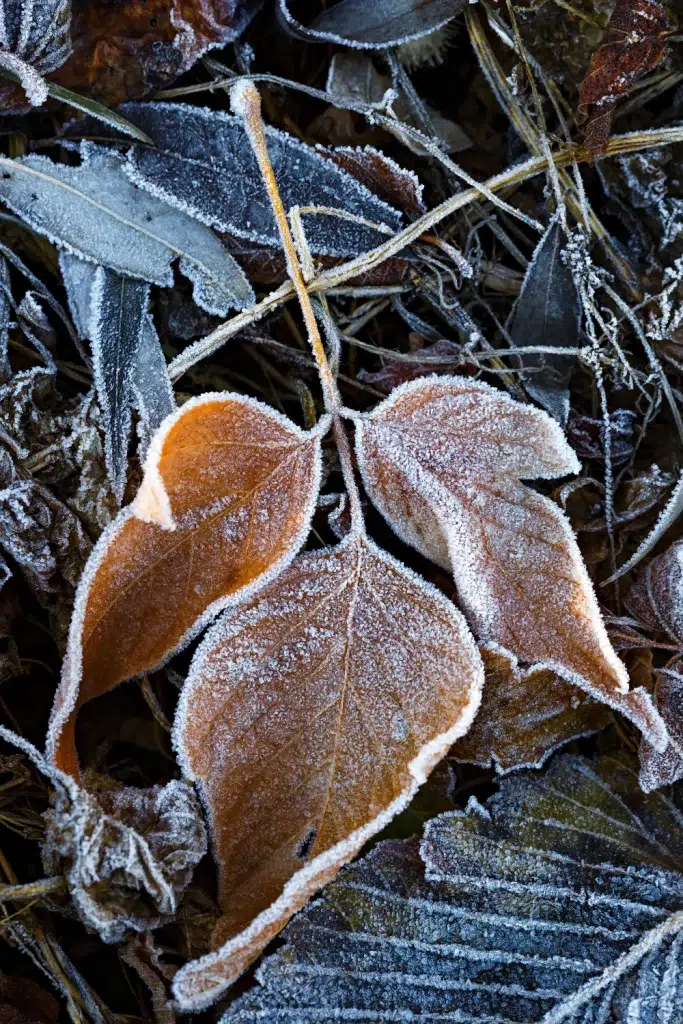
Tip: Try brushing a leaf, if the white coating stays put, it’s likely mildew and not just dust.
Not sure what you’re seeing on your tree?
If your tree shows symptoms beyond leaf coating, it may be dealing with more than one issue. Spinblade’s certified arborists evaluate the whole tree, not just the visible symptoms.
Homeowner Management Strategies
Managing powdery mildew is less about eliminating every trace of fungus, and more about reducing stress on the tree and limiting the conditions that allow infections to take hold. In many cases, thoughtful maintenance and timing matter far more than aggressive treatments, especially for mature, and otherwise healthy trees.
Cultural Practices
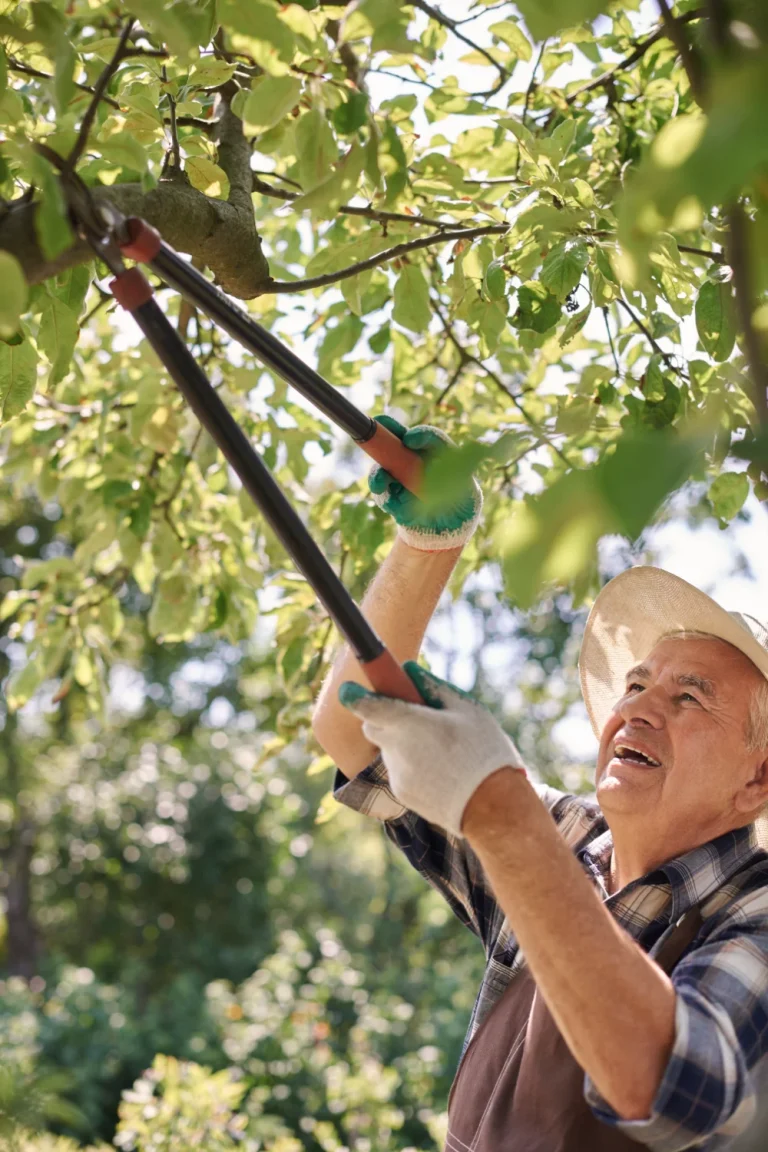
Long-term control starts with how the tree is grown and maintained. Powdery mildew thrives when airflow is restricted and growth is overly lush, so adjusting everyday care practices can significantly reduce both the severity and frequency of infections.
Good maintenance reduces infection risk naturally:
Treatment Options
When cultural practices aren’t enough to keep symptoms in check, targeted treatments may be appropriate. These approaches work best as part of a broader management strategy rather than as a standalone fix, especially for trees that experience repeated infections.
Organic and biological treatments
Organic options focus on suppressing fungal growth rather than eliminating it outright. Products containing sulfur, potassium bicarbonate, or neem-based compounds can reduce spore viability on leaf surfaces when applied early and consistently. Biological treatments may also include beneficial microorganisms that compete with or inhibit fungal development. These approaches tend to work best in mild to moderate cases and are most effective when paired with good airflow and canopy management.
Chemical control methods
Chemical interventions can be effective when timed correctly and used selectively:
When to Call a Professional
While powdery mildew is often manageable, there are situations where professional input is the smarter choice. This is especially true when symptoms extend beyond typical leaf-level signs or when treatment decisions carry higher risk.
Homeowners should seek arborist guidance if:
A certified arborist can evaluate whether powdery mildew is the primary issue or part of a larger decline pattern, and recommend solutions that make sense for the tree’s species, age, and growing conditions.
Still dealing with the same issue year after year?
If symptoms keep returning despite proper pruning and care, the problem may be deeper than it appears. Spinblade can assess recurring issues, identify contributing factors, and recommend long-term solutions tailored to your tree and property.
Frequently Asked Questions
Here are common questions homeowners have when trying to identify tree problems:
In Short,
Powdery mildew is one of the more common, and manageable, tree health issues faced by homeowners. When identified early and addressed thoughtfully, it rarely poses a serious threat on its own. The key is understanding what the disease looks like, how it behaves, and when symptoms suggest something more complex may be happening.
By focusing on proper identification, smart maintenance, and realistic expectations, homeowners can protect tree health while avoiding unnecessary treatments. And when symptoms don’t align with what’s described here, stepping back and seeking professional assessment is often the most effective next move.